






From Flame to Feast
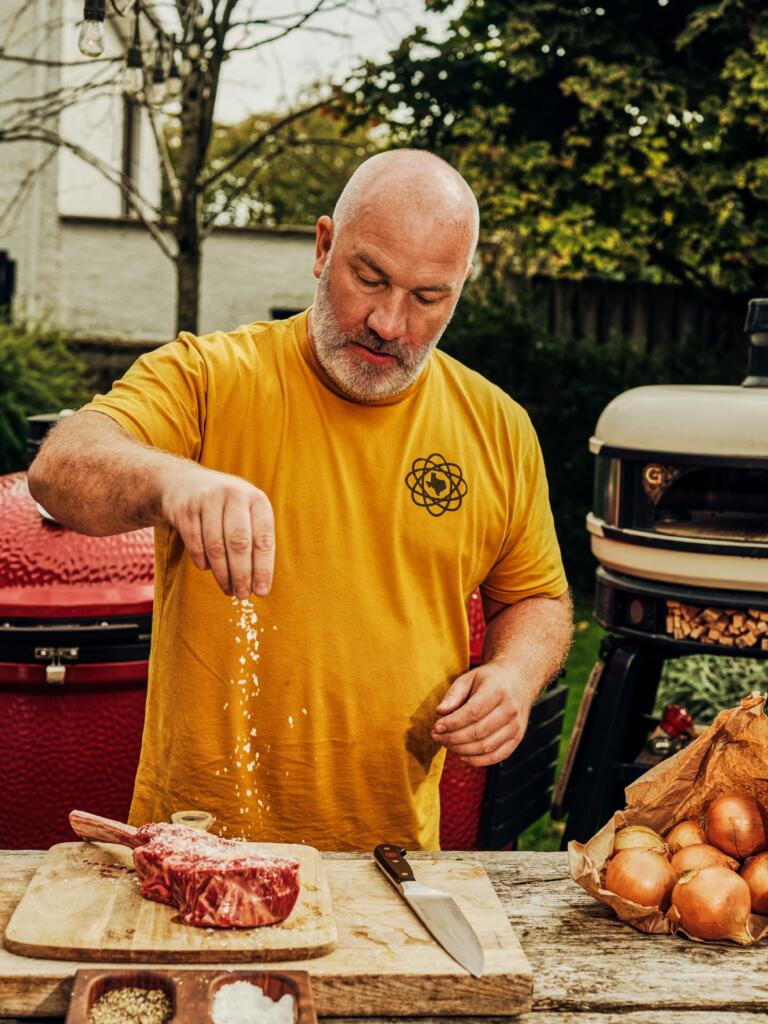
As August draws to a close, we’re firing up the grill with a cookbook that has everything you need for unforgettable outdoor cooking. This month, Maldon Salt’s Cookbook Club is spotlighting How to BBQ Everything by Jim Moore, the Sunday Times bestselling guide that’s become a must-have for barbecue lovers. Whether you’re searching for BBQ recipes, grilling tips, easy summer entertaining ideas or crowd-pleasing outdoor dining inspiration, Moore’s approachable guide delivers bold flavours, expert techniques and plenty of recipe ideas to help you make the most of the season’s final cookouts.
Known to his thousands of followers as @onlyslaggin, Jim Moore is one of the UK’s most respected BBQ experts, combining championship-winning experience with a down-to-earth approach to live-fire cooking. In How to BBQ Everything, he covers everything from mastering charcoal and smoked food to creating flavour-packed marinades, juicy burgers and show-stopping barbecue feasts. It’s the perfect cookbook for anyone embracing the UK’s growing love of al fresco dining, outdoor entertaining and restaurant-quality BBQ at home. Add a pinch of Maldon Salt, gather friends and family, and savour every last sunny evening before autumn arrives.
In Conversation with Jim Moore
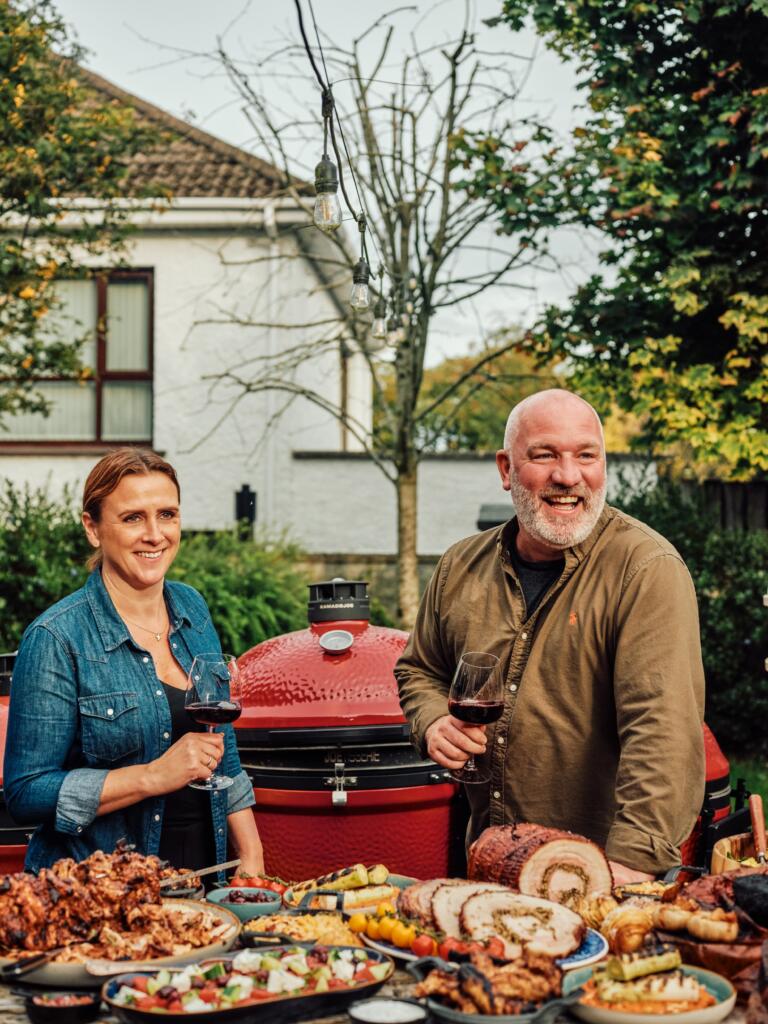
Jim! We’re big fans of the book. What was the moment that made you think ‘I need to write a book called How to BBQ Everything’? What gap were you wanting to fill for home cooks?
For years I’d hear the same comments, both in person and across social media. People would say, “I wish I knew what else I could cook on my barbecue,” or “I only ever seem to cook the same few things.” Just as often I’d be asked, “When are you going to write a cookbook?”
Those conversations planted the seed.
The BBQ community across the UK and Ireland has never been stronger. We’re spoiled with fantastic equipment, great producers and a real appetite to learn. But travelling showed me something different. In so many countries, people don’t think of cooking outdoors as a hobby or an event. It’s simply another way of cooking.
In Texas I’d watch people cooking everything from breakfast to slow-smoked brisket over live fire. In Italy it was wood-fired pizzas and rustic breads. In Australia, seafood and fresh produce were cooked over charcoal as part of everyday life. Everywhere I went, the barbecue wasn’t a novelty, or something reserved for sunny weekends. It was simply another way of cooking.
Then I’d come home and see barbecues sitting under covers for much of the year, only being wheeled out at the first hint of sunshine for burgers, sausages and maybe the occasional steak.
That’s when I realised there was a real gap.
I wanted to write the book I’d been looking for myself. Not another BBQ book centred around low-and-slow cooking or competition barbecue, but one that gave people the confidence to cook almost anything outdoors. Midweek family dinners, Sunday roasts, breads, chilli, vegetables, desserts and sauces. One of the things I say throughout the book is that if you can cook it indoors, you can cook it on a barbecue. You just get the added flavour, theatre and enjoyment that comes from cooking over live fire.
If How to BBQ Everything inspires someone to light their barbecue on a Wednesday evening instead of waiting for the next bank holiday and gives them the confidence to try something they’ve never cooked outdoors before, then it’s achieved exactly what I set out to do.
Because once you stop thinking of your barbecue as a seasonal gadget and start treating it like another cooker, you don’t just barbecue more often, you discover a completely different way of cooking.
What did you learn about your own cooking style while writing this book?
Writing the book made me realise that my cooking has evolved into being much more about flavour, exploring options and having fun than following strict rules.
I’ve spent years travelling and learning from incredible pitmasters and chefs around the world, but one thing they all had in common was an instinct for balancing flavours rather than relying on complicated recipes. That’s something I wanted to help readers develop for themselves.
One of the features I feel really helps that in the book is the flavour wheel. Rather than simply giving people recipes to copy, it encourages them to understand which flavours naturally work together and gives them the confidence to start creating their own combinations. Once you understand those building blocks, cooking becomes much more intuitive and enjoyable. If you don’t have a certain ingredient at home, then what else could you use that will be along the same path.
It also reinforced something I’d probably known all along. The recipes people come back to aren’t necessarily the most technical; they’re the ones that fit into everyday life. If I can simplify a recipe without compromising flavour, I will every time.
For me, great barbecue isn’t about chasing absolute perfection. It’s about cooking food that people genuinely want to eat, sharing it with friends and family, and giving people the confidence to experiment with their own ideas. If the book inspires someone to create a recipe that’s completely different from mine because they understand how flavours work together, I consider that a real success.
Was there a particular meal, memory or person that first sparked your love for fire cooking?
It wasn’t one single meal or one person. If anything, it was travelling that really cemented my love of cooking over fire.
Every trip introduced me to another way of doing it. Sitting in tiny BBQ joints in the southern states of the US watching briskets being sliced, cooking on beaches in Australia, eating incredible street food in Mexico, or seeing families gather around live fire rather than a kitchen. It made me realise that, across so many cultures, cooking over fire isn’t just about the food, it’s about slowing down and enjoying the whole process.
That’s what hooked me.
Even now, the first smell of charcoal lighting instantly helps me switch off. I find the whole experience incredibly relaxing. Unlike cooking in a kitchen, you’re constantly involved. You’re watching the fire, moving food around the grill, choosing hotter and cooler cooking zones, adjusting vents to increase or restrict airflow, and learning how the fire responds. Every cook is slightly different, which means you’re always engaged with it.
It’s that connection with the fire that I love most. You’re not just following a recipe; you’re working with the elements.
I came home from every trip wanting to recreate those experiences, and that’s why so many recipes in How to BBQ Everything begin with a little travel story. They’re not there by accident. They’re reminders of where the inspiration came from, the people I met, the food I ate, and the notes I scribbled down along the way.
Is there a recipe in the book that holds a special connection to you?
Probably the Key Lime Pie.
People don’t expect to find a dessert like that in a BBQ book, but it reminds me of visiting Key West and having my first proper slice there. I became slightly obsessed with recreating it when I got home.
It went through countless versions before making the book, but that’s one of the recipes that instantly takes me back to a place. I think food is at its best when it does that.
Many people can feel intimidated by live-fire cooking. What would be your top tip for someone new to learning how to cook with fire?
My biggest piece of advice is to stop worrying about getting everything perfect.
People often think barbecuing is difficult because they’re cooking over fire, but once you understand that fire is simply another heat source, it becomes much less intimidating. Like any cooker, it has hotter areas, cooler areas and different ways of controlling the temperature. The only difference is that you’re in control of the fire itself.
If you’re keen to try low-and-slow cooking, start with something forgiving like a pork shoulder. It’s relatively inexpensive, packed with flavour, and incredibly forgiving if things don’t go exactly to plan. It gives you the chance to spend several hours getting to know your barbecue, learning how it behaves and building confidence without the pressure of cooking a more expensive cut of meat.
One of the things I cover in the book is the importance of setting up different cooking zones and understanding the fire triangle. Once you understand how fuel, oxygen and heat work together, and how to use airflow and cooking zones to your advantage, the barbecue suddenly becomes much more predictable. You’re no longer guessing, you’re making informed adjustments to control the cook.
One of the things I love most about barbecuing is that no two cooks are ever exactly the same. The weather changes, the charcoal burns differently, and the fire evolves throughout the cook. Rather than fighting that, embrace it. It’s all part of the experience, and every cook teaches you something new.
The more often you light your barbecue, the more instinctive it becomes. Before long you’ll stop worrying about the fire and start enjoying working with it, and that’s when the real fun begins.
At the end of the day, barbecue doesn’t have to be complicated. It’s simply great food, cooked over fire, and shared with the people around you.
Name three things in the kitchen you can’t live without!
- A good sharp chef’s knife. It doesn’t have to be expensive, but a sharp knife makes cooking safer, quicker and far more enjoyable.
- An instant-read thermometer, like a Thermapen. If there’s one bit of kit that will instantly make you a better cook, it’s this. It takes all the guesswork out of cooking, whether you’re grilling a steak, roasting a chicken or smoking a brisket. Rather than relying on time, you’re cooking to temperature, which means more consistent results every time.
- Finally, a cast iron skillet. It’s probably the most versatile piece of kit I own. It works just as well on the hob as it does on the barbecue, whether I’m searing steaks, baking bread, roasting vegetables or even making desserts. If I could only keep one pan, that would be it.
- I’d probably sneak in a fourth as well: never underestimate the importance of good seasoning. You can have the best ingredients and cook them perfectly, but without seasoning they’ll always feel like they’re missing something. I keep a range of rubs and spices to build flavour, and I always finish dishes with a sprinkle of flaky sea salt like Maldon. That final touch of texture and seasoning is often what brings the whole dish together.
Do you have a current favourite cookbook that you’re reading? We’d love to know your recommendations!
I’m a bit of a cookbook collector, so picking just one is almost impossible. My shelves are full of books covering everything from barbecue and baking to food science and different world cuisines. I genuinely think you can learn something from every one of them.
The first proper BBQ cookbook I ever bought was Weber’s Big Book of Barbecue. I still have it on my bookshelf today, and looking back it played a big part in getting me hooked on cooking outdoors.
More recently, I’ve really enjoyed Barbacoa: The Heart of Tex-Mex Barbecue by Brandon Hurtado. I love how it blends traditional Texan barbecue with Mexican influences, something I’ve been lucky enough to experience while travelling through Texas.
I’ve also really enjoyed Fired Up by Melissa Thompson. It’s packed with bold flavours and a fresh perspective on cooking over fire, and it’s one of those books that leaves you wanting to light the barbecue as soon as you’ve put it down.
For me, the best cookbooks don’t just give you recipes. They inspire you to experiment, travel, learn new techniques and, ultimately, cook more often. That’s exactly what I hope How to BBQ Everything does for its readers.
Sunday Roast BBQ Lamb with Roast Veg & Yorkshire Puds Recipe
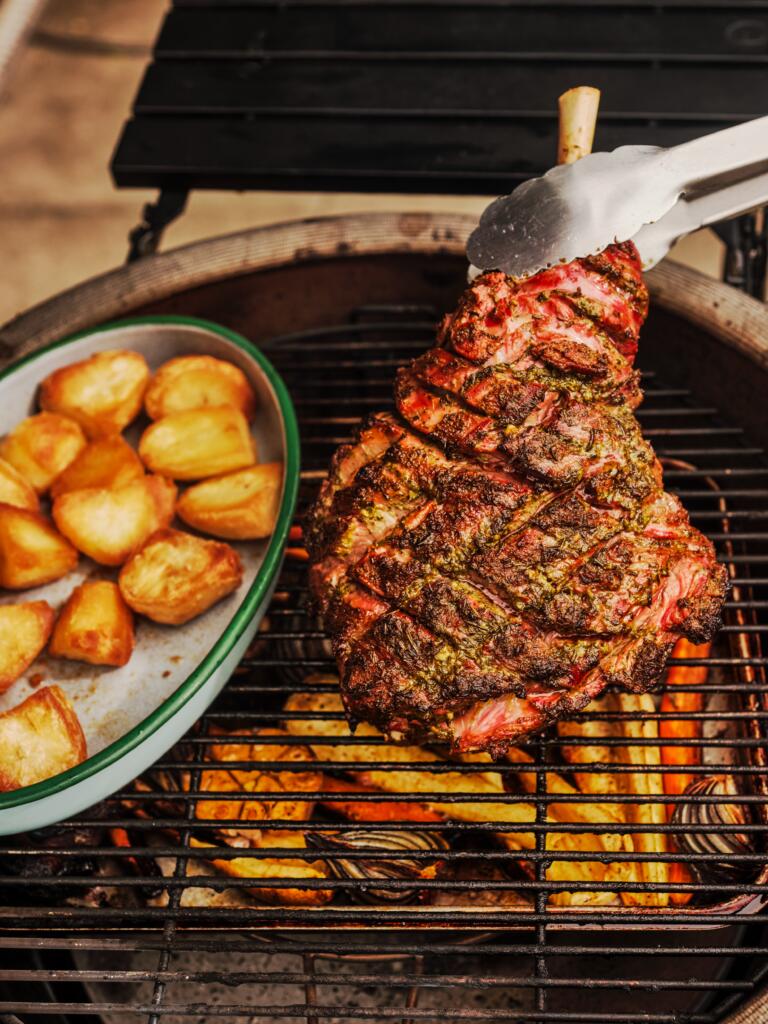
A smoky spin on the classic! This one’s straight from the heart and the barbecue. A golden, herb-crusted leg of lamb slow-roasted over coals, soaking the tray of root veg below in its glorious drippings, all rounded off with puffed-up Yorkshire puddings that rise to the occasion every time.
Serves: 6-8 people
Prep Time: 30 minutes, plus 2 hours or overnight resting and marinating (optional)
Cook Time: 2 -2 ½ hours
Ingredients:
- 5–6 sprigs of fresh rosemary
- 5–6 sprigs of fresh mint
- 4 garlic cloves
- Zest and juice of 1 lemon
- 60ml (2½fl oz) olive oil
- 1 tbsp Maldon Original Sea Salt Flakes
- ½ tbsp freshly ground black pepper
- 1 tsp red wine vinegar or a pinch of smoked paprika (optional)
- 1 whole leg of lamb (approx. 2.2kg/5lb), bone in
- FOR THE ROAST VEG
- 4 carrots, peeled and halved lengthways
- 3 parsnips, peeled and halved lengthways
- 2 red onions, cut into quarters
- Beef dripping or neutral oil
- 4 large potatoes, peeled and halved
- FOR THE YORKSHIRE PUDDINGS
- 4 eggs
- 200ml (7fl oz) whole milk
- 200g (7oz) plain flour
- Pinch of Maldon Original Sea Salt
- Beef dripping, tallow or oil for muffin tin
Method:
Prep:
- Blitz the rosemary, mint, garlic, lemon zest and juice, olive oil, salt
(or anchovies), pepper and your optional extra into a thick paste. Spoon off a couple of tablespoons to use on the veg later. - Score the skin of the lamb in a crisscross pattern to help the rub sink in. Slather the lamb all over with the herb mix, getting right into the cuts. Let it sit for at least 30 minutes at room temperature – or stash it in the fridge for a few hours to deepen the flavour.
- To make the Yorkshire pudding batter, whisk together the eggs and milk, then sift in the flour and salt. Mix to a smooth batter, then rest in the fridge for an hour or overnight.
- Fire up the barbecue for indirect cooking at around 200°C (400°F).
Grill:
- Pop all the veg, except the potatoes, into a tray, toss with the reserved herb rub and a good glug of dripping or oil, then position the lamb directly above them on the grill grates. As the lamb roasts, it’ll baste the veg with its juices.
- Cook until the lamb hits 60°C (140°F) internal temperature for medium (about 1½–2 hours). Once done, take it off the grill and tent it loosely with foil for at least 20 minutes, to rest and reabsorb its juices.
- While the lamb is resting, crank your barbecue or oven to 250°C (475°F).
- Preheat a muffin tin with fat until smoking hot, then carefully pour in the batter. Bake for 25–30 minutes until golden and puffed – no peeking!
- Boil the potatoes for 6 minutes, then drain and let them steam-dry. Toss into hot oil or dripping and roast alongside the lamb or separately until crisp and golden brown.
Serve:
- Carve thick slices of lamb, stack with golden roasties and caramelised veg, then top with a giant Yorkshire. Drizzle over a proper gravy or go fancy with a minty jus.
Top Tip:
- Add grated Cheddar or a spoonful of English mustard to the Yorkshire batter for
extra flavour.
Bring the Flavours Home
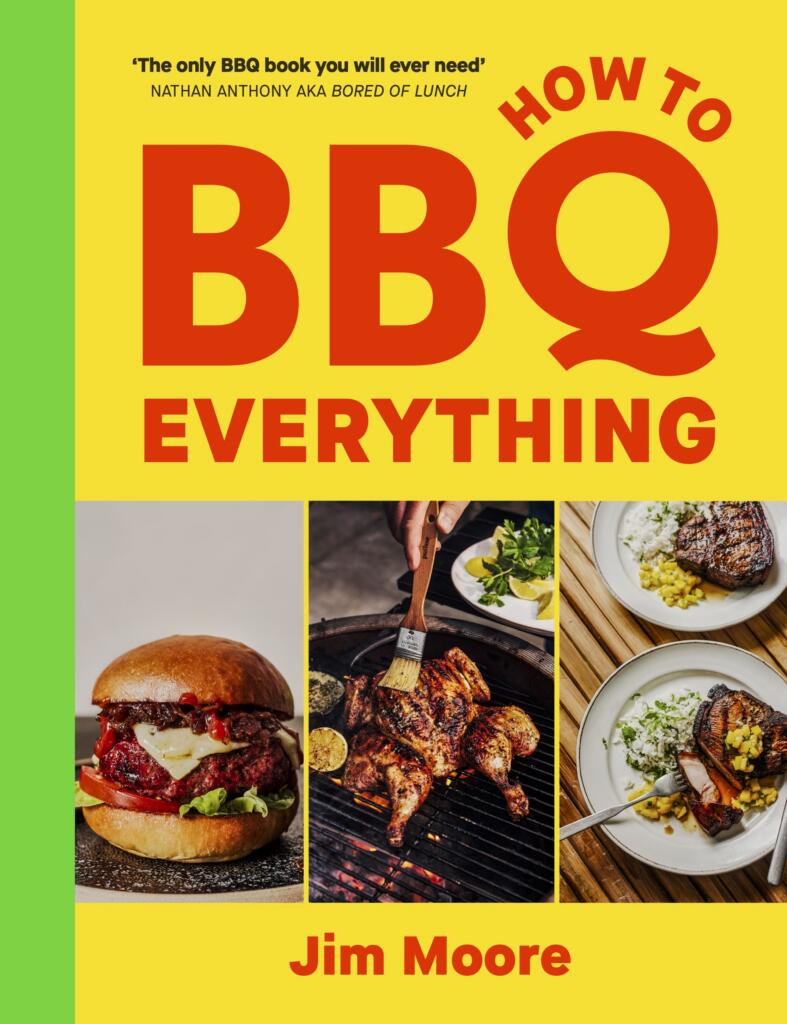
Ready to make the most of BBQs? Grab your copy of How to BBQ Everything and discover why it’s earned a place on every outdoor cook’s bookshelf. Don’t forget to stock up on Maldon Salt to bring Jim Moore’s flame-fired flavours to life in your own garden. We’d love to see what you’re cooking, so tag us in your creations on social media using #MaldonSalt for a chance to inspire fellow home cooks.
