



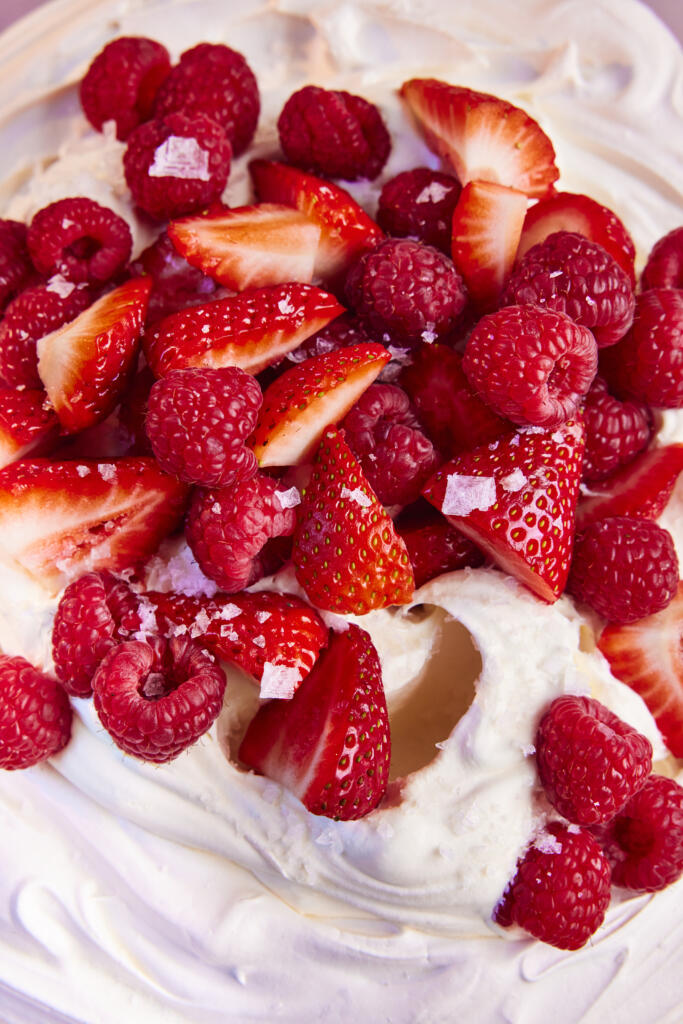
There’s nothing quite like a summer pavlova to crown a sun-drenched afternoon – crisp on the outside, marshmallow-soft within, and generously topped with clouds of whipped cream and a riot of fresh berries. This fruit pavlova, kissed with vanilla extract and finished with a delicate sprinkle of Maldon Sea Salt flakes, bring together the finest elements of warm-weather indulgence.
How To Make Summer Fruits Pavlova

To make this summer pavlova truly shine, preheat the oven and prepare your baking trays with baking parchment. After shaping the meringue into a generous nest, reduce the temperature once it goes in – the secret to that perfect balance of crisp shell and soft centre. Resist the urge to peek; leave the oven door closed as it baked and cools completely inside. Once cooled, top with cream whipped to soft peaks. You can also add a touch of icing sugar for extra sweetness. Pile on fresh summer berries – strawberries, raspberries and blueberries – crowning it all with a final flourish of Maldon Sea Salt flake. Why add salt to a pavlova? The salt enhances the sweetness of the cream and fruit, elevating this classic dessert into something both elegant and unforgettable in flavour.
Step 1 – Prepare the Oven and Baking Sheet
Preheat the oven to 130°C fan. Line a large baking sheet with parchment paper.
Step 2 –Whisk the Egg Whites
Using a stand mixer, whisk the egg whites on medium-high speed until they form soft peaks.
Step 3 – Add Caster Sugar Slowly
Lower the mixer speed. Add the caster sugar, one spoonful at a time, allowing a little time between additions for the sugar to dissolve.
Step 4 – Whip to Stiff Peaks
Once all the sugar is added, increase the speed to medium. Whisk for at least 10 minutes until the meringue is thick, glossy, and forms stiff peaks. Check by rubbing a little between your fingers—if it feels gritty, keep whisking.
Step 5 – Add Cornflour and Vinegar
Mix the cornflour and white wine vinegar in a small bowl. Add a dollop of meringue, mix well, then fold this back into the main meringue mixture.
Step 6 – Shape the Meringue
Spoon the meringue onto the lined baking sheet and shape into a round about 25cm in diameter, with a shallower middle and taller edges.
Step 7 – Bake
Bake for 10 minutes at 130°C fan, then reduce the oven to 100°C fan and bake for a further 80 minutes. Turn off the oven and allow the pavlova to cool inside for at least 2 hours or longer.
Step 8 – Whip the Cream
Just before serving, whisk the double cream and vanilla extract to soft peaks.
Step 9 – Assemble and Serve
Fill the pavlova with whipped cream, top with fresh summer berries, and finish with a pinch of Maldon Sea Salt.
Pairing Suggestions
- Sparkling Wine or Champagne – A dry sparkling wine, such as Brut Champagne or Prosecco, compliments the sweetness of the summer fruits pavlova and cuts through the richness of the fresh whipped cream.
- Elderflower Cordial or Iced Tea – For a non-alcoholic options, try serving the pavlova with chilled elderflower cordial or a lightly sweetened iced tea with lemon and mint.
- Mint or Basil Garnish – Fresh mint or thinly sliced basil leaves add a refreshing herbal note and a beautiful pop of colour against the red berries.
- Stone Fruits – Depending on the season, add sliced peached, nectarines, or apricots to the berry mix for added depth and juiciness.
- Flavoured Cream – Try infusing the fresh whipped cream with a hint of rosewater or orange blossom for a delicate floral note.
Serving Suggestions
- Serve on a Cake Stand – Elevate the pavlova on a wide cake stand or rustic wooden board for a centre-piece worthy display at a dinner party.
- Individual Pavlovas – For more formal gatherings, such as weddings or anniversary dinners, make mini pavlovas and serve individually, topped with fresh cream and a curated mix of berries.
- Whipped-to-Order Cream – To maintain the perfect fluffy texture, whip the cream just before serving and dollop generously.
Storing and Reheating Your Pavlova
With the right storage, your summer fruits pavlova can remain light, crisp and celebration-ready for your party – even a day or two after baking! Here is how…
Meringue Base
- Cool completely – Always allow the pavlova to cool completely in the oven with the door slightly ajar to prevent cracks caused by sudden temperature changes.
- Airtight storage – Once cool, store the meringue base in an airtight container at room temperature. Keep it in a cool, dry place – not the fridge! This will add moisture to the meringue and cause sogginess, you want the base to be dry and crisp. For best texture, use the meringue base within 1-2 days of baking.
- Drying out soft meringue – If your unassembled pavlova base has gone slightly soft due to humidity, you can ‘re-crisp’ it by placing in a preheated oven at 120°C for 15-20 minutes, then turning the oven off and letting it cool completely inside with the door adjar.
Assembled Pavlova
- Refrigerate – If your pavlova is already topped with cream and fruit, cover it loosely with plastic wrap or a cake dome and store in the fridge. It’s best eaten within 6-8 hours to preserve the crispness of the shell. Please note, once you have topped your meringue with cream and fruit, the meringue will begin to soften, becoming more marshmallowy in texture.
- Reheating – Do not reheat a pavlova that has already been topped with cream and fruit – it will collapse and become mushy!
Pro Tips When Making Pavlova
- Use room temperature egg whites – You should always use room temperature egg whites when making a pavlova (or meringue) because they whip up faster and create a greater volume compared to cold egg whites, which are harder to whip up and don’t achieve the same level of fluffiness. Using room temperature egg whites will make the pavlova more staple and airy in texture.
- Don’t rush adding sugar – Make sure the egg whites have been whisked to soft peaks before you add in your sugar. If you add in the sugar to soon and quickly, you won’t get an airy foam structure that you need for a thick and stable meringue.
- Fully cool the meringue in the oven – Cooling the meringue in the oven after baking helps it to dry out evenly, leading to a crispier outer shell and softer, mashmallowy centre. You need to fully cool down the meringue in the oven to prevent it from cracking and ensure the structure is firm enough to hold the fresh whipped cream topping and medley of fruits.
- Assemble just before serving – Assembling a pavlova before serving ensures the meringue remains crisp, the cream doesn’t become soggy, and the fruit is fresh. Moisture from the fresh whipped cream and berries can soften the meringue over time, create a soggy, unpleasant texture.
- Separate components – If making ahead, keep the meringue base, whipped cream, and fruit separate until just before serving.
- Avoid moisture – Always use dry utensils and containers when handling meringue to preserve it’s crisp texture.
How long do pavlovas last?
Once assembled with fresh whipped cream and fruit, pavlovas can be eaten within 1-2 days. When storing your pavlova, find somewhere that has no moisture and humidity. Do not store in the refrigerator, as this can cause the meringue to absorb moisture and become very soggy!
How do you stop a pavlova from cracking?
To prevent your pavlova from cracking, bake it at a low and consistent temperature, allowing it to cool slowly in the oven. This slow cooling process helps prevent the outer shell from hardening too quickly, which can cause cracks and an unstable structure.
Is pavlova gluten free?
Yes, a pavlova is naturally gluten-free! The core ingredients are egg whites and sugar, which are both gluten-free.
Can you freeze pavlova?
You can freeze the meringue shell of a pavlova by wrapping it tightly in plastic wrap or in an airtight container. This will last for a bout 1 month in the freezer. Although you could also freeze an assembled pavlova (topped with cream and fruits), the filling and decorations will become very soggy in texture and lose it’s delicious appearance.
When defrosting a pavlova, it’s recommended to thaw at room temperature for 5-7 hours, or in the fridge for 11-12 hours. Once defrosted, eat as soon as possible.
Why has my pavlova sunk?
If your pavlova has sunk or become flat, it is possible you have overbeating the egg whites, causing them to no longer hold air and will deflate during baking. Additionally, if your pavlova doesn’t reach 80°C , the marshmallow centre won’t fully be cooked and will collapse. Thirdly, undissolved sugar can attract moisture, making the meringue weep and potential to collapse. To avoid this, make sure the sugar is fully dissolved by rubbing a portion of the meringue mixture between your fingers; if you can feel any sugar granules, continue whisking!
Can you cook pavlova in the air fryer?
Yes, you can make pavlova in an air fryer. The air fryer method can significantly reduce the cooking time.
- Heat the air fryer to 120°C. Line the air-fryer basket with baking parchment.
- Make your meringue mix, which is made up of egg whites, sugar, cornflour, vinegar and vanilla extract.
- Spoon out the meringue mixture onto the parchment and create a mount of meringue with a dip in the centre to hold the filling later.
- Bake for 20 minutes. Reduce temperature to around 100°C. Bake for a further 1 hour, 15 minutes until the meringue is crisp on the outside. Turn off the air fryer, leaving the pavlova inside to cool completely.
- Carefully lift out the meringue and put on a platter or plate.
- Before serving, top with fresh whipped cream and fruit and a pinch of Maldon Sea Salt flakes.
Can you make pavlova without sugar?
Yes, you can make pavlova without sugar by using sugar alternatives such as erythritol or monk fruit.
- Erythritol is a type of sugar alcohol, a naturally occurring sweetener found in some fruits and fermented foods. It’s a low-calorie sweetener and sugar substitute, around 70% as sweet as sugar.
- Monk Fruit is a naturally occurring sweetener with a more intense sweetness than sugar. It’s often combined with erythritol for better results.
Tried this pavlova recipe? Let us know in the comments below! For more dessert recipes, visit our full collection.