These ridiculously easy and very tasty skewers take just a couple of minutes to cook, so plan on making them as part of a bigger spread to get the most out of your good fuel. They make a lovely little nibble while you’re cooking your main course. It can be a little tricky to source, but you could also make these using morcilla, a delicious Spanish black pudding, if you can find some.
Here is how to make the skewers…
Fire up the barbecue ready for hot direct grilling but, as usual, leaving a fire-free zone on your grill so you can slide the skewers further from the heat. Use a small sharp knife to separate the orangey-pink coral from the scallop and drop both into a bowl. Add the chorizo, sage, garlic and olive oil. Season generously with salt and pepper and stir well to coat.
Starting and ending with chorizo (the more solid texture of which will hold everything else in place), alternately thread the can chill in the fridge for 30–60 minutes, if you like. When you are ready to cook, rest the skewers directly over the fire, either hung between two bricks, or onto hot clean grill bars. Grill for just a minute or so on each side until lightly caramelized. The fat from the chorizo will cause the fire to flare a little so if it’s all getting a bit much, slide a little further away from the fire.
Squeeze over some lemon juice and tuck in while sizzling hot.
Purchase ‘SCORCHED’ by Genevieve Taylor
Live-fire expert Genevieve Taylor covers everything you’ll ever need to know about buying and cooking all kinds of fish in her third cookbook: Scorched. From cooking whole dish, fillets, shellfish to burgers and skewers, this is the ultimate guide to barbecuing fish!
You can purchase your very own copy here, where you can become inspired with over 85 recipes and gain insight on how to set up your barbecue, sourcing your fuel and lighting your fire.
Much as Genevieve Taylor loves fish and meat proteins, she adores pulses and try to eat them several times a week. Cheap and cheerful, a bowlful of beans is an excellent way of making your fish go a little further. Fresh oregano is one of her favourite herbs, giving a slightly floral note to this pesto-style dressing.
Here is how to make the recipe
As is usual, a few hours before you want to cook, lay the mackerel fillets skin-side up on a rack over a tray and slide into the fridge to dry the skin and minimize sticking.
For the pesto, pour a good 4 tablespoons of the olive oil into a bowl and stir through the chopped oregano and garlic, the lemon zest and juice. Season to taste with Maldon Sea Salt and pepper and a good pinch of sugar. Spoon out a tablespoon or so into a separate small bowl ready to baste the fish, then set both bowls a side.
When you are ready to cook, fire up the barbecue ready for direct grilling but leaving an area coal-free so you have room to manoeuvre if things are getting hot. Set a grill tray or cage over the fire to heat up.
Once the fire has a little heat in it, start on the beans. Set a flame proof pan over the fire (it’s fine to rest the pan on the grill tray so you can heat two things at once!) and pour in the olive oil. Add the tomatoes and garlic and fry for a few minutes, just until the tomatoes are softening. Add the beans and cinnamon, then season to taste with the sugar and salt and pepper. Bring up to a simmer and cook for a few minutes. Take the pan off the heat and cover with a lid or foil to keep warm – they are more flavourful eaten warm rather than hot, so don’t worry too much about them cooling a little.
Remove the mackerel from the fridge and drizzle the remaining tablespoon of oil all over the skin side, spreading it out into a thin, even layer. Sprinkle generously with Maldon Sea Salt flakes and take to the grill along with the smaller bowl of pesto and a silicone brush.
Lay the fillets, skin-side down, on the hot grill tray and rest a lightly oiled weight on top to press the fillets flat, keeping the skin in maximum contact with the hot surface. After a couple of minutes, the weight will have done its job so remove it, then brush the oregano pesto over the flesh side of the fish. Cook for another couple of minutes until the skin is crisp. Use a fish slice to tease the fillets from the grill tray and rest on top of the beans. Drizzle over the rest of the pesto and tuck in.
Purchase ‘SCORCHED’ by Genevieve Taylor
Live-fire expert Genevieve Taylor covers everything you’ll ever need to know about buying and cooking all kinds of fish in her third cookbook: Scorched. From cooking whole dish, fillets, shellfish to burgers and skewers, this is the ultimate guide to barbecuing fish!
You can purchase your very own copy here, where you can become inspired with over 85 recipes and gain insight on how to set up your barbecue, sourcing your fuel and lighting your fire.
Start by putting a large pan of salted water on the heat and when it comes up to boil, add the bucatini. Cook this following the packet instructions for al dente.
While the pasta is cooking, put a large sauté pan on the heat and add the butter and oil. Allow them to melt and then add the red chilli, garlic, and fennel seeds. Let the spices sizzle for a couple of minutes until smelling fragrant, then add the crab meat. Stir the spices through the crab and heat through.
Next add the asparagus tips along with a splash of the pasta water – this will help them steam and cook. After a couple of minutes turn the heat off and check the pasta. It should be perfectly al dente. Use tongs to lift and transfer the bucatini from the water to the pan with the crab. Once all the pasta is added, ladle in a little more pasta water and toss this through – this will help the pasta to create a sauce and allow all the ingredients to cling to the bucatini.
When you are happy with consistency, finally add the lemon zest, followed by the juice, and chopped chervil. Toss this through and then add the Maldon Garlic Sea Salt and some cracked black pepper to taste. If the pasta looks a little dry, just add another splash of the pasta water.
Then serve the bucatini piled in bowls, with a final drizzle of good quality olive oil.
Serve and enjoy!
This recipe was created by Nomadic Dinners, who run immersive woodland feasts as an alternative way of dining. Nomadic welcome you all to dine amongst ancient oak trees, starlit skies and a roaming wildfire in a hidden woodland setting unlike any other. It’s an opportunity to explore a connection with the world around us; where new friendships are foraged around a shared table.
Their ethos remains the same: using food and nature as a catalyst to bring people close together.
You can book a seat for one of their many Woodland Feasts today! Join in to experience a restaurant without walls and no boundaries, where food is a universal language and the story of their Woodland is shown through the dishes that they serve you.
Smoky Cedar Planked Trout Recipe
Cedar planked trout is one of Nomadic’s favourite springtime recipes to grill outdoors at Nomadic Dinners and is a real showstopper if you are looking to up your barbeque game to the next level.
This particular version has a springtime twist using bright green fresh nettle tips to layer over the cedar that combined with Maldon Smoked Sea Salt create a deep earthy flavour and the unmistakable aroma of the great outdoors.
Soak your cedar plank overnight ensuring it is fully immersed. If you can’t be bothered or forget, give it a good soak an hour before. This stops it catching fire and creates more smoke for the fish when it cooks
Blanch nettles in water to get rid of the stingers and layer on top of the board. Layer your trout over the top. Add sliced lemon. Nail in down end to end so it doesn’t flop over. Massage with olive oil, add Maldon Smoked Sea Salt flakes.
Place the cedar plank on the BBQ at a 45 degree angle set far back from the flame so it cooks slowly and wait for the translucent skin to gradually change colour to a beautiful rose colour. Remember to cook to temperature not to time. It will become apparent when the trout is ready (don’t worry about burnt ends, these are delicious).
Nomadic serves this trout dish with a simple foragers salad of hairy bittercress, sorrel, chicory and young spinach leaves, freshly grated horseradish and bonfire potatoes in wild garlic but this fish is so versatile it can pair with almost anything.
Lobster, prawns and crayfish are often considered delicacies for a special occasion, so this BBQ recipe with smoky siracha mayonnaise and herbed butter is perfect for a showstopping Christmas feast.
Begin by mixing together the herb butter for your seafood. In a small bowl mix together the softened butter with Maldon Garlic Sea Salt, cracked black pepper, the chopped parsley and coriander. Set aside.
The perfect way to cook your seafood is on a hot BBQ, however if you don’t have one then a griddle pan will work too. Make sure it has reached a medium to high temperate, and start by grilling your lobster halves. Cook flesh side down on the griddle until the meat has turned pink and has some lovely charring on it. The shells will turn orangey pink too, and this is when you know your lobster are cooked. Do the same with the king prawns and crayfish, although these will take less time to cook.
While your seafood is cooking, it is also nice to griddle some lemon to serve alongside. Simply add your lemon halves cut side down onto the grill and allow them to cook and char for 3 minutes.
Once your seafood is all cooked, pile onto a large serving platter and using a pastry brush, brush all across the flesh with your delicious herb butter – letting it melt in. Place your griddled lemon onto the serving platter too.
In a small bowl mix together the mayonnaise and siracha. Serve this alongside the platter of BBQ seafood and allow everyone to tuck in!
This delicious starter can be ready to eat in a matter of minutes. All you need it some good quality king prawns, olive oil, garlic cloves, a handful of spices and of course a generous pinch of Maldon Chilli Sea Salt to really elevate that fiery kick!
To make this dish as a main, try serving with a handful of asparagus, or charred sweetcorn to pair the chilli sea salt flakes with the natural smokiness from the cooked vegetables.
Here is how to make Spicy Prawns with Garlic and Chilli Salt…
Heat the oil up in a heavy bottomed frying pan. When the oil is nice and hot, add the prawns, sliced garlic, and chilli. Fry them until the prawns are pink and slightly charred, and the garlic is golden – approximately 2-3 minutes.
Take them off the heat and stir the paprika and Maldon Chilli Sea Salt into the oily sauce, tossing to coat the prawns.
Serve the prawns immediately with some crusty bread for mopping up the juices.
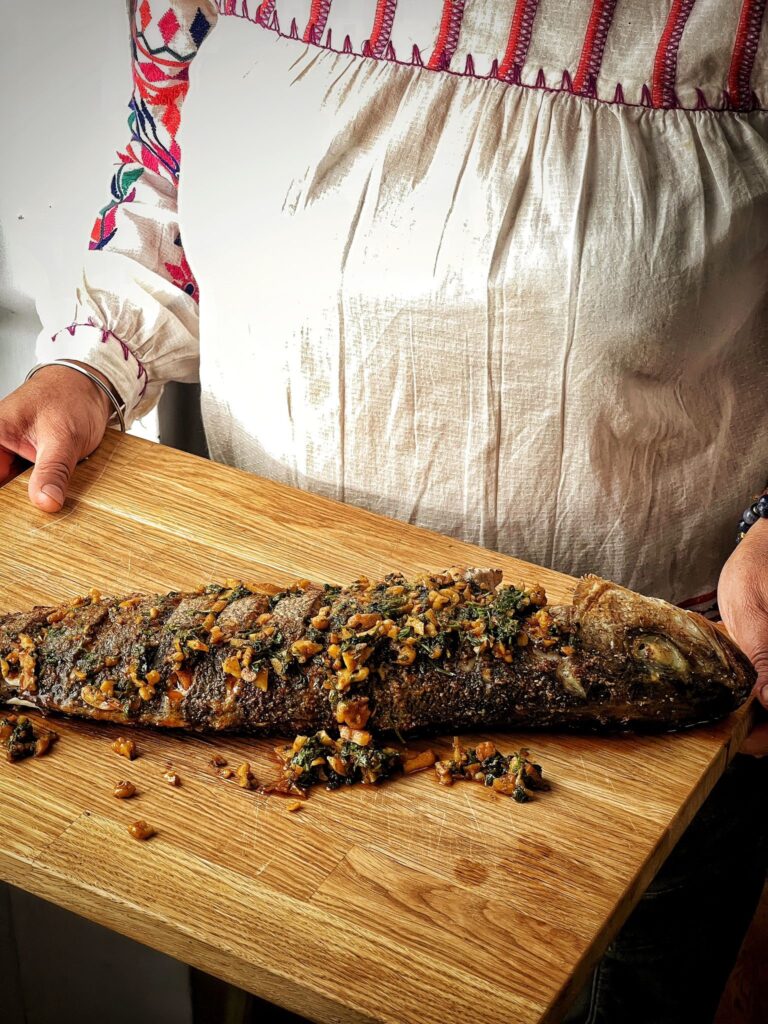
There is something very special about serving a whole fish at the table amongst friends and family, and this recipe will certainly not disappoint! The delicate flavour of sea bass is only elevated further through the spices that Romy infuses within the dish, where a handful of chopped walnuts is added to give an irresistible crunch to the succulent, flakiness of the cooked fish.
Why buy line-caught Cornish sea bass
Cornish sea bass is relatively low-fat fish with a great source of protein. When purchasing your sea bass for this recipe, make sure that it is line caught in local waters.
Line-caught sea bass is a sustainable, traditional fishing method of a simple hook and a line. This method of fishing has minimal environmental impact due to being small scale and not over-fishing., meaning there is no waste fishing. If small fish are caught, they are returned back to the water immediately.
The quality and taste of line-caught fish is of a much higher quality compared to fish farms. It is believed to have a fresh taste as they are not exposed to pollution and debris.
Photography by: Matt Inwood
Here is how to make Romy Gill’s Cornish sea bass recipe…
Chef Romy Gill has used her inspirations as a British/Indian chef and food/travel writer to create a gorgeous sea bass dish, paired with a spice blend that incorporates Himalayan Pink Salt, carefully selected by Maldon Salt’s master salt merchants. Along with the Himalayan salt, Romy infuses the spices of cumin, fennel, coriander seeds and black peppercorns to give a warmth and smokiness to the fish.
How to make the spice blend
To make the spice blend, add all of the spices together with Himalayan Pink Salt, Selected by Maldon, and blend for a few seconds until well combined.
Make 6-7 good slits in the fish in order to rub the spice blend over the surface and into the flesh of the fish.
Marinate the fish both sides with the spice blend, setting aside 1 teaspoon for later.
Rub well, and then drizzle over olive oil and the juice of one lemon.
Once the fish is evenly covered, leave in the fridge for one hour before cooking.
Cooking and dressing for the sea bass
To cook the fish, pre-heat the oven to 200C and cook the fish for 15-20 minutes.
While the fish is cooking, make a dressing. Chop six large cloves of garlic, then 20g of walnuts and finally a large handful of coriander.
Heat a saucepan and add 2 tsp olive oil and then the chopped garlic. Add 1 tsp ghee, cook for a minute, then add the chopped walnuts, stir some more and then add the chopped coriander. Add 2 tsp of paprika and the reserved tsp of your spice blend and combine everything together well.
Finally, add 1 tsp of olive oil and take off the heat.
When the fish is cooked, remove from the oven and place onto plate or board. Immediately spoon the dressing all over the top of the fish and serve straight away and enjoy!
What can you serve with sea bass?
Romy created a dish of roasted stem broccoli, served on a bed of creamy feta that pairs perfectly well with sea bass. The tasty, green crunch of the stem broccoli compliments the succulent, light flakiness of the fish that makes your taste buds sing! When served with feta cheese, it will a subtle burst of creaminess and silkiness as you take your first bite.
If you are looking for a lighter option, you can serve your cooked sea bass along with a simple cucumber salad. Easy, refreshing and bursting with flavour, adding cucumber to the dish will actually help elevate the flavours of the sea bass, making a deliciously balanced dinner.
Romy Gill and Maldon Salt
If you enjoy Romy’s culinary creations as much as we do, then get ready to ‘feast’ your eyes on other delicious recipes that Romy has made using Maldon Salt. From sensational Moong Bean Dal’s to a showstopping Orange and Cocoa Cake, the options are endless!
Plus, we also had the opportunity to do a Q&A with Romy about her heritage and her top food recommendations when celebrating Diwali. Pour yourself a cup of tea and get seated for a wonderful read.
This is the dish to make if you want to really impress your guests this evening. Paired with fresh cucumber, pickle and dill, your taste buds will be singing as you serve up this dish.
Do you need ideas for a main course? Try Lisa’s delicious Harissa Spiced Sticky Lamb Belly, which is paired with a creamy whipped fetta and topped with pockets of pomegranate and almond flakes.
Salt cure:
Begin making the salt cure by blending all the ingredients until combined. Set aside.
Warm cured salmon:
Next, begin making the warm cured salmon.
Evenly cover the salmon loin with the salt cure, then wrap in clingfilm.
Leave to rest for about 40 minutes to let it cure.
Remove from the clingfilm and wash off the salt cure from the salmon, patting dry with a jay cloth.
Re-roll the salmon in clingfilm tight.
Cook on 38°c steam for 30 minutes.
Chill immediately, then cut in to 4 even portions.
To reheat, place back in the steamer or drop into a bath of olive oil and lemon at 52°c for 5/6 minutes.
Remove and plate on a dish.
Champagne sauce:
To make the champagne sauce, sweat the shallots in the butter for 3-4 minutes until soft, no colour.
Add the champagne and reduce until it forms a jam-like consistency. The liquid should start to coat the shallots.
Once reduce, add the crème fraiche, butter and fish stock.
Bring to the boil. Once boiled, place into a blender and blend until smooth. Pass through a fine sieve and season with Maldon Salt.
Finish with a splash of champagne to serve.
Dill Oil:
Chop through the dill with a knife before putting in a thermomixer with the sunflower oil and spinach. Blend at speed 6 for 6 minutes at 70c.
Hang in a tammy cloth over a bowl to drip clear.
Once finished, pour into a small bowl. Add into the diced cucumber and gherkins to to the oil. Mix together gently and season with a little pinch of Maldon Salt.
To plate:
Put a good spoon full of the dill oil mixture into the centre of the bowl.
Place the warm salmon on top.
Foam and spoon around with the hot Champagne sauce.
Garnish with salmon caviar and dill.
Looking for a delicious and super easy recipe to make? Our bruschetta recipe is the perfect appetizer, paired with juicy tomatoes and fresh, red onion for a burst of summertime flavour! We also add a few anchovy fillets on top of the veg to give a rich, umami flavour to the dish.
What is bruschetta?
Did you know ‘bruschetta’ actually refers to the bread! The word is derived from the verb ‘bruscare’ which means to char or toast. The word was invented to name stale slices of bread which had been toasted and then smothered in olive oil, garlic and salt.
However, commonly today bruschetta is known as a classic Italian antipasto, comprising of bread that is toasted in the oven/grilled, rubbed with garlic and salt and then topped with tomatoes.
What do you eat with bruschetta?
We recommend pairing bruschetta with a delicious caprese salad…light and refreshing, it’s a match made in heaven! The use of fresh tomatoes, mozzarella and basil compliment the flavours and textures of the crunchy bruschetta.
If you’re looking to expand your selection of antipastos, try cooking our padron peppers along with your bruschetta – bold and hearty in flavour, the textures of both dishes compliment each other beautifully!
Here is how to make our Tomato, Red Onion and Anchovy Bruschetta…
Start by toasting your bread – we like to use a griddle pan for this as the charred edges add a lovely flavour, but using a toaster also works well.
When the toast is still warm, drizzle with a little oil and then use garlic clove cut in half and rub it all over the bread – this will infuse it and compliments the tomatoes.
In a small bowl, add the chopped mixed tomatoes and finely sliced red onion. Season this with the Maldon Salt and cracked black pepper, and add the 2 tbsp of olive oil. Toss this together.
Spoon the tomatoes onto your prepared toasts. You could finish it here with some basil however we like to add some anchovy fillets too.
Garnish with the basil leaves and serve while the toast is still a little warm.
Preheat the oven to 180C.
Start by making the crust for the salmon.
Place the Himalayan Pink Salt, Selected by Maldon, in a pestle and mortar and crush until it has a fine texture. Pour this into a bowl and add the fresh white breadcrumbs, parmesan, finely chopped pistachios, red chilli, chopped parsley, lemon zest and some cracked black pepper. Finally add the olive oil and mix until it forms a wet paste – add a little more olive oil if it looks dry.
Place one of the salmon fillets on a baking tray lined with baking paper, skin side down. Layer the lemon slices and the dill and parsley sprigs across the top of the flesh. Next place the second fish fillet on top of this, again skin side down – sandwiching the lemon and herbs in between.
Spoon the crust mixture on the top piece of fish and press it onto the top of the flesh, it should stick nicely.
Place the tray into the preheated oven and bake for 20 minutes, the salmon should be cooked through and the crust lovely and golden. If your fillets are thicker, you may need to give this an extra 5 minutes.
Once cooked, serve your stuffed salmon as the centrepiece of your dinner tables along with your favourite sides – we like to do this with herby new potatoes and seasonal greens.