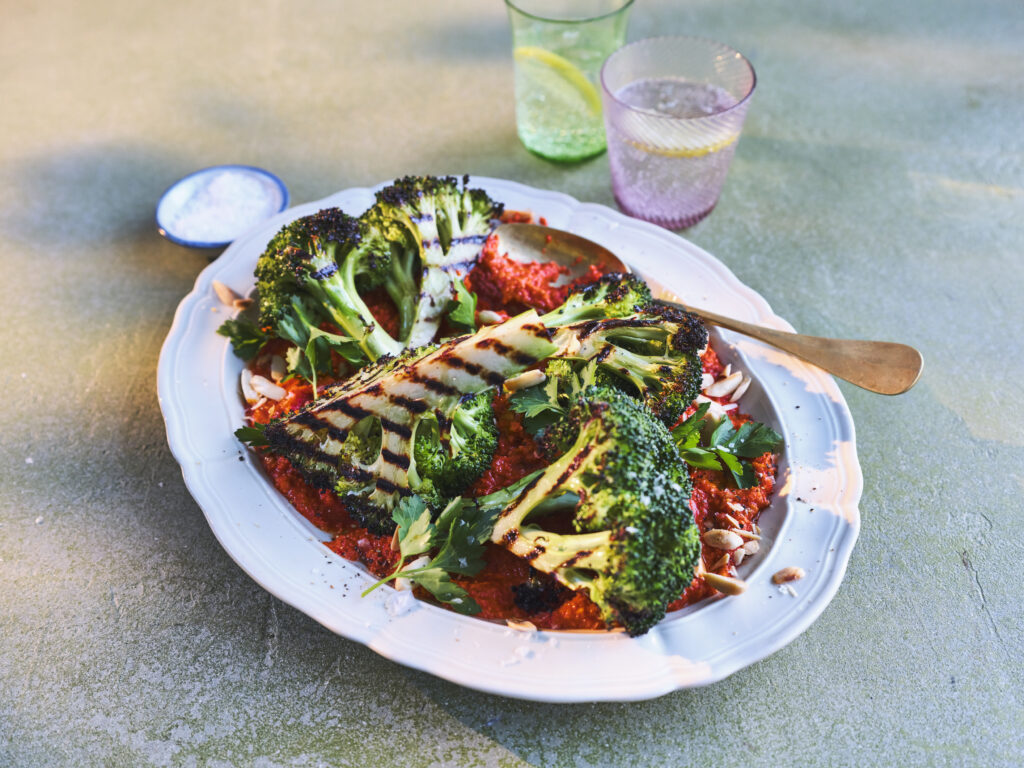
Lightly griddled broccoli wedges with a delicious Romesco sauce is the perfect side dish for your springtime banquet. The combination of sweet and slightly acidic with the smoky red pepper Romesco sauce pairs beautifully with the charred broccoli, a flavour profile that will certainly impress your dinner guests.
Broccoli contains compounds that some people may consider bitter. However, gently griddling your broccoli will allow a delicious earthy, almost sweet taste to rise. It also brings out many nutrients, including a wide array of vitamins, minerals and fibre.
Image by <a href=”https://pixabay.com/users/catkin-127770/?utm_source=link-attribution&utm_medium=referral&utm_campaign=image&utm_content=482403″>Catkin</a> from <a href=”https://pixabay.com//?utm_source=link-attribution&utm_medium=referral&utm_campaign=image&utm_content=482403″>Pixabay</a>
What is Romesco sauce?
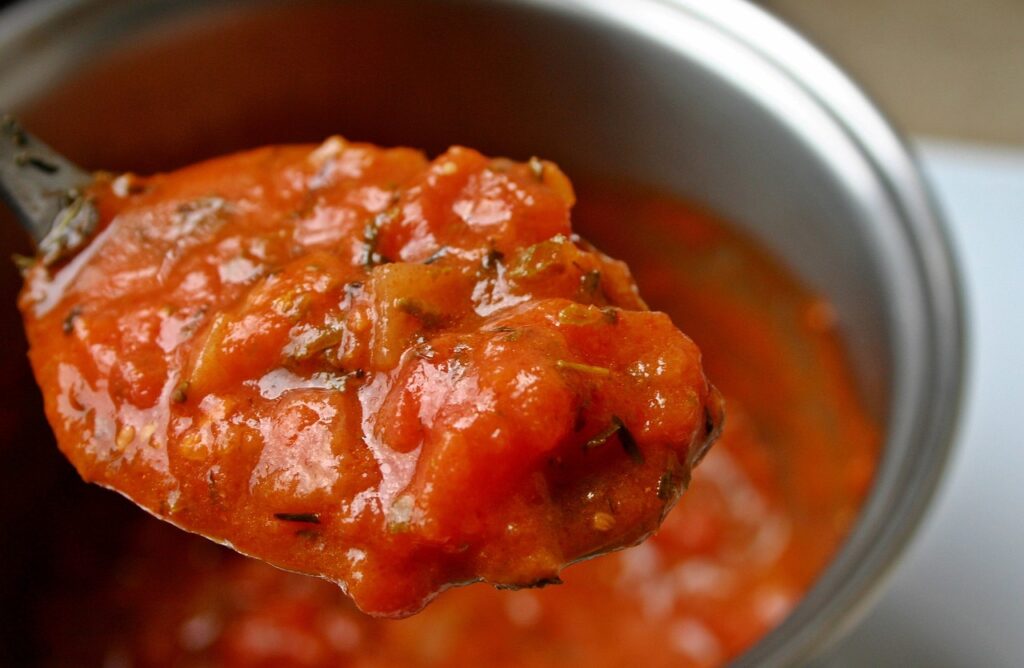
Romesco sauce is a rich Spanish sauce comprising of roasted red peppers, which are pureed and thickened with toasted almonds and sometimes pieces of bread.
The origin of the sauce dates back to the 18th century, where fishermen were believed to have made the sauce to eat with their rather bland meals, whilst catching their fish off the coast of Catalonia, Northwest Spain.
The taste of Romesco sauce is lightly sweet and tangy in flavour, with a delicious hint of garlic and smoky flavours and a touch of spice. As the sauce is a classic Mediterranean condiment, it’s the perfect accompaniment to fish, grilled vegetables and roasted chicken.
Is Romesco sauce served hot or cold?
Romesco sauce is very adaptable and can be served either hot or cold depending on the dish that you’re making.
Romesco sauce can freeze and last for up to 3 months in the freezer. We do not recommend storing the sauce longer than 3 months as the flavour can start to degrade and the colour becomes dull.
You can freeze Romesco sauce easily by using an ice cub tray:
Portion the sauce into the ice cube tray. You can use spoons to make it easier to pour into each ice cube square.
Wrap the ice cub tray with a layer of clingfilm to prevent spillages and also limit the chance of any odours in your freezer.
Put the tray in the freeze carefully, keeping it as flat as possible.
Once frozen solid, you can pop the cubes out of the ice cube tray into a freezer bag, making sure it is sealed up.
Label the bag with the contents and the date it was made, before placing it back in the freezer.
The best way to defrost Romesco sauce is by taking a cube out of the freezer and popping it into the dish, allowing it to thaw whilst the dish continues to cook.
Image by <a href=”https://pixabay.com/users/jeshoots-com-264599/?utm_source=link-attribution&utm_medium=referral&utm_campaign=image&utm_content=569070″>Jan Vašek</a> from <a href=”https://pixabay.com//?utm_source=link-attribution&utm_medium=referral&utm_campaign=image&utm_content=569070″>Pixabay</a>
How to make Romesco sauce?
Start by making the romesco sauce.
In a large frying pan, add the blanched almonds and toast them until they turn colour and start to char in places, turning them over so they evenly toast. Then tip them out the pan and allow to cool slightly.
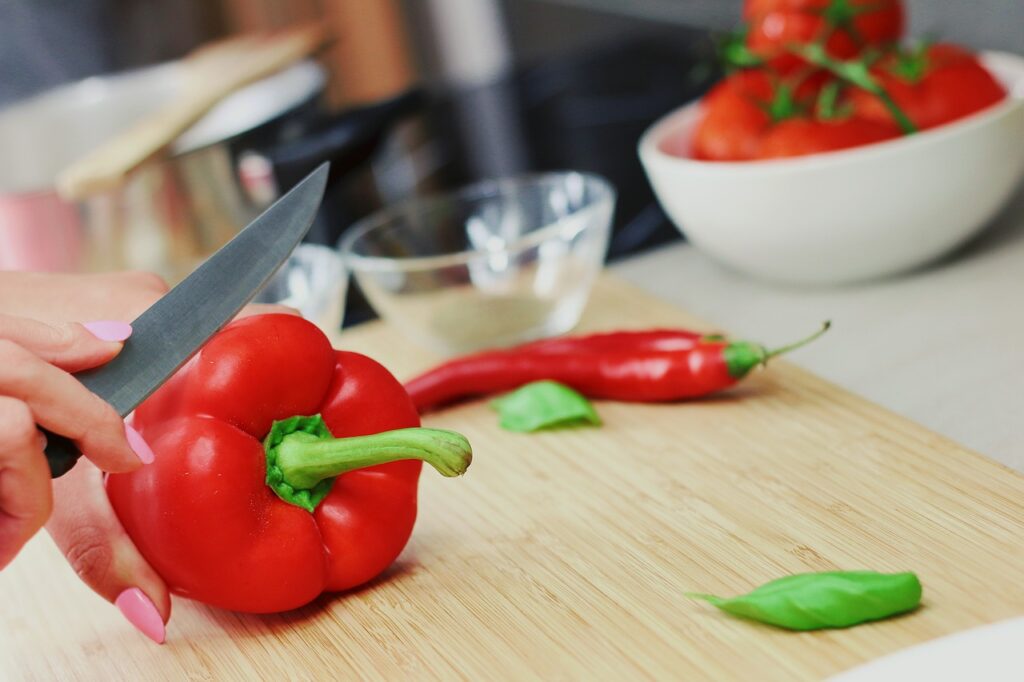
In a food processor add the roasted red peppers, toasted almonds, handful of parsley and the garlic cloves. Pulse this until everything has broken down to a chunky paste. Then add the sherry vinegar, lemon juice and olive oil and pulse again to your desired texture – you don’t want it to be completely smooth.
Tip the mixture from the food processor to a bowl and stir through the paprika and Aleppo pepper. Taste the sauce and then add some Maldon Sea Salt flakes and cracked black pepper.
How to make griddled broccoli?
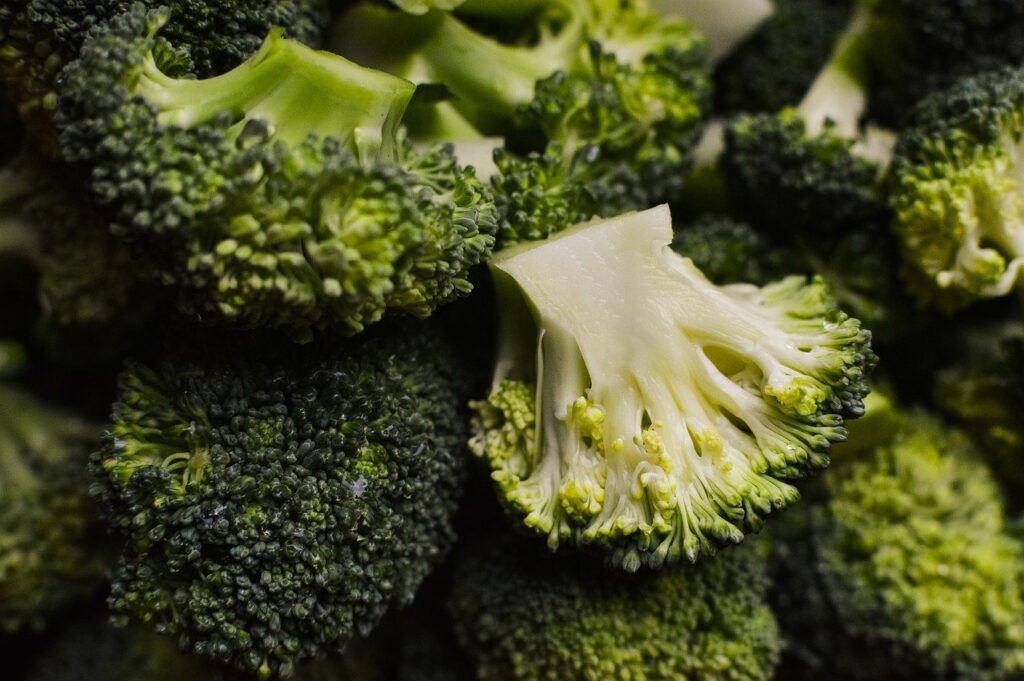
Prepare the broccoli. Heat a griddle pan onto a high heat. Slice the broccoli heads into wedges by cutting each one in half lengthways through the stalk, then cut each half again into quarters.
Rub each wedge with olive oil, and then place onto the griddle pan. Let each side cook for 5 minutes until prominently char lines appear on the stalk before turning and doing the other side. This can be done in batches; the broccoli will char but also steam as it cooks.
Image by <a href=”https://pixabay.com/users/zichrini-3417353/?utm_source=link-attribution&utm_medium=referral&utm_campaign=image&utm_content=3267634″>Hanna</a> from <a href=”https://pixabay.com//?utm_source=link-attribution&utm_medium=referral&utm_campaign=image&utm_content=3267634″>Pixabay</a>
Do you have to boil broccoli before frying?
You do not need to boil broccoli before frying in the pan if you implement a steaming method to it. This is where you trap hot air in the pan to help soften the broccoli. This allows the broccoli to be a little softer in texture when you bite into it, but still irresistibly crunchy.
You can blanch the florets before stir-frying to help soften the stems and stop the enzyme that leads to browning. We recommend adding a good pinch of Maldon Sea Salt flakes and a dash of olive oil to your blanching water to help the broccoli retain it’s crunchy texture and vibrant green colour.
How to serve griddled broccoli with Romesco sauce:
When you are ready to serve, spoon the romesco sauce across the base of a large serving platter.
Then arrange the charred broccoli wedges on top.
Finally scatter with some chopped smoked almonds, a drizzle of olive oil and a final sprinkle of Maldon Sea Salt flakes and Aleppo pepper.
Image by <a href=”https://pixabay.com/users/meszarcsekgergely-18097400/?utm_source=link-attribution&utm_medium=referral&utm_campaign=image&utm_content=7744338″>Meszárcsek Gergely</a> from <a href=”https://pixabay.com//?utm_source=link-attribution&utm_medium=referral&utm_campaign=image&utm_content=7744338″>Pixabay</a>
How long does it take to cook raw broccoli?
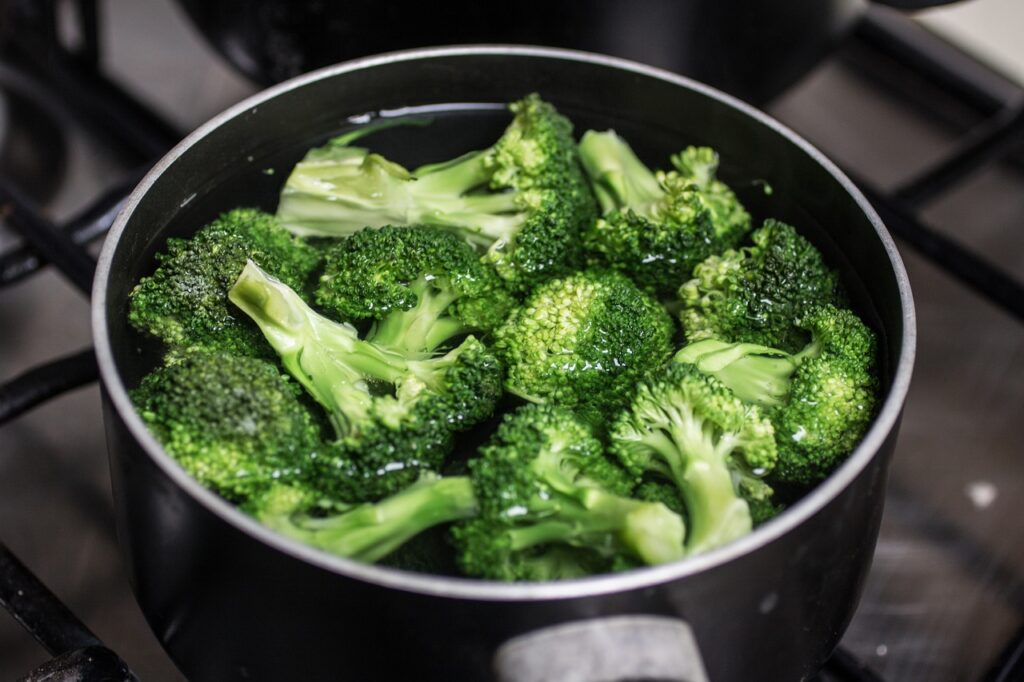
Broccoli can be easy to overcook, it should always retain it’s vivid bright green colour when cooked and should have a little ‘crunch‘ to it.
When you are boiling broccoli in a pan of boiling water, we recommend cooking the florets for 6-8 minutes.
If you aresteaming your broccoli, make sure to place a steamer over boiling water and cook for the same time, around 6-8 minutes.
You can stir-fry your broccoli for a delicious, crunchy texture. You need to separate into bite-sized florets, adding 1 tbsp of olive oil into the frying plan and adding the broccoli, cooking for around 4-5 minutes or until nice and tender.
When roasting broccoli, we recommend preheating your oven to 400 degrees F for 20 minutes to allow the vegetable to be perfectly roasted.
How long does broccoli keep in the fridge?
Fresh broccoli can last up to 3-5 days in the fridge when properly stored in an air-tight container. If it is cut-up broccoli, we recommend no more than 4 days stored in the fridge, otherwise the vegetable will start to decay in colour and texture and have a unpleasant odour.
If you are storing cooked broccoli in the fridge, make sure to store in a shallow, air-tight container or wrapped in foil. It can be stored for up to 3-5 days.
This recipe was created by Nomadic Dinners, who run immersive woodland feasts as an alternative way of dining. Nomadic welcome you all to dine amongst ancient oak trees, starlit skies and a roaming wildfire in a hidden woodland setting unlike any other. It’s an opportunity to explore a connection with the world around us; where new friendships are foraged around a shared table.
Their ethos remains the same: using food and nature as a catalyst to bring people close together.
You can book a seat for one of their many Woodland Feasts today! Join in to experience a restaurant without walls and no boundaries, where food is a universal language and the story of their Woodland is shown through the dishes that they serve you.
Smoky Cedar Planked Trout Recipe
Cedar planked trout is one of Nomadic’s favourite springtime recipes to grill outdoors at Nomadic Dinners and is a real showstopper if you are looking to up your barbeque game to the next level.
This particular version has a springtime twist using bright green fresh nettle tips to layer over the cedar that combined with Maldon Smoked Sea Salt create a deep earthy flavour and the unmistakable aroma of the great outdoors.
Soak your cedar plank overnight ensuring it is fully immersed. If you can’t be bothered or forget, give it a good soak an hour before. This stops it catching fire and creates more smoke for the fish when it cooks
Blanch nettles in water to get rid of the stingers and layer on top of the board. Layer your trout over the top. Add sliced lemon. Nail in down end to end so it doesn’t flop over. Massage with olive oil, add Maldon Smoked Sea Salt flakes.
Place the cedar plank on the BBQ at a 45 degree angle set far back from the flame so it cooks slowly and wait for the translucent skin to gradually change colour to a beautiful rose colour. Remember to cook to temperature not to time. It will become apparent when the trout is ready (don’t worry about burnt ends, these are delicious).
Nomadic serves this trout dish with a simple foragers salad of hairy bittercress, sorrel, chicory and young spinach leaves, freshly grated horseradish and bonfire potatoes in wild garlic but this fish is so versatile it can pair with almost anything.
Looking for something to cook this Christmas that doesn’t involve a turkey? We’ve made a delicious slow cooked beef brisket, paired with pomegranates to add delicious sweetness to the dish.
This flavour pairing of pomegranates with meat is very common in Persian cuisine, and has been for thousands of years, where the Persian culture tends to use pomegranates for both sauces and marinades for different meats. The tartness of the pomegranate fruit and molasses gives a delightful brightness to the rich brisket, adding depth as your take your first bite.
Pomegranate molasses can be hard to find at your local grocery, however Odysea has a beautifully sweet & tart Pomegranate Molasses, made from 100% concentrated pomegranate juice.
Why this recipe is perfect for Christmas
Our slow cooked pomegranate beef brisket is perfect for the festive season. This time of the year calls for rich, hearty dishes which is everything that the beef brisket holds. The juices of pomegranate molasses seeps throughout the dish, given a delightful, festive feel. Not only this, the slow cooking of the meat produces rich and beautifully tender results, making your guests want to go in for seconds.
Most importantly, this recipe is simple and effective for Christmas. Once you have you list, prepped and assembled everything into the casserole dish/pot, you simple let it cook away for 5 hours while you go about your business. This makes it IDEAL for such a busy time of the year. Once the time is done, you are greeted with a dish that delivers both in complex flavour, achieved with simplicity.
Here is how to make festive slow cooked pomegranate brisket
Take the meat out the fridge 30 mins before cooking.
Preheat the oven to 120C.
Place a large heavy bottomed casserole pan on the hob and add the olive oil. When it has heated up, add the brisket, and sear it on all sides for approximately 10 minutes – you want the meat well browned as this adds lots of flavour.
Once the meat is nicely browned, remove from the pan and set aside on a plate. Add the onions into the pan with all the meat juices, and fry them until they are soft and starting to caramelize. Then add the garlic cloves, Maldon sea salt flakes and the spices and fry for another few minutes until smelling fragrant.
Next add the apple cider vinegar and allow it to bubble and cook off before adding the soft brown sugar and the stock. Bring the liquid up to a simmer and then add the brisket back to the pot. Place a lid on the casserole and put it into the oven for 5 hours.
Check how tender the meat is by pricking with a fork, it should pull apart and shred very easily. If it doesn’t, then return it to the oven for another 30 minutes. Baste the meat in the juices, and if it’s looking a little dry the splash in some water.
After the meat has cooked, remove from the oven, and rest it under some foil for 10 minutes.
Then shred the meat with two forks and mix into all the juices and sauce. Drizzle in the pomegranate molasses and toss through to make it sticky and unctuous. Transfer to a large platter and scatter with the pomegranate seeds and coriander leaves.
Serve this with some sides, we chose fluffy wild rice, seasonal greens, and warm flatbreads.
What sides go well with beef brisket?
Our Hasselback potatoes are a match-made-in-heaven when paired with beef brisket. The deliciously crispy outer provides an irresistible crunch that compliments the tender meat perfectly. Additionally, the fluffy centres of the potato soak up the remaining juices on the plate, leaving no waste!
If you are wanting a green vegetable, try our roasted Brussels Sprouts, peppered with bacon for a deliciously smoky taste. The earthy and smoky tones of the vegetables balances out the gentle sweetness from the beef brisket that paired with pomegranate.
A twist on the classic cranberry sauce. Homemade cranberry sauce is so worth making, it’s unbelievably simple and tastes so much better than store bought. Orange and cranberry pair brilliantly, but the addition of Maldon Chilli Sea Salt adds a hum and warmth to the sauce which is unexpected. Add a splash of port because… well, Christmas!
Place the cranberries, orange zest and juice, caster sugar and cinnamon stick in a pan and simmer gently for 10 minutes until the cranberries have begun to break down and pop.
Add the port and Maldon Chilli Sea Salt and simmer for a further 5 minutes until thickened.
Check the seasoning and then allow to cool before serving with your Christmas meal or alongside pigs in blankets.
Homemade custard is a thing of beauty, you could eat this straight with a spoon. Christmas spices such as brandy, nutmeg, cloves, cardamom, and cinnamon make this custard extra delicious and warming. A sprinkling of Maldon Sea Salt flakes in a sweet sauce always adds the perfect saltiness note. This would be great cold in a trifle, warmed on Christmas pudding or even with a mince pie.
Place the milk, cream, brandy, and spices into a saucepan and bring to a simmer (but do not boil), and gently simmer for a couple of minutes to allow the flavours to infuse. Remove from the heat.
In a large bowl whisk together the egg yolks and caster sugar until pale. Then slowly pour in the warm infused milk, through a sieve and whisk constantly. When all the milk is added and you have a smooth liquid, pour this back into a clean pan along with the vanilla bean paste and a good pinch of Maldon Sea Salt flakes.
Gently heat again, stirring continuously until the custard has thickened (it should coat the back of a spoon).
Serve the custard on top of warm Christmas pudding or cold in a Christmas trifle.
Lobster, prawns and crayfish are often considered delicacies for a special occasion, so this BBQ recipe with smoky siracha mayonnaise and herbed butter is perfect for a showstopping Christmas feast.
Begin by mixing together the herb butter for your seafood. In a small bowl mix together the softened butter with Maldon Garlic Sea Salt, cracked black pepper, the chopped parsley and coriander. Set aside.
The perfect way to cook your seafood is on a hot BBQ, however if you don’t have one then a griddle pan will work too. Make sure it has reached a medium to high temperate, and start by grilling your lobster halves. Cook flesh side down on the griddle until the meat has turned pink and has some lovely charring on it. The shells will turn orangey pink too, and this is when you know your lobster are cooked. Do the same with the king prawns and crayfish, although these will take less time to cook.
While your seafood is cooking, it is also nice to griddle some lemon to serve alongside. Simply add your lemon halves cut side down onto the grill and allow them to cook and char for 3 minutes.
Once your seafood is all cooked, pile onto a large serving platter and using a pastry brush, brush all across the flesh with your delicious herb butter – letting it melt in. Place your griddled lemon onto the serving platter too.
In a small bowl mix together the mayonnaise and siracha. Serve this alongside the platter of BBQ seafood and allow everyone to tuck in!
Creamy, tender and full of flavour…New potatoes are the ultimate comfort food.
This recipe only contains four ingredients, with Maldon Garlic Sea Salt being the star of the show for this dish. The delicious blend of sea salt flakes with wild and roasted garlic elevates the humble potato to new heights, giving a fragrant taste that compliments the new potatoes.
What are new potatoes?
A new potato is basically an immature potato that is dug up before it reaches full size. As a result, the tend to have a sweeter taste and loose skins which can be gently rubbed off before being boiled or cooked. The flex is waxier than other potatoes, which is why many use new potatoes in salads when cold, and paired with butter when warmed up.
The best variety of new potatoes are ‘charlottes’. They offer a great resistance to blight and are generally resistant to scabbing.
Place your new potatoes in a large pan of water so they are submerged. Put this onto the heat and bring to the boil. Allow the potatoes to cook for 5 – 8 minutes in the water, until they are just tender and you can insert a knife easily.
Drain the potatoes and allow to steam dry for a couple of minutes.
Tip into your favourite serving bowl and toss with the olive oil, Maldon Garlic Sea Salt and cracked black pepper.
Serve whilst still warm.
Want to impress your guests at your next party? Mix up a classic dirty martini, made using Graza “Drizzle” Extra Virgin Olive Oil. Whilst holding the usual ingredients for an ordinary martini, adding EVOO will allow the cocktail to become silkier and smooth in texture, resulting in a ‘delicious’ experience.
Make sure to add a salt rim using Maldon Sea salt flakes to help bring balance to cocktail’s flavour, whilst elevating the sweetness and reducing the bitterness from the olive brine.
Here is how to make Graza’s Dirty Marg-tini
Using a spare olive, wet and rim a cocktail glass with Maldon Salt and set aside in a freezer to chill.
Add tequila, brine, Drizzle, lime, and agave nectar to a shaker tin and shake vigorously over ice for 10-15 seconds or until chilled and aerated.
Using a Hawthorne and tea strainer, fine strain into your prepared cocktail glass.
Garnish with three Castelvetrano olives and enjoy.
Where Can You Buy Graza “Drizzle” Extra Virgin Olive Oil?
You can purchase Graza’s “Drizzle” directly from their website. You have the option to buy as a one-time purchase, or subscribe & save to have a frequent delivery of EVOO at a lower price – what more could you want!
“Drizzle” is 100% Extra Virgin finishing oil. It’s made from olives that are picked early, when flavour is bold and antioxidants are highest.
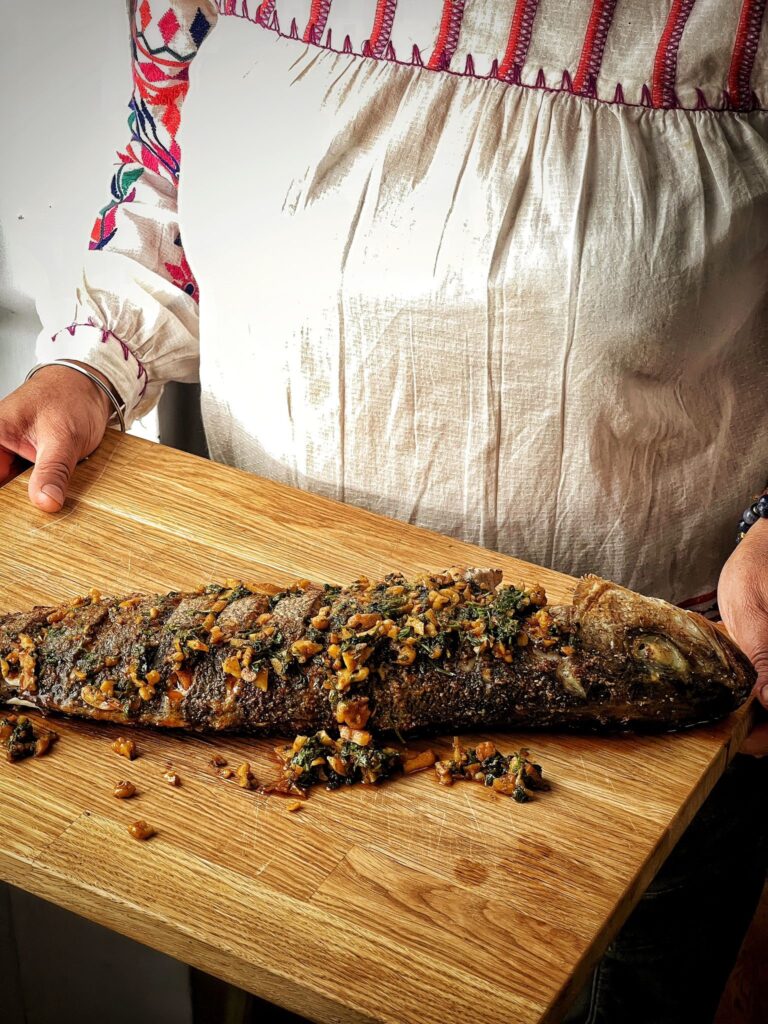
There is something very special about serving a whole fish at the table amongst friends and family, and this recipe will certainly not disappoint! The delicate flavour of sea bass is only elevated further through the spices that Romy infuses within the dish, where a handful of chopped walnuts is added to give an irresistible crunch to the succulent, flakiness of the cooked fish.
Why buy line-caught Cornish sea bass
Cornish sea bass is relatively low-fat fish with a great source of protein. When purchasing your sea bass for this recipe, make sure that it is line caught in local waters.
Line-caught sea bass is a sustainable, traditional fishing method of a simple hook and a line. This method of fishing has minimal environmental impact due to being small scale and not over-fishing., meaning there is no waste fishing. If small fish are caught, they are returned back to the water immediately.
The quality and taste of line-caught fish is of a much higher quality compared to fish farms. It is believed to have a fresh taste as they are not exposed to pollution and debris.
Photography by: Matt Inwood
Here is how to make Romy Gill’s Cornish sea bass recipe…
Chef Romy Gill has used her inspirations as a British/Indian chef and food/travel writer to create a gorgeous sea bass dish, paired with a spice blend that incorporates Himalayan Pink Salt, carefully selected by Maldon Salt’s master salt merchants. Along with the Himalayan salt, Romy infuses the spices of cumin, fennel, coriander seeds and black peppercorns to give a warmth and smokiness to the fish.
How to make the spice blend
To make the spice blend, add all of the spices together with Himalayan Pink Salt, Selected by Maldon, and blend for a few seconds until well combined.
Make 6-7 good slits in the fish in order to rub the spice blend over the surface and into the flesh of the fish.
Marinate the fish both sides with the spice blend, setting aside 1 teaspoon for later.
Rub well, and then drizzle over olive oil and the juice of one lemon.
Once the fish is evenly covered, leave in the fridge for one hour before cooking.
Cooking and dressing for the sea bass
To cook the fish, pre-heat the oven to 200C and cook the fish for 15-20 minutes.
While the fish is cooking, make a dressing. Chop six large cloves of garlic, then 20g of walnuts and finally a large handful of coriander.
Heat a saucepan and add 2 tsp olive oil and then the chopped garlic. Add 1 tsp ghee, cook for a minute, then add the chopped walnuts, stir some more and then add the chopped coriander. Add 2 tsp of paprika and the reserved tsp of your spice blend and combine everything together well.
Finally, add 1 tsp of olive oil and take off the heat.
When the fish is cooked, remove from the oven and place onto plate or board. Immediately spoon the dressing all over the top of the fish and serve straight away and enjoy!
What can you serve with sea bass?
Romy created a dish of roasted stem broccoli, served on a bed of creamy feta that pairs perfectly well with sea bass. The tasty, green crunch of the stem broccoli compliments the succulent, light flakiness of the fish that makes your taste buds sing! When served with feta cheese, it will a subtle burst of creaminess and silkiness as you take your first bite.
If you are looking for a lighter option, you can serve your cooked sea bass along with a simple cucumber salad. Easy, refreshing and bursting with flavour, adding cucumber to the dish will actually help elevate the flavours of the sea bass, making a deliciously balanced dinner.
Romy Gill and Maldon Salt
If you enjoy Romy’s culinary creations as much as we do, then get ready to ‘feast’ your eyes on other delicious recipes that Romy has made using Maldon Salt. From sensational Moong Bean Dal’s to a showstopping Orange and Cocoa Cake, the options are endless!
Plus, we also had the opportunity to do a Q&A with Romy about her heritage and her top food recommendations when celebrating Diwali. Pour yourself a cup of tea and get seated for a wonderful read.
Did you know that lamb is one of the most desired meats in Nepal? One of the many ways to celebrate this meat is by preparing a lamb curry dish, usually made with lamb chops that are charcoal grilled and then sautéed in a chilli sauce. We have adapted this slightly by using lamb shoulder, as shoulder is a much richer and fattier cut of meat that works wonders when oven cooked for a period of time. This results in a deliciously succulent curry dish that will make you want to go up for second helpings!
We serve our curry with steamed turmeric rice and warm roti flatbreads on the side – which are perfect for dipping!
Here is how to make our Nepalese Lamb Curry…
Start by heating the vegetable oil in a large casserole dish. Add the red onion and fry until softened, then add the cloves, ginger, garlic, cinnamon, bay and cardamon pods and fry for another few minutes until smelling fragrant.
Next add the lamb pieces and cook in the spices and onion until it browns on all sides – the longer you brown it the more caramelisation you will get on the meat and the deeper the flavour.
Once the meat is nicely browned all over, add the diced tomatoes followed by the garam masala, fenugreek, turmeric, chilli flakes and Himalayan Pink Salt. Stir everything together so it is all well coated and allow it to sizzle and fry for 5 minutes, so the tomato breaks down.
Add the lamb stock or water and bring to the boil. Then reduce to a low simmer and allow it to bubble away for 1 hour. Keep an eye on it and if it needs some more liquid then top it up.
After an hour the sauce should be thickened and the lamb tender.
Serve the curry topped with chopped coriander and alongside some steamed turmeric rice and warm roti flatbreads.