Step 1 – Make the Saffron Risotto Heat the olive oil in a large pan and fry the rice for 2 minutes. Add the vegetable stock and saffron, stirring continuously until the rice is tender and creamy. Stir through the butter, parmesan and Sicilian Fine Sea Salt, Selected by Maldon. Spread onto baking trays, cool completely, then chill until firm.
Step 2 – Prepare the Beef Ragu Filling Heat the olive oil in a large pan and gently cook the onion, carrot and celery for 15 minutes until softened. Add the beef mince and cook until browned. Stir in the tomato purée and chopped tomatoes, then simmer for 30–40 minutes until rich and thick. Season with oregano, Sicilian Fine Sea Salt, Selected by Maldon and black pepper. Leave to cool completely.
Step 3 – Shape the Arancini Place a handful of chilled risotto in your palm and create a well in the centre. Add a teaspoon of ragu, then seal with more rice and shape into a traditional cone. Repeat with the remaining mixture and chill for 15 minutes.
Step 4 – Coat the Arancini Place flour, beaten egg and breadcrumbs in three separate bowls. Coat each arancini in flour, then egg, then breadcrumbs until evenly covered.
Step 5 – Fry Until Golden and Crisp Heat the vegetable oil to 180°C in a deep, heavy-based pan. Fry the arancini in batches for 2–3 minutes until golden brown and crisp. Drain on kitchen paper.
Step 6 – Serve and Enjoy Serve warm with seasoned passata for dipping, finished with grated parmesan and fresh basil.
Introduction
This indulgent yet beautifully simple dish was created in collaboration with food writer and cook Margie Nomura, best known for her much-loved platform Desert Island Dishes. Combining bold flavours with comforting textures, this recipe celebrates seasonal ingredients and elevates everyday cooking with a touch of luxury – perfect for a cosy night in or an impressive dinner for guests.
About Margie Nomura (Desert Island Dishes)
Source: KITRI Spotlight: Margie Nomura
Margie Nomura is a professional chef, recipe developer, and the creator of Desert Island Dishes, a popular online destination for easy, approachable home cooking. With over ten years of experience as a private chef, Margie is passionate about creating recipes that deliver maximum flavour with minimal effort. Her philosophy centres around ‘low effort, high reward’ cooking – helping home cooks build confidence in the kitchen while enjoying delicious, unfussy meals.
Why Maldon Garlic Sea Salt Flakes Elevates This Dish
Maldon Garlic Sea Salt Flakes
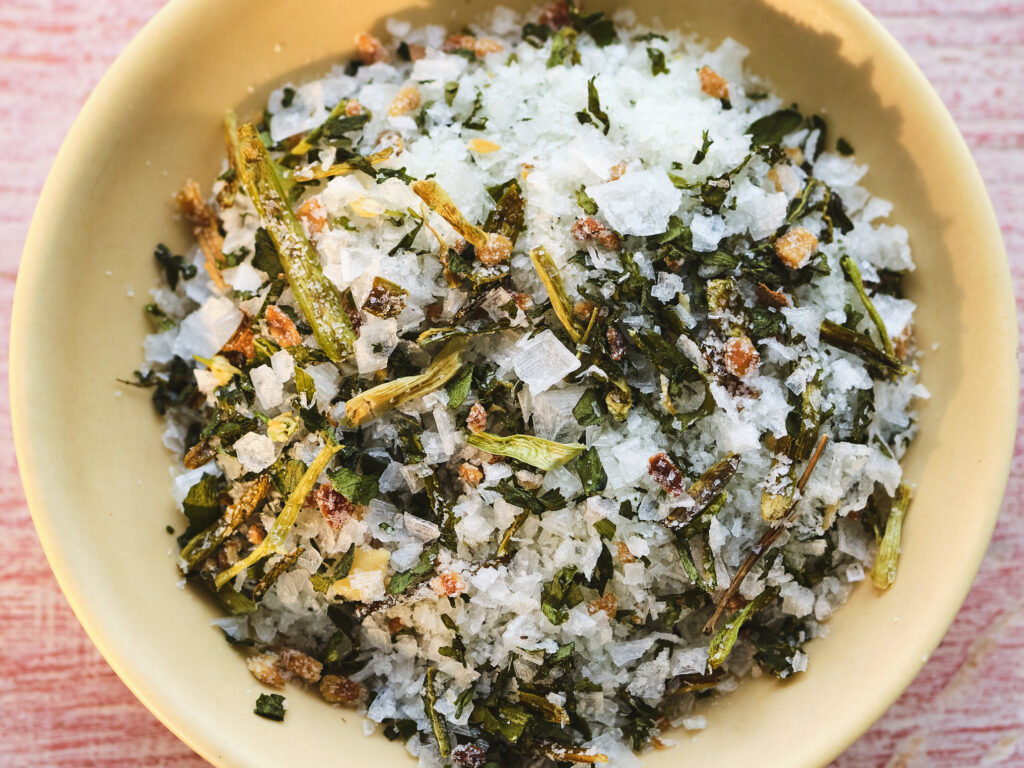
The secret to this recipe’s depth of flavour is Maldon Garlic Sea Salt Flakes. Their delicate, flaky texture and balanced garlic infusion enhance each element of the dish – from seasoning the steak to enriching the wild garlic butter. Unlike standard salt, these flakes add both flavour and texture, ensuring every bite is perfectly seasoned while complementing the natural richness of the butter and steak.
How To Make Wild Garlic Butter Steak Bites and Cauliflower Puree
To make the wild garlic butter, add the wild garlic leaves to a blender with2 tbsp olive oil and the lemon juice and blitz to a puree. Add 200g of the butter (reserving the rest for the cauliflower) and a good pinch of Maldon Garlic Sea Salt and whizz until smooth. If you don’t have wild garlic just sub with 2-3 cloves garlic and add a handful of parsley or basil works too.
Cut the cauliflower until florets and boil until super tender then drain and transfer to a blender with the butter and a good pinch salt and blitz until smooth. Add the cream and blitz again. Cut the steak into bites, add to a bowl with olive oil, Maldon Original Sea Salt and pepper and mix. Get a pan very hot and add in the steak, turning so it’s browned on all sides.
Cook it to your liking, you can have it still pink in the middle or you can cook it through. Add in a generous spoonful of the wild garlic butter and let it melt and sizzle around the steak. Spoon the cauliflower puree into a bowl, top with the steak and plenty of the wild garlic butter. I served mine with some roasted tomatoes but serve it with whatever you like, some rocket or a green salad would work well.
Final Touch
This dish is all about simple ingredients elevated through flavour, texture and quality seasoning. Tried it yourself? We’d love to see! Tag us on social media and share your creations.
Create a show-stopping classic beef Wellington with this simplified, step-by-step recipe, which serves up to 8 people. This easy beef Wellington features a beautifully seared beef fillet, which is brushed with Dijon mustard. wrapped in a rich mushroom duxelles made from chestnut mushrooms, layered with Parma ham (or prosciutto), then enclosed in all-butter pastry for a golden, flaky pastry finish. Careful chilling and resting of the beef Wellington ensures a medium-rare, perfectly pink centre on the beef.
Seasoned with Maldon Original Sea Salt and cracked black pepper, the beef Wellington with puff pastry pairs beautifully with creamy mashed potatoes, seasonal vegetable likes roasted carrots, and a rich red wine jus. This dish is ideal for any special occasion centrepiece; as a Easter alternative to lamb to a table show-stopper at Christmas time.
How to Make a Beef Wellington
Crafting a show-stopping beef Wellington by searing a tender beef fillet, wrapping it in mushroom duxelles and Parma ham, and baking it in golden, flaky puff pastry until perfectly pink at the centre.
Step 1 – Bring the Beef to Room Temperature
Remove the beef fillet from the fridge 1 hour before cooking so that the meat reached room temperature. This helps the meat cook more evenly, ensuring you achieve that signature pink centre without overcooking the outer layers.
Step 2 – Make the Mushroom Duxelles
Add unsalted butter and 1 tbsp olive oil to a large frying pan.
Soften the finely diced onion gently until translucent, then add the crushed garlic.
Pulse the chestnut mushrooms in a food processor until finely chopped, then cook them with the onions/garlic until all the liquid has evaporated (approx. 15 minutes). It is important to reduce the moisture from the mushroom duxelles because excess water can cause the pastry of the beef Wellington to become soggy.
Stir through thyme leaves and chopped parsley in the last 5 minutes.
Season with Maldon Original Sea Salt flakes and cracked black pepper, then cool completely, chilling in the fridge to firm up.
Step 3 – Sear the Beef Fillet
Generously season the beef fillet all over with Maldon Original Sea Salt flakes and cracked black pepper.
Heat a large frying pan over medium-high to high heat until very hot, then add 1 tbsp olive oil.
Sear the beef on all sides until well caramelised – no longer than 2 minutes total so the centre stays very rare.
Remove from the pan and rest for 30 minutes to cool slightly.
Step 4 – Wrap the Beef in Parma Ham and Duxelles
Lay out overlapping layers of clingfilm on a clean surface.
Arrange the Parma ham slices in an even layer that will fully wrap the beef.
Spread the chilled mushroom duxelles evenly over the Parma ham.
Brush the rested beef with Dijon mustard, place it on one edge, then use the clingfilm to roll everything up tightly into a firm “sausage” shape.
Twist the ends to secure and chill in the fridge for at least 1 hour (or overnight).
Step 5 – Encase in Puff Patry
Unroll the puff pastry on its parchment paper.
Remove the clingfilm from the beef log and place it in the centre of the pastry.
Wrap the pastry around the beef, sealing the edges well and ensuring the seam is on the underside.
Use beaten egg to brush and seal the pastry.
If needed, trim and use extra pastry to patch any gaps and decorate (e.g. thin strips for a lattice).
Transfer to a baking tray lined with baking paper and chill for a further hour to firm up.
Step 6 – Bake the Beef Wellington
Preheat the oven to 200°C (fan if appropriate – specify if recipe assumes fan or conventional).
Brush the Wellington all over with beaten egg for a glossy finish.
Bake for around 35 minutes, or until the pastry is deep golden brown.
You can mention indicative doneness (e.g. for medium-rare fillet, the centre should still feel slightly springy; optional note on using a thermometer if desired).
Remove from the oven and rest for 20 minutes before slicing.
Step 7 – Finish and Serve
Just before serving, sprinkle the pastry with Maldon Sea Salt flakes and a few extra thyme leaves. Seasoning your Wellington with Maldon Sea Salt flakes enhances flavour and texture by delivering clean, bright saltiness that lifts the beef, duxelles, and pastry while adding a delicate, crunchy finish.
Slice into 1-inch pieces with a sharp knife.
To Serve
A beef Wellington is ideal for Christmas, New Year’s, or any special occasion because it feels truly celebratory. It’s luxurious yet comforting, feeds a crowd with ease, and can be prepped ahead of time, making it perfect for busy kitchens. It’s classic flavour pair effortlessly with seasonal sides likes roasted carrots and red wine jus, making it just as fitting as a show-stopping alternative to lamb on Easter.
Here are a few sides that you can pair your beef Wellington:
Bring the beef fillet to room temperature for even cooking and a perfectly pink centre.
Sear the beef until golden to lock in flavour and prevent excess moisture.
Cook the mushroom duxelles thoroughly to remove moisture and avoid soggy pastry.
Wrap tightly with Parma ham (or prosciutto) to create a moisture barrier for the beef and mushroom duxelles.
Chill the beef Wellington before baking to help and pastry hold it’s shape.
Use all-butter puff pastry for the best golden, flaky finish.
Season generously with Maldon Sea Salt and cracked black pepper for an elevated flavour.
Rest the beef Wellington before slicing to keep the layers intact.
Doneness, Make-Ahead & Reheating Notes
How do I know when the beef will be done in a beef Wellington
Medium-rare is the classic level of doneness for beef Wellington. After 35 minutes at 200°C and resting, the 1lg fillet should be cooked and have a warm, perfectly pink centre with a tender texture.
Can I prepare beef Wellington in advance?
Yes, you can absolutely prepare beef Wellington in advance. You can assemble the Wellington (beef, mushroom duxelles, Parma ham, pastry), then wrap tightly in clingfilm and chill for up to 25 hours before baking.
Chilling helps the pastry stay crisp and golden and improves overall shape.
Brush with egg wash just before baking for the best finish.
Can I reheat beef Wellington?
Yes, you can reheat beef Wellington. Leftover slices can be reheated gently in the oven at 160°C (320°F) for 12-15 minutes until warmed. Make sure you use a wire rack to keep the pastry crisp.
You can also reheat in an air fryer. Set the air fryer to 150°C (300°F) and heat to 10-12 minutes, flipping halfway through for even cooking.
Avoid reheating in the microwave – it will make the pastry soggy and tough.
Please note – the beef will now stay medium-rare after reheating; it will cook further, but the flavour will remain delicious.
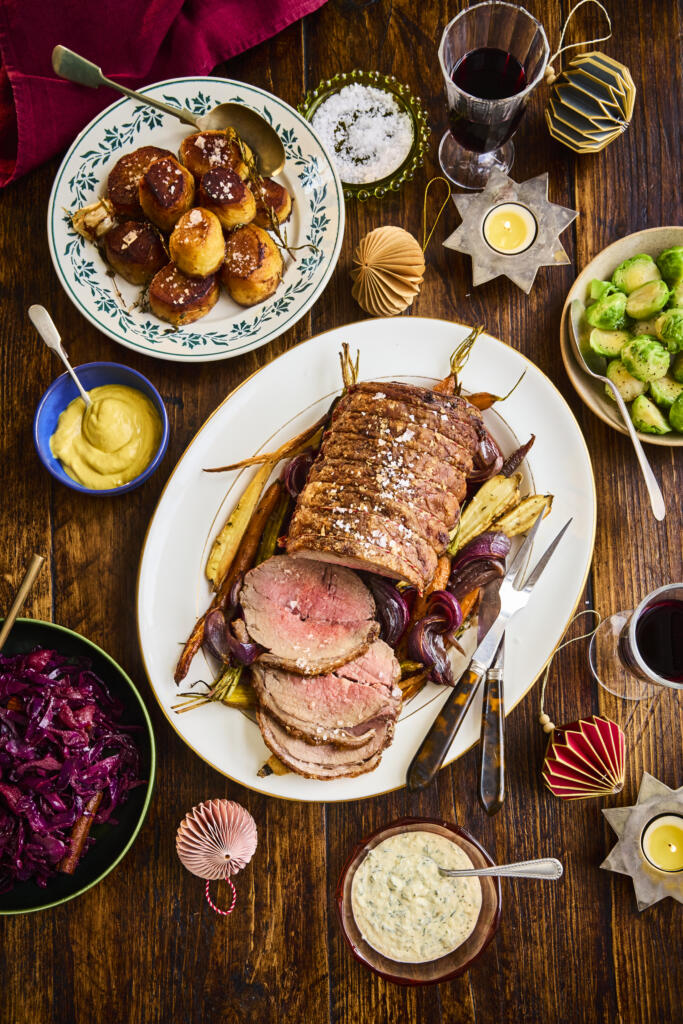
Make Christmas roast beef the easy way. A 2kg sirloin roasting joint is seared for a flavourful crust, then roasted over a tray of carrots, parsnips and onions. Finished with a quick red wine jus and seasoned with Maldon Sea Salt, this roast beef recipe delivers tender, medium‑rare slices and caramelised vegetables—perfect for a show‑stopping festive main.
How to Make Christmas Roast Beef with Easy Veg Medley
Step 1 – Temper and Season the Beef
Remove the beef from the fridge 2 hours before cooking. Pat dry and season all over with Maldon Sea Salt. Drying is important as it allows the meat to brown faster; salting in advance can also help with creating a crispier crust.
Step 2 – Preheat and start the Vegetables
Preheat the oven to 180°C fan (200°C conventional/392°F).
Toss onions, carrots, parsnips and thyme with 2 tbsp olive oil; season with Maldon Sea Salt and black pepper. Spread on a large roasting tray and roast 5–10 minutes while you sear the beef.
Step 3 – Sear the Beef
Heat a large frying pan over high heat with oil or beef fat. Sear the beef on all sides until well browned.
Step 4 – Roast Over the Vegetables
Set the browned beef on top of the vegetables, pour in the glass of red wine.
Roast for about 20 minutes per kilo at 180°C fan (≈9 minutes per lb) — around 40 minutes for a 2kg joint — turning the tray halfway for even cooking.
Step 5 – Check Temperature and Rest
For best accuracy, use a meat thermometer in the centre of the thickest part:
Rare: remove at 48-50°C (118–122°F)
Medium-rare: remove at 51–53°C (124–127°F)
2. Temperatures rise during resting to ~51–53°C (124–127°F) rare or 54–56°C (129–133°F) medium‑rare.
3. Transfer beef to a warm plate, tent loosely with foil and rest 20 minutes. Keep veg warm in the oven if needed.
Step 6 – Serve
Slice against the grain. Serve with the roasted vegetables, creamed horseradish and mustard. Spoon over the red wine pan juices.
Tips & FAQs
Best cut for Christmas roast beef? Sirloin roasting joint is tender with a good fat cap; ribeye or rump also work.
How long to cook a 2kg sirloin at 180°C fan? Approximately 40 minutes after searing, or until thermometer hits 51–53°C (124–127°F) for medium‑rare.
Do I need to cover the beef? No. Roast uncovered for a better crust; tent with foil during the 20‑minute rest.
Can I make this ahead? Roast up to doneness −5°C (−9°F), rest and cool. Reheat slices gently in hot pan juices or gravy to serve.
How do I get a great crust? Pat very dry, salt early, sear in a hot pan, and avoid over‑crowding the tray so veg can caramelise.
Gravy vs jus? Deglaze the tray with extra wine/stock; simmer to reduce. Season with Maldon Sea Salt to finish.
Festive extras: homemade red wine gravy, cranberry relish, or a drizzle of horseradish cream over slices.
Scale up: For 10–12 guests, use a 3kg joint (increase roast time to ~60 minutes; monitor with thermometer).
Storage & Reheating
Leftover beef: Cool quickly, refrigerate in an airtight container up to 3–4 days. Reheat slices gently in simmering pan juices or covered in a 160°C/320°F oven until just warm.
Roasted vegetables: Refrigerate up to 3 days; reheat on a hot tray at 200°C/392°F to re‑crisp.
Freezing: Sliced beef and veg can be frozen up to 1 month; thaw overnight in the fridge before reheating.
Have You Tried this Christmas Roast Beef?
Share your tips in the comments and tag #MaldonSalt. For more festive mains and sides, browse our Christmas recipes collection.
Heat 3 tbsp olive oil in a large, heavy based pot. Once hot, add the minced beef and season with Maldon Original Sea Salt and pepper. Fry over a medium-high for about 10 minutes, breaking up the meat with your wooden spoon until well browned. You don’t want the pot to be too crowded otherwise the meat will steam rather than brown, so work in two batches if needed.
Scoop the meat out of the pot into a bowl and set aside. Add another 3 tbsp olive oil to the pot, along with the onions, peppers and garlic. Season with Maldon salt and pepper and cook gently over a medium low heat for about 15 minutes, stirring every so often, until soft.
Add the meat back into the pot, along with the tomatoes. Fill each tin halfway with water, swill it around to get every last bit of tomato, then add the liquid to the pot. Bring up to a simmer then leave to blip away for 45 minutes, stirring every so often to ensure it’s not sticking on the bottom of the pot, until thickened and reduced. Stir through the oregano and basil, then taste for seasoning.
Bring a large pot of salted water to the boil and cook the lasagne sheets in a few batches for just 2 minutes until no longer rigid but still very al dente, then transfer to an oiled baking tray. Drizzle the sheets with a little olive oil so they don’t stick to one another.
Preheat the oven to 180C fan.
To assemble the lasagne, spoon a couple of ladles of the meat sauce into a large, rectangular baking dish (about 30cm by 20cm). Cover with lasagne sheets then add a single layer of courgette slices. Season the courgettes with a small pinch of Maldon Original Sea Salt and pepper. Dot with roughly a third of the torn mozzarella, grate over roughly a third of the parmesan, and drizzle over roughly a third of the double cream. Repeat this layering process (meat sauce, lasagne sheets, courgette slices, seasoning, cheeses and cream) twice more. Drizzle the top with a little olive oil and cover the dish with foil. Put the dish on a baking tray (this will catch any spill over while baking).
Bake for 20 minutes then remove the foil and bake a further 20 minutes until golden and bubbling. Leave to stand for 20-30 minutes before serving (this allows the layers to settle and makes it easier to slice).
Few things capture the flavour of summer quite like a juicy BBQ beef burger, hot off the grill, smoky and sizzling under the sun. Whether you’re firing up the barbecue for a weekend treat, planning a picnic, or hosting a casual garden get-together, this homemade burger recipe delivers series crowd-pleasing flavour.
Made with tender ground beef and seasoned generously with Maldon Sea Salt flakes and freshly cracked pepper, these beef patties are grilled to perfect over high heat until charred on the outside and juicy on the inside.
The real magic, though, comes in the layering – these BBQ beef burgers are topped with sharp, tangy quick-pickled red onions and a creamy, smoky spicy mayo with pickles, giving every bite a perfect balance of heat and zing. Serve them up in toasted buns with a slick BBQ sauce, crisp lettuce, and all your favourite toppings for the ultimate grilled burger experience.
How to Make Summer Beef Burgers
Quick and easy to make, this BBQ burger recipe is build around simple, bold ingredients like beef mince, olive oil and Maldon Sea Salt – proof that a great homemade burger doesn’t need much to shine.
Step 1 – Make the Quick-Pickled Onions
Toss and lightly scrunch the onions with the vinegar and a pinch of salt of Maldon Sea Salt. Set aside to soften and turn bright pink as you get on with the burgers.
Step 2 – Prepare the Burger Patties
In a large bowl, mix the beef mince, finely chopped onion, beaten egg, a good pinch of Maldon Sea Salt and pepper.
Step 3 – Shape and Chill the Patties
Using wet hands, divide the mixture into four balls, then lightly press each ball down to create patties about 5cm thick. Transfer the patties to a plate and leave to chill in the fridge for 30 minutes, or until you’re ready to cook.
Step 4 Make the Spicy Pickle Mayo
In a small bowl, mix the mayonnaise with a dash of hot sauce and the finely chopped gherkins. Taste for seasoning and add a dash more hot sauce if you’d like more heat.
Step 5 – Cook the Burgers
Heat your BBQ or griddle pan to medium-high. Brush patties with olive oil, then add to the grates or pan. Press down lightly with a spatula. Cook for 4–5 minutes until well browned, then flip and cook for 3–5 minutes more. Add cheddar slices after flipping if desired.
Step 6 – Toast the Buns
Transfer cooked burgers to a plate to rest for a couple of minutes. Toast the burger buns, cut side down, on the BBQ or pan until golden.
Step 7 – Assemble and Serve
Spread spicy pickle mayo on the bottom buns. Add patties, pickled onions, and your favourite toppings: lettuce, tomato, cheese, mustard, and sliced gherkins.
Make sliders for parties by forming smaller patties and using mini buns.
Storing and Reheating Your Burgers
Store your cooked patties in the fridge for up to 2 days. Reheat burgers in a pan or oven until piping hot. Pickled onions can be kept in a sealed container in the fridge for up to 1 week. The spicy pickle mayonnaise can last in the fridge for up to 2-3 days, if stored in an air-tight container.
Tips
Use 20% fat beef mince for juicer burgers.
Chill patties in the fridge for up to 30 minutes to help them hold their shape on the grill.
Don’t press down too hard during cooking as you will loose all the delicious juices.
Can I make burgers ahead of time?
Yes, you can make the burgers ahead of time by making the patties (beef mince, onion, egg, pepper, Maldon Sea Salt and olive oil) and shape them. You can then store the beef patties in the fridge to chill for up to 3 days, ensuring they are tightly wrapped to prevent oxidation.
Can I freeze the patties?
Yes, you can freeze beef burger patties. Start by shaping the ground beef into patties, adding your desired seasonings to the mix. When freezing, make sure that you separate the patties with parchment paper or plastic wrap to prevent sticking. Use freezer-safe bags or airtight containers to protect from freezer burn. The raw patties can be frozen for up to 3 months. Cooked patties can be frozen for roughly 4 months.
What’s the best beef burger for burgers?
For a juicy and flavour-packed burger, the best beef option is ground chuck. This is because it has an 80/20 lean-to-fat ratio, which means it has a good balance between lean protein and flavourful fat for a delicious, tender and juicy burger. You can also experiment with mixing different cuts like chuck, brisket, or short ribs to create your own burger blend.
Can I cook these without a BBQ?
Yes, you can absolutely cook burgers without a barbecue grill.
Oven Baking – Preheat your oven to 190°C/375°F. Place your patties on a baking sheet and bake for 20-25 minutes for medium-rare, adjusting time for desired doneness.
Pan-Frying – Use a cast iron or non-stick skillet over medium-high heat. Place seasoned patties in the hot skillet, allowing for some space between them. Cooking for about 3-4 minutes per side for a medium-rare burger, flipping halfway for a balanced cook – you want a nicely seared and browned surface on either side.
How do I keep burgers juicy?
If you want your homemade beef burgers to be juicy, you need to make sure to do the following:
Avoid overworking the meat when forming your patties. This will prevent them from becoming tough and dry.
Use a good ground beef with a higher fat content (80/20). This is because it provides a balance of flavour and juiciness from the fat content, which melts during cooking, contributing to a flavourful, juicy burger that’s not too dry.
Add a spoon/knob of butter to add moisture and fat to the beef, helping to prevent the burgers from drying out during the cooking process. It also adds a delicious rich and savoury flavourful that compliments the beef well.
Can you cook beef burgers from frozen
Yes, you can cook beef burgers from frozen. This is because the flat shape of the patties allows for an even cooking. The thawing process can also help retain moisture, leading to a juicer burger! Make sure to adjust your cook time and heat accordingly to ensure the burger is cooker through. For the oven, we recommend cooking at 230°C for 12 minutes, flipping halfway through. If using the air fryer, preheat to 200°C, cooking for 8-12 minutes, flipping halfway through.
Can I cook the beef burgers in an air fryer?
Yes, you can cook homemade beef burgers in the air fryer. Place the patties in the air fryer basket and cook for 5 minutes on one side at 175°C, flip, and cook for another 5 minutes.
Steak with frites and garlic butter is the epitome of timeless dining, made famous by the legendary Le Relais de l’Entrecôte in Paris. A favourite for date nights, especially on Valentine’s Day, or any celebratory meal for two, this dish combines simple ingredients with impeccable flavour. Juicy, tender steak paired with crisp, golden fries (or chips), and a decadent garlic butter creates a meal that’s as it is elegant. This recipe ensures restaurant-quality results, perfect for recreating the romance and charm of a French bistro at home.
For the steak, we use thick-cut sirloin from Hawksmoor, celebrated for it’s robust flavour and beautifully marbled texture. Seasoned simply with Maldon Sea Salt flakes, freshly cracked pepper, and sprigs of thyme, the steak is seared to perfection, ensuring a rich, caramelised crust. The frites, made from skin-on Maris Piper potatoes, are fried until crisp and golden, retaining their natural flavour and texture. To complete the dish, we whip up a silky garlic butter infused with fresh parsley, adding an aromatic richness that elevates every bite. Together, these components create a culinary masterpiece that feels both luxurious and comforting.
How to make steak frites with garlic butter
Step 1
Start by preparing your chips. Cut your potatoes into skinny chip pieces – you can peel them or keep the skin on, but we kept the skin on for more flavour. Then place them in a large bowl and cover with cold water – toss them around then leave them in the water for 1 hour. This will help remove the starch from the potatoes which means they will be crispier when fried.
Step 2
After 30 minutes take the steak out the fridge to allow it to come to room temperature.
Step 3
Now you can prepare the garlic butter. In a bowl beat the softened butter until smooth with a spoon, then add the chopped parsley, crushed garlic cloves and plenty of Maldon Sea Salt and cracked black pepper. Then place two sheets of clingfilm onto your worktop and spoon the butter into the middle. Use the clingfilm to shape the butter into a thick sausage shape and roll it tightly, twisting each end to keep it secure. Then place the butter into the fridge.
Step 4
After 1 hour, remove the chips from the water and dry them very well on some kitchen paper. Preheat the oven to 180c.
Step 5
Pour in the veg oil into a large high-sided pan so it comes up 2 third of the way up the sides. Then place it on the heat and heat until it reaches 140c. Then add the chips to the oil and fry for about 5 to 6 minutes until they are cooked through but only lightly golden in colour – you may need to do this in batches. Remove them from the oil with a slotted spoon when ready and place on a tray lined with kitchen paper.
Step 6
While the chips are frying, we can get started on the steak. Season the steaks liberally with Maldon Sea Salt and cracked black pepper on both sides. Take a large frying pan, heat to a medium high temperature. Start by adding the steak on the side with the biggest part of fat and rendering this down – you may need to hold it in place with some tongs. You want the fat to go lovely deep golden and crisp. Then you can place the steak on one of the flesh sides and cook for 1 – 2 minutes on each side. When you are cooking the final side, add a knob of butter along with the bunch of thyme. Use a spoon to baste the steak with the butter and thyme.
Step 7
Once the steaks have a good level of colour and caramelization on each side, place the pan into the preheated oven for 6 minutes. Ensure you have an oven safe pan before you do this, if not simply transfer to a baking tray along with the pan juices. After the 6 minutes, remove the steaks from the oven and place onto a plate and pour over any cooking juices. Let this rest while you finish the chips.
Step 8
Turn the temperature up on the veg oil, so it reaches 180c. Then fry the chips again for approximately 2-3 minutes until very crisp and golden. Remove from the oil with a slotted spoon onto the tray again with kitchen paper to soak up any excess oil. Then add the chips to a large bowl while still hot and toss well with Maldon Sea Salt and cracked black pepper.
Step 9
In a small bowl, whisk together the Dijon mustard, olive oil and lemon juice to make a dressing. Drizzle and toss this over the butterhead lettuce along with the finely chopped chives.
Step 10
Now you can serve! Serve each rested steak on a plate or serving board. Take the garlic butter from the fridge and unwrap it, then cut some discs to put onto the steak, allowing it to melt. Add the chips to a bowl and serve with the mustardy green salad. Feel free to serve with any additional sauces you like, such as bearnaise or peppercorn. Perfect for a special Valentine’s Day dinner.
What is steak frites?
Steak frites is a dish consisting of a steak paired with fried potatoes, also known as ‘frites’. It’s commonly served in Belgium and French brasseries.
Tim Menger (Head Chef of Entrecôte in Melbourne’s Prahran) says steak frites is a dish that’s ’emblematic’ of France’s approach to food, going on to say it ‘encompasses a lot of what French bistro cooking is’. On the other hand, many claim that the steak frites is Belgium’s national dish due to the invention of the ‘frite’ in the 17th century – and let’s face it – without frites, there no such thing as steak frites!
Both have their differences, with Belgium serving Belgian fries with their steak, which is traditionally pre-cooked and cooled, then refried in oil again when ordered, creating the ultimate crispy, golden chip with a soft, fluffy interior. Belgian fries tend to be thicker in size, needing to be at least 10mm on each side. Whereas, France cut them between 6mm-9mm, creating a ‘skinnier’ chip.
France also adds a delicious Bearnaise sauce to their steak, covering the cut of meat to add refinement and flavour. This sauce is made of butter, egg yolk, white wine vinegar and herbs and is sometimes referred to as the ‘child’ of hollandaise sauce. This is because a bearnaise sauce uses shallot, black pepper and tarragon, whereas hollandaise uses white pepper and a pinch of cayenne. This creamy richness
What kind of steak is steak frites?
The bistro/brasserie staple of steak frites was traditionally made from the rump cut, however nowadays many chefs make steak frites from a variety of parts of the cow, including hanger (also known as onglet), rib-eye, porterhouse or flank. We used sirloin for our steak frites recipe. This is because sirloin is a tender cut of beef that’s affordable and easy to find at the grocery store. It’s also suitable for quick, high-heat cooking in the pan when searing.
What’s the best way to cook a perfect steak?
Cooking the perfect steak begins with choosing the right cut and understanding the best appliance to cook it on. Popular cuts like ribeye, sirloin, fillet and rump all offer distinct texture and flavours.
Ribeye is known for its marbled fat and rich taste
Fillet is tender and lean.
Sirloin balances flavour and tenderness
Rump provides a bolder, meatier bite.
Regardless of the cut, achieving a beautifully seared crust while maintaining a juicy interior requires the right equipment. Cast iron skillets are ideal for their ability to retain high, even heat whilst heavy-bottomed frying pan or a grill will also yield excellent results. For maximum flavour, make sure the steak is at room temperature before cooking and the pan is smoking hot to achieve a proper sear!
The stages of cooking a steak
Understanding the ‘doneness’ levels of steak is essential to tailoring it to your preference. Here’s a guide to each stage:
Blue: The steak is seared on the outside while the inside remains almost entirely raw by being cooked at a very high temperature for a short period of time. It feels very soft to the touch and is cooked to about 46–49°C (115–120°F) for a maximum time of 1-2 minutes on each side.
Rare: Warm on the outside with a cool red centre. Rare steak is tender and juicy. It reaches an internal temperature of 49–52°C (120–125°F). Cooked for 2-3 minutes per side over medium-high heat.
Medium Rare: The sweet spot for many steak lovers. Medium rare is warm with a red-to-pink centre. The texture is juicy but slightly firmer, cooked to 54–57°C (130–135°F) for 3-4 minutes per side.
Medium: This steak is firm and pink in the centre, with less moisture than medium rare. It’s cooked to 60–63°C (140–145°F) for 4-6 minutes per side.
Medium Well: A slight hint of pink remains, but the steak is mostly cooked through and noticeably firmer. It reaches 65–69°C (150–155°F) for around 11-16 minutes in total.
Well Done: The steak is cooked through completely, with no pink, and is firm to the touch. It’s cooked to 71°C (160°F) or higher for 18 minutes, depending on the thickness of the meat.
To check doneness, use an instant-read thermometer for precision or press the steak gently. The softer it feels, the rarer it is. Always allow the steak to rest for a few minutes after cooking to let the juices redistribute, ensuring every bite is as succulent as possible.
What’s the difference between fries and frites
‘Fries’ are long, thin pieces of fried potato, cut julienne or batonnet style and deep-dried in oil. It’s country of origin is from Belgium and France. It is believed that American soldiers stationed in Belgium were first introduced to French fries during World War I. Because the language of the Belgium army was French, soldiers nicknamed the fried potatoes as ‘French fries’.
‘Frites’ is the French word for French fries. It is a shortened version of the French phrase ‘pommes frites’ which means fried potatoes.
This style of fried potato is very popular amongst fast food chains that serve French fries, including McDonald’s, Five Guys and Arby’s.
Serving suggestions and variations
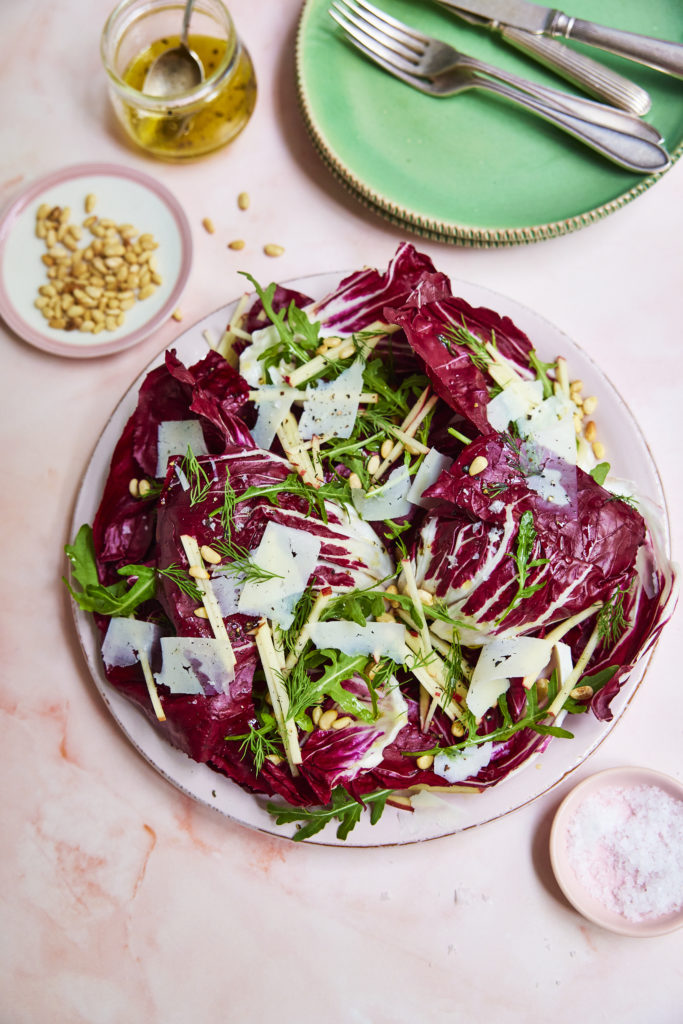
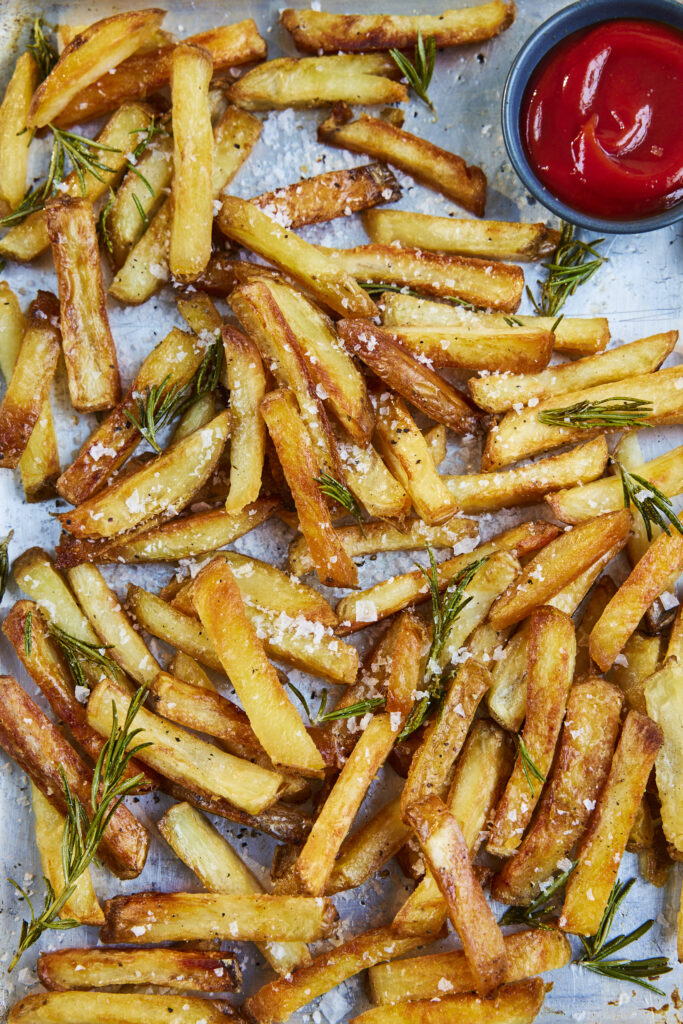
Radicchio salad with pine nutsCrispy green leaf salad with lemonHomemade ‘chunky’ chipsHomemade tomato sauce
Steak frites is a classic French bistro dish, but there are plenty of ways to elevate and customise it. Here are a few serving suggestions and variations you could following.
Serving suggestions:
Finish with Maldon Salt. A generous pinch of flaky Maldon Sea Salt over the steak just before serving will enhance the flavours with a delicate crunch. It also works well on the fries for extra seasoning!
Pair with a side salad. A simple arugula salad with a lemon vinaigrette or a crunchy radicchio salad balances the richness of the dish.
Dipping sauces for fries. Serve with a classic homemade tomato sauce, aioli, Dijon mustard or Sriracha mayonnaise for extra indulgence.
Wine pairing. A bold red wine like a Cabernet Sauvignon or a Syrah compliments the richness of the juicy steak and butter.
Variations:
Truffle garlic butter. Mix in a small amount of truffle oil or finely shaved truffle into the garlic butter for an earthy depth of flavour.
Herb & Citrus twist. Add chopped fresh herbs, such as parsley, thyme or tarragon, and squeeze lemon juice into the garlic butter for a fresh take.
Looking for something to cook this Christmas that doesn’t involve a turkey? We’ve made a delicious slow cooked beef brisket, paired with pomegranates to add delicious sweetness to the dish.
This flavour pairing of pomegranates with meat is very common in Persian cuisine, and has been for thousands of years, where the Persian culture tends to use pomegranates for both sauces and marinades for different meats. The tartness of the pomegranate fruit and molasses gives a delightful brightness to the rich brisket, adding depth as your take your first bite.
Pomegranate molasses can be hard to find at your local grocery, however Odysea has a beautifully sweet & tart Pomegranate Molasses, made from 100% concentrated pomegranate juice.
Why this recipe is perfect for Christmas
Our slow cooked pomegranate beef brisket is perfect for the festive season. This time of the year calls for rich, hearty dishes which is everything that the beef brisket holds. The juices of pomegranate molasses seeps throughout the dish, given a delightful, festive feel. Not only this, the slow cooking of the meat produces rich and beautifully tender results, making your guests want to go in for seconds.
Most importantly, this recipe is simple and effective for Christmas. Once you have you list, prepped and assembled everything into the casserole dish/pot, you simple let it cook away for 5 hours while you go about your business. This makes it IDEAL for such a busy time of the year. Once the time is done, you are greeted with a dish that delivers both in complex flavour, achieved with simplicity.
Here is how to make festive slow cooked pomegranate brisket
Take the meat out the fridge 30 mins before cooking.
Preheat the oven to 120C.
Place a large heavy bottomed casserole pan on the hob and add the olive oil. When it has heated up, add the brisket, and sear it on all sides for approximately 10 minutes – you want the meat well browned as this adds lots of flavour.
Once the meat is nicely browned, remove from the pan and set aside on a plate. Add the onions into the pan with all the meat juices, and fry them until they are soft and starting to caramelize. Then add the garlic cloves, Maldon sea salt flakes and the spices and fry for another few minutes until smelling fragrant.
Next add the apple cider vinegar and allow it to bubble and cook off before adding the soft brown sugar and the stock. Bring the liquid up to a simmer and then add the brisket back to the pot. Place a lid on the casserole and put it into the oven for 5 hours.
Check how tender the meat is by pricking with a fork, it should pull apart and shred very easily. If it doesn’t, then return it to the oven for another 30 minutes. Baste the meat in the juices, and if it’s looking a little dry the splash in some water.
After the meat has cooked, remove from the oven, and rest it under some foil for 10 minutes.
Then shred the meat with two forks and mix into all the juices and sauce. Drizzle in the pomegranate molasses and toss through to make it sticky and unctuous. Transfer to a large platter and scatter with the pomegranate seeds and coriander leaves.
Serve this with some sides, we chose fluffy wild rice, seasonal greens, and warm flatbreads.
What sides go well with beef brisket?
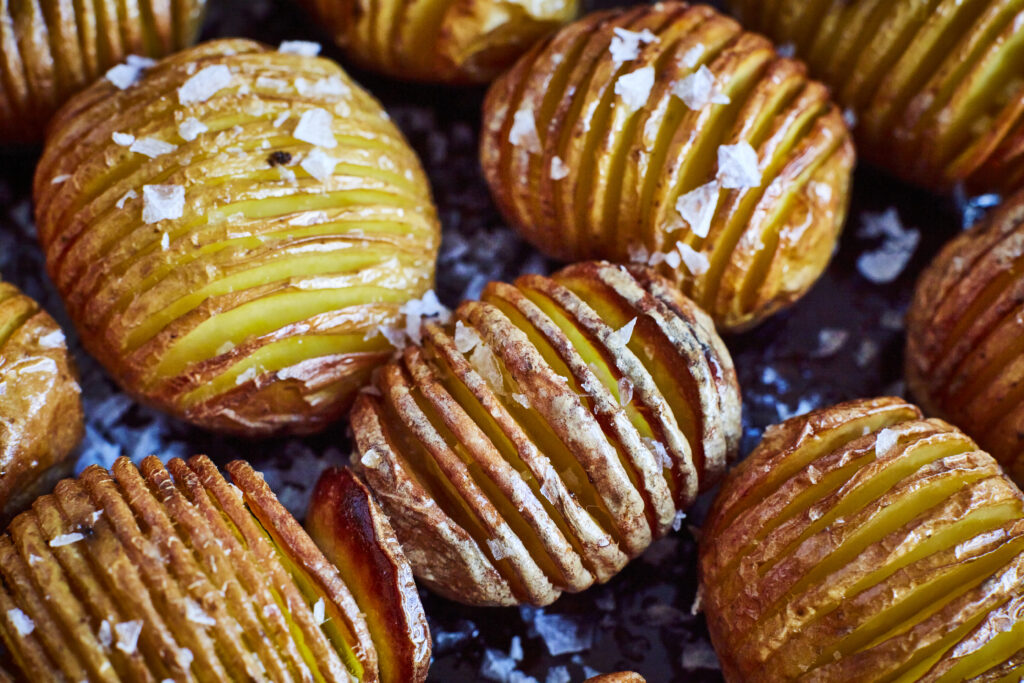
Our Hasselback potatoes are a match-made-in-heaven when paired with beef brisket. The deliciously crispy outer provides an irresistible crunch that compliments the tender meat perfectly. Additionally, the fluffy centres of the potato soak up the remaining juices on the plate, leaving no waste!
If you are wanting a green vegetable, try our roasted Brussels Sprouts, peppered with bacon for a deliciously smoky taste. The earthy and smoky tones of the vegetables balances out the gentle sweetness from the beef brisket that paired with pomegranate.
We join Jesse Jenkin’s (A.D.I.P) in creating a 70’s Californian classic…the delectable ‘protein style’ burger as the perfect fakeaway dish for you and your friends.
A ‘protein style’ burger means you have a burger wrapped in lettuce instead of a bun. The reason for it’s nickname is because you are essentially getting a burger without the carbs (from the bun), and instead you have a burger patty wrapped in shell of iceberg lettuce…more protein and less carbs! It’s believed that McDonald’s heightened this trend in Australia, where they added the lettuce wrapped burgers as part of their Create Your Taste Menu.
Mould 2 burger patties in to lose balls. Try not to overwork them as they can become rubbery. Jesse likes to season the top of his meat about 5 minutes before searing, giving the salt time to adhere to the meat. A note – avoid mixing the salt through the meat, this also results in a rubbery texture.
Add the butter and a splash of oil to a pan on medium heat. Sauté thinly sliced or diced white onions until soft and translucent – around 5 minutes. Add a pinch of Maldon Salt, brown sugar, Worcestershire sauce, and a splash of water. Cook until the water is gone and set aside.
Thinly slice red onion and tomatoes. Jesse likes to season his tomatoes with a small pinch of Maldon salt a few minutes before building the burger.
For the sauce – mince the sautéed onions, and pickles before mixing them with the mayonnaise, mustard, tomato paste, and pickle juice. A few twists of black pepper is a welcome addition here.
In a lightly oiled hot pan, smash the burger patties down using a small square of parchment paper – this helps achieves maximum contact with the pan and crispy edges. Weigh the burger down with the back of a spatula, another pan, or a chef’s press as I’ve used in the video. Once a good sear has formed, flip and add the cheese. After about a minute, turn off the heat and cover with a lid and a drop of water to create some steam – after about 30 seconds you should have some very melty cheese and a tender burger with a golden sear.
Pick the large outer leaves of an iceberg head and lay them out like a big flower. Jesse likes to start his build with sauce, then burger, adding sautéed onions, red onion, and tomato.
Fold the edges all around and create a parcel.
Enjoy!
Start this recipe the day before you want to eat as the steak needs overnight brining. Up to 24 hours ahead is fine. You can also cook this steak in the oven and on the hob if you don’t have access to a barbecue.
When it comes to cooking the steak, you apply the same principles as below, but take the low part of the cooking in the oven – around 100C in a fan oven for as long as it takes to get to the temperature you are looking for. See the numbers you need within the recipe. The sear part can happen in a very very hot frying pan, just flipping and turning to get maximum Maillard reactions until it is cooked how you like to eat it. Again, whether to rest or not is a personal preference.
Begin by dry-brining the ribeyes. Please do it, it really makes the biggest difference (see more detail on why below) . Simply sprinkle Maldon Salt over both sides of the steaks, place on a rack set over a tray and slide into the fridge for 12-24 hours. The rack allows the air to circulate so the steak doesn’t swim in its own juices. Allow a good tablespoon or so of Maldon Salt per kilo of meat. Don’t cover the tray, you want the surface to dry out a little but do make sure the tray is on the bottom shelf of the fridge and not touching any other food.
When you are ready to cook, fire up your barbecue ready for slow indirect cooking, aiming for a gentle temperature of around 120°C.
Set the steak, always straight from the fridge, onto the grill bars far away from the fire, and shut the lid. Cook using very gentle convection heat, take the steak up to a temperature 10°C below the temperature you want to eat it at. A temperature probe is essential here. No need to turn or rotate, just let it very gently do its thing. It will look dry and unappetising at this point, never fear. The drying of the surface is going to work in your favour, allowing for the Maillard crust to build up during the sear.
Whilst the steak is having the low and slow treatment, get everything else ready.
To make the walnut and tarragon pesto, tip the walnuts into a small fireproof frying pan and toast over a medium heat on the hob for a couple of minutes. Add to a food processor along with the tarragon, garlic, olive oil and white wine vinegar and blend to a smooth paste. Season to taste with Maldon Salt and freshly ground black pepper and scoop into a bowl. Set aside.
Prepare the salad by chopping up the tomatoes and dividing onto a plates or a serving platter. Scatter over herbs and drizzle with a really generous glug of extra virgin olive oil. Season well with sprinkles of Maldon Salt to taste. Set aside at room temperature for maximum flavour.
Back to the steak – once it’s reached your chosen temperature you want get your barbecue really good and hot, so get those coals glowing red. I often start another little chimney of charcoal at this point if I feel it needs more heat. And get those bottom vents open wide – remember that more air means a hotter fire. Don’t worry about the top vents as you sear with the lid up.
When your fire is hot, get the steak directly on the hot grill bars over the fire. Sear it hot and fast, flipping every 30 seconds or so with the lid up. Every time you turn, try to place it back on a slightly different bit of the grill bars to get maximum heat.
Once the steak has a deep, mahogany brown crust on both sides and has reached your desired eating temperature, get it off and slice up to share, serving the salad and pesto alongside.
Top TipsBy Genevieve Taylor:
Brining is the number one trick to boost meat tenderness
Salt is amazing: a little water-soluble molecule (sodium chloride or NaCl if you’re a bit of a science nerd like me) that has the ability to amplify the flavour of everything. Salt makes things taste better – your roast pork more porky, your ribeye steak more beefy or your curry more deliciously spicy – but it also has rather more miraculous properties than just enhancing flavour.
All meat benefits from the application of salt to increase juiciness and I have got into the habit of salting, or brining, all my meat before I cook it, regardless of the cut or species. It is, however, especially effective when you want to cook the perfect steak. Good steak is a treat and it really pays to cook it as well as you can.
With dry-brining, when you sprinkle salt over meat it quickly draws out a little water from the muscle cells, creating a really concentrated salty brine on the surface. Over time this salty brine soaks back into the meat by a process called diffusion. Nature always wants to seek equilibrium – so the more salty outside diffuses into the less salty inside, doing its darnedest to make things equal. When you salt meat, it physically breaks the protein bonds that hold the muscle cells together in a tight bundle so over time the tight bundle becomes a much looser bundle. By disrupting the bonds between muscle fibres they cannot physically contract up as much once that meat hits the heat, so less of the water inside gets squeezed out. The result? Juicer meat with the flavour ramped up to the max.
How to dry-brine
Dry-brining is ridiculously easy and quick. Simply sprinkle Maldon Salt all over the meat and set the onto a rack hung over a tray, slide into the fridge, uncovered, and leave undisturbed while the salt does it magic. The rack allows air to circulate and prevents the meat from resting in its own juices. A rough rule of thumb is to use a level tablespoon of Maldon Salt per kilo of meat. I try to leave the meat brining for 12-24 hours as standard, but even a couple of hours is worth doing if you are short of time. There’s no need to wash the salt off after brining. In fact I would encourage you not to as the salt will have slightly dried out the surface and a dry surface results in more effective Maillard reactions.
Maillard reaction, and why we don’t want perfect grill bar marks
The Maillard, or browning, reaction is a chemical chain reaction sequence that creates hundreds of new flavour molecules. It is why steak with a glorious crisply seared crust will always taste infinitely better than steak that is floppy, pale and grey-looking. While we may have been led to believe that perfect grill bar marks on our steak are the end goal, if evidence of the Maillard reactions is shown by browning on the surface, it almost goes without saying that grill marks are 100% not the aim here. You are only allowing the browning reaction to happen where the marks are, all the unmarked bits don’t get the insane flavour boost Maillard gives you. The more browning, the more flavour and an evenly browned crusty outer is the goal rather than the neat parallel lines mirroring your grill bars. Constant turning and flipping your steaks over a very high heat is the way to get an even crust.
Why reverse sear?
I prefer to cook thick steaks to share; it’s easier to nail the internal temperature vs crust conundrum, i.e. max sear on the outside, minimal chance of overcooking the inside. And I like the spirit of generosity it’s served in; a sharing dish always feels like a more friendly way of eating, offering an edible gift to those I love. Sharing steaks are always best cooked used a brilliantly failsafe technique called ‘reverse sear’. The weight of steak is irrelevant as you are cooking to temperature and so this technique is identical whether you are cooking a 500-600g steak for two or a 1-1.2kg steak for four. You do need an instant read thermometer, such as a Thermapen, for this technique but they are such useful things for all meat cooking I think they are a worthwhile investment.
With the reverse sear technique you flip the traditional way of cooking steak on its head, so instead of searing hot and fast, then moving to a cooler spot to finish cooking, you start very cool and finish very, very hot indeed. The result is a steak cooked to equal perfection from the outside to the centre, with a glorious deep brown crust all over.
Heat energy from the fire of your barbecue excites the molecules on the outside of the steak and those molecules transfer the heat into the centre of the meat. By starting your cook very slowly that heat transfer happens evenly, so your steak will be the exact same temperature on the outside as it is in the middle. Call it the fire cook’s equivalent of sous vide, if you like. The danger with starting high and finishing cooler is that you overdo the outside while trying to get the inside done as you like it, so the outside layer of a steak can be dry and overcooked. Reverse sear gives you, the cook, the chance for gentle equilibrium from top to bottom, resulting in a juicer steak with a better crust.
What temperature to cook to?
Ribeye steaks have a generous nugget of tasty fat in the centre, and whilst I like rare steak, the ribeye is a good cut to take a little further, perhaps to medium rare or medium to render the fat melting and succulent. But by all means eat it rare if you prefer.
With the reverse sear method you cook the steak low and slow to 10C below the final eating temperature, then to sear it very hot and fast until you have the temperature you want to eat it at.
Follow these temperatures when cooking:
Rare – cook to 42C low and slow, then take to 52C with a hot and fast sear
Medium rare – 46c initially, then 56C to eat
Medium – 50C followed by 60C
Why I don’t bother to rest steak
I always prefer to cook steak to the temperature I want to each it at and eat it as quickly as possible after getting it off the grill. The reason being that meat carries on cooking once off the heat and resting, but the rate of carryover cooking is rather variable – is it a hot summers day, or rather cool and chilly, or a humid damp day? These things have a big impact on carryover cooking meaning it can be impossible to judge when to remove it from the grill. The good news is, with dry brining, I guarantee your steak will be juicy and succulent straight from the grill.