In this cookbook, Romy shares over 70 recipes which are inspired by her beloved family, with flavours that define her childhood. From iconic dishes like Butter Chicken, which is a staple in every Indian home, to the delicious simplicity of a Masala Omelette, Romy invites cooks to savour the authentic tastes of India without a fuss! The instructions for each dish are easy to follow along with readily available ingredients. Every dish is designed with the home cook in mind, ensuring that your journey into Indian cuisine is as delightful as it is delicious!
Today we’re sharing Romy’s delicious beetroot croquettes, also known as chaap!
How to make beetroot croquettes
These beetroot croquettes (or chaap), are succulent and flavourful. They have the perfect balance of colour, texture and taste. The distinctive earth flavour of the beetroot combines beautifully with the potato, carrots and spices. It can be enjoyed as an appetiser or as a side dish.
Place the potato in a saucepan (there is no need to peel it), cover with hot water and bring to a boil. Cook the potato until the flesh is soft, then remove from the heat and leave to cool.
When the potato is cool enough to handle, remove the skin. Grate (shred) the potato into a bowl. Grate the beetroot (wear rubber gloves to prevent staining your hands) into a separate bowl, then grate the carrots into a third bowl and set aside.
Place all the whole spices in a frying pan (skillet) over a low heat and toast them until they start to release their aromas. Remove from the heat and leave the spices to cool before grinding them to a powder with a pestle and mortar.
Heat the mustard oil in a pan over a medium heat. Once the oil is hot, add the peanuts and cook for1 minute. Add the ginger and chillies, cook for 1minute, then add the grated beetroot and carrot and mix. Cover the pan with a lid and cook for 5 minutes. Add the potatoes, all the toasted spices and the Maldon Sea Salt, mix well, then cook for a further few minutes. Remove from the heat and leave the mixture to cool before rolling it into 10 equal-sized cylindrical shapes.
Whisk together the cornflour and plain flour with30 ml (1 Fl oz/2 tablespoons) water in a bowl. Place the breadcrumbs in a shallow dish. Heat the frying oil in a deep pan to 170°C/340°F. Drop in a tiny bit of batter; if it floats, the oil is hot enough. Dip one of the cylinders into the batter, then roll it in the breadcrumbs to coat it on all sides. Deep fry until golden and crispy. Repeat with all of the cylinders, then serve with your favourite chutney.
Where to buy Romy Gill’s India: Recipes from Home
You can find where to purchase Romy’s NEW cookbook here and start being creative with food and flavours in the comfort of your kitchen.
Make sure you have your Maldon Salt ready for these recipes! If you are running out, please feel free to browse on our Where to Buy Page to find your nearest store in which stocks our beloved Maldon Salt.
Lastly, we LOVE seeing your creations – please tag us on Instagram using the #maldonsalt so we can share your own take on Romy’s recipes!
In this cookbook, Romy shares over 70 recipes which are inspired by her beloved family, with flavours that define her childhood. From iconic dishes like Butter Chicken, which is a staple in every Indian home, to the delicious simplicity of a Masala Omelette, Romy invites cooks to savour the authentic tastes of India without a fuss! The instructions for each dish are easy to follow along with readily available ingredients. Every dish is designed with the home cook in mind, ensuring that your journey into Indian cuisine is as delightful as it is delicious!
Today we’re sharing Romy’s delicious Masala Crab, also known as Kekada Masala.
How to make masala crab
Simi, Romy’s childhood friend, and her share a bond rooted in the industrial New Town in Burnpur. Their common passions, particularly our love for culinary adventures, has bonded us forever. Countless college escapades involved outings to watch movies, then occasionally getting caught. The consequences were often chores piled up at home, but the shared laughter and memories made it worthwhile. It was during one of these movie escapades that she stumbled upon a scene portraying the joy of savouring crabs. Intrigued and captivated, the desire to taste the delicacy lingered in Romy’s mind. The opportunity finally presented itself when she had crab in England and then with Simi’s roots from Kerela she crafted the recipe infusing it with the flavours that complement the crab meat. This dish became the most loved starter in her restaurant. The creamy coconut milk, the pungent mustard seeds, the moreish curry leaves and the sourness of the tamarind elevates the dish.
Heat the oil in a pan over a high heat. Once the oil is hot, add the mustard seeds and curry leaves. As soon as the mustard seeds start to pop, add the garlic and cook for30 seconds, then add the onion and cook for 3–4 minutes.
Reduce the heat to medium then add the coconut and cook for 1 minute. Add the chilli powder, turmeric, ground coriander, Maldon Sea Salt, tamarind, sugar and coconut milk and cook, stirring, for a further 2 minutes.
Add the crab meat, mix well and cook for 3 minutes, then serve immediately. Romy enjoys it on crispy toasted sourdough bread, but you can also serve it with rice or any Indian flatbreads of your choice.
Where to buy Romy Gill’s India: Recipes From Home
You can find where to purchase Romy’s NEW cookbook here and start being creative with food and flavours in the comfort of your kitchen.
Make sure you have your Maldon Salt ready for these recipes! If you are running out, please feel free to browse on our Where to Buy Page to find your nearest store in which stocks our beloved Maldon Salt.
Lastly, we LOVE seeing your creations – please tag us on Instagram using the #maldonsalt so we can share your own take on Romy’s recipes!
In this cookbook, Romy shares over 70 recipes which are inspired by her beloved family, with flavours that define her childhood. From iconic dishes like Butter Chicken, which is a staple in every Indian home, to the delicious simplicity of a Masala Omelette, Romy invites cooks to savour the authentic tastes of India without a fuss! The instructions for each dish are easy to follow along with readily available ingredients. Every dish is designed with the home cook in mind, ensuring that your journey into Indian cuisine is as delightful as it is delicious!
Today, we’re sharing Romy’s delicious Butter Chicken, also known as Mung Makhani.
How to make butter chicken
There are so many different recipes for butter chicken. This is Romy’s take, because there is a lot of spark and dispute going on in India about butter chicken. Romy served so much butter chicken in her restaurant, so she went in search of the very best butter chicken recipe and researched how it all started. She found this gave me a better understanding of this best-loved dish. With its silky smooth, gently spiced tomato, cashew and cream gravy, it’s a comforting, warming dish that feels decadent. It was in 2013 when Romy started to take a closer look at butter chicken and its history. Her mentor, chef Manjit Gill, took her to the first ever Moti Mahal restaurant in Daryagang in Delhi. A restaurant co-founded by Kundan Lal Jaggi, Kundal Lal Gujral and Maggu (also known as Thakur Das) and it was where they created both butter chicken and dal makhani.
To make the marinade, mix all of the marinade ingredients together in a large bowl. Prick the chicken pieces with a fork to allow the marinade to penetrate the meat. Add the chicken to the bowl and stir well to coat thoroughly. Cover the bowl and set aside in the fridge to marinate for at least a couple of hours.
When ready to cook, preheat the oven to 180°Cfan/400°F/gas 6.
Spread the marinated chicken out on a baking tray and cook in the hot oven for 15 minutes.
While the chicken is cooking, make the sauce. If the chicken finishes cooking before you have finished making the sauce, switch the oven off after the15 minutes and leave the meat to rest in the oven. Blanch the tomatoes in a bowl of boiling water for a few minutes, then remove their skins. Cut into quarters and remove the seeds, then roughly chop and place in a food processor. Blitz to a smooth purée.
Heat the butter in a saucepan over a medium heat. Once the butter has melted, add the ginger and garlic and cook for 1 minute. Add the puréed fresh tomatoes as well as the tomato purée and cook for 8–10 minutes until the tomatoes are cooked through, stirring regularly to avoid them sticking and burning. Add all the spices, chilli powder, Maldon Sea Salt and sugar, mix well and cook for a further 2 minutes until emulsified.
Lower the heat, then add the ground cashew nuts and cream, and stir well. Add 500–600 ml (20–24 Fl oz/2 1/2 cups–scant 3 cups) water – the quantity you choose to add depends on how runny you want the sauce to be. Bring the mixture to a boil, and when it starts bubbling, add the chicken, lower the heat and cook for a further 8–10 minutes. Sprinkle over the cardamom seeds and dried fenugreek leaves. Stir and leave to rest for at least 10 minutes before serving with rice or any Indian flatbreads.
Where to buy Romy Gill’s India: Recipes From Home You can find where to purchase Romy’s NEW cookbook here and start being creative with food and flavours in the comfort of your kitchen. Make sure you have your Maldon Salt ready for these recipes! If you are running out, please feel free to browse on our Where to Buy Page to find your nearest store in which stocks our beloved Maldon Salt. Lastly, we LOVE seeing your creations – please tag us on Instagram using the #maldonsalt so we can share your own take on Romy’s recipes!
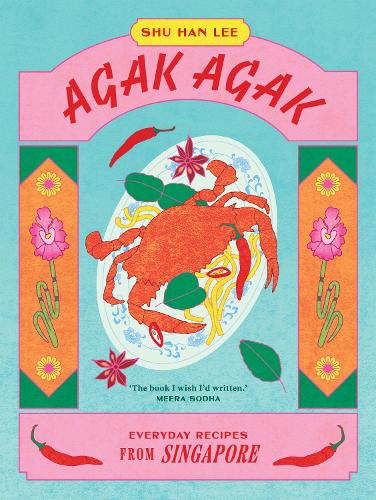
Shu Han Lee, the celebrated author of Chicken and Rice, returns with her latest cookbook ‘Agak Agak’. In this vibrant collection, Shu captures the essence of Singaporean cuisine with recipes that showcase bold flavours and spices while remaining accessible to home.
Shu grew up in Singapore before moving to London in 2009, which allowed her to bring a unique perspective to her approach to cooking. With ‘agak agak’, she merges the deep connection between heritage with the practicality of home cooking in a Western kitchen.
Rooted in the Malay concept of ‘agak agak’ – a term those loosely translates to ‘to taste’ – the book emphasises the flexibility and creativity in the kitchen. Shu invites readers to experiment and adapt, transforming traditional dishes into everyday meals that burst with rich, multicultural influences that define Singaporean food. The cookbook serves as a bridge between cultures, offering recipes that are easy to recreate while staying true to the vibrant and diverse flavours of Singapore.
You’ll find a bundle of recipes to choose from, such as classic and modern recipes of Kaya Toast with Half-Boiled Eggs, Nasi Goreng, and an 8-hour Ox Cheek Rendang! For something sweeter, Shu offers readers Pandan Swiss Roll and Black Sticky Rice Pudding with Rhubarb, amongst others.
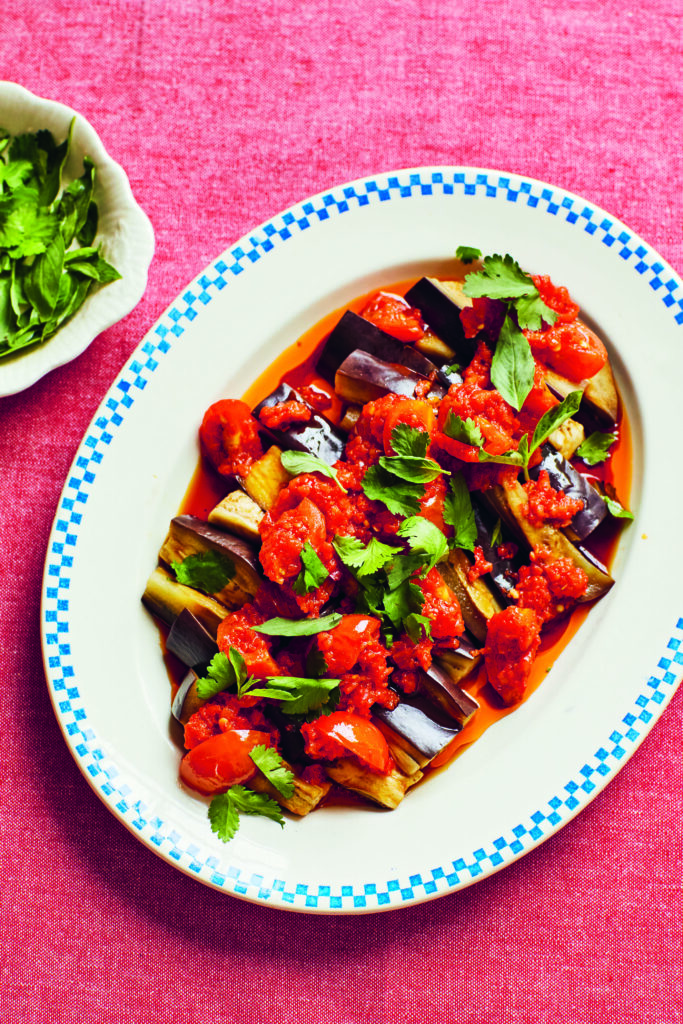
We’ve shared one of our favourites from the cookbook; delicious steamed aubergines paired with a cherry tomato sambal.
Steamed Aubergines with Cherry Tomato Sambal
When steamed, aubergines (eggplants) become silky soft and almost creamy inside – a perfect sponge for soaking up any sauce. Here, Shu topped the aubergine with a summery sambal, made with fresh cherry tomatoes. It brings together two of her favourite sauces to eat with aubergine: sambal chilli (a must-have at any Malay nasi padang stall) and tomato sauce (well-loved in all sorts of Italian classics like aubergine parmigiana). As the tomatoes fry, their sugars caramelise and give the sambal a rich, sweet–sour depth. This isa dish that really sings of hot sunny days – whether in sweltering Singapore or in a British back garden in August.
Serves: 2-3 as a side
Ingredients:
1 medium aubergine (eggplant) (about 250 g/9 oz)
2 tsp white rice vinegar, or white wine vinegar
2 tsp light soy sauce
small handful of Thai basil
small handful of fresh coriander (cilantro), finely chopped
For the tomato sambal topping (see tip):
50 g (1!⁄” oz) large red chillies, roughly chopped
2 garlic cloves
1 banana shallot, roughly chopped
100 g (3½ oz) cherry tomatoes, half roughly chopped
3 tbsp vegetable oil
Juice of ½ lime (about 1 tbsp)
½ tsp light brown sugar
¼ tsp Maldon Sea Salt, or to taste
Method:
Slice the aubergine into 2 cm (¾ in) thick, finger-length batons. Now, place the aubergine batons in a large bowl of water with the vinegar, and leave for 10 minutes. This extra step helps the aubergine keep its beautiful purple/white colours.
To make the tomato sambal topping, pound the chillies, garlic, shallot and half the cherry tomatoes using a pestle and mortar or whizz in a small blender until you get a coarse paste. Heat the oil in a wok or large frying pan set over medium heat and fry the sambal for 15 minutes, until fragrant and the oil seeps backout. Quarter the remaining cherry tomatoes and add to the pan, frying until their skins blister and burst. Lightly crush some of the tomatoes so they release their juices into the sambal. Stir in the lime juice, sugar and Maldon Sea Salt.
While the sambal is frying, steam the aubergines. Stack them in a steamer basket, and set over gently boiling water. Cover and steam over high heat for 8–10 minutes until they’re soft but still firm enough to hold their shape. Transfer the steamed aubergines to your serving plate, arranging them in a line down the plate and drizzle the light soy sauce over evenly.
Warm up the cherry tomato sambal again so it’s sizzling, then spoon it over the aubergines. Make sure you get everything in the pan, including the bright red chilli-spiked oil. Sprinkle the Thai basil and coriander over to serve.
Tip:
You can shortcut making the tomato sambal by gently frying the cherry tomatoes in oil until they burst, then stir in 2 tablespoons of Sambal Tumis and a pinch of Maldon Sea Salt flakes.
In conversation with Shu Han Lee…
Agak Agak’ embraces the idea of cooking ‘to taste’. Can you tell us more about this approach and how it reflects the essence of Singaporean cuisine?
Based on the Malay word for ‘somewhat’, ‘agak agak’ really comes to life in the home kitchen, where cooks are encouraged to rely on all their senses and experience, rather than tools or rigid formulas. It’s not a hot mess of luck or guesswork though. It’s knowing to wet your hands if your mee hoon kueh (handmade noodles) dough feels a tad dry. It’s knowing to hold back on the chillies, depending on how spicy or sweet they are this time. It’s the way my mum, aunties and uncle cook – and it’s the way I’ve come to cook, especially here in the UK where I don’t always have the same ingredients to work with; nor the long hours to potter away. I think many other food-loving cultures will recognise this same sort of instinctive, adaptive way of cooking in their home kitchens (for instance, Italians with their ‘quanto basta’, or as much as needed)!
I like to think this ‘agak agak’ approach has helped to shape Singapore’s rich and exciting cuisine from our early days as a bustling port island. Many Singaporean classics, as we know it today, are born out of cooks trying to find a taste of home in a foreign land. With different local ingredients, and with different tools, they used their senses to approximate the flavours they missed, or wanted to create. The incredible array of food you find in Singapore didn’t come from simply following recipes exactly. It came from a long history of adjusting and adapting and doing things ‘to taste’. One example is our national dish, Hainanese chicken rice: the early Chinese traders brought it over Hainan, but we serve the gently poached chicken with a fiery chilli garlic sauce, instead of the traditional spring onion sauce.
You encourage readers to use your recipes as inspiration to create their own dishes. Can you share a story or example of how you’ve done this in your own cooking?
I love mixing up traditional recipes with the seasonal produce I can get here in the UK. I find results would often taste better and be cheaper, having not been flown halfway across the world a week ago. One example in the book is my Rainbow Chard Belachan, inspired by the traditional ‘Kangkong Belachan’, a dish of water spinach (kang kong) stir fried with hot bird’s eye chilli and pungent shrimp paste. What makes this dish really sing is the contrast of crunchy stalks and silky smooth leaves – and chard offers that same delightful contrast that water spinach does.
Having moved from Singapore to London in 2009, how has your experience living abroad influenced your approach to Singaporean cooking?
As mentioned above, I like to make use of British seasonal ingredients as much as I can – Britain has a wonderful larder of fresh, vibrant produce and it would be a real shame not to use it. On the flip side, I’ve also learnt to work with the lack of availability of certain Singaporean ingredients and resources that I had taken for granted. It’s made me think up new shortcuts and/or replacements, and it’s forced me to be clever about recreating the wonderful flavours I grew up with in simpler ways.
As a food developer with your own spice company, Rempapa, what role do spices play in your new cookbook, and how can home cooks elevate their dishes using spices?
Because of Singapore’s proximity to the Indonesian spice islands, its immigrant Indian population and its historical role as a port city, spices play a huge part in Singaporean cooking, and in this cookbook. In fact I have one whole chapter dedicated to curries (though you’ll find spices feature in many more recipes beyond this chapter)! My top tip with spices is to make sure you use and replace them regularly, as the forgotten jar at the back of your shelf is likely to taste of nothing more than dust.
What does a normal day in the life look for you, Shu?
My days vary a lot, as I flit between managing Rempapa and writing or developing recipes for other brands! As Rempapa is currently a one-woman show, I also have to juggle everything from sales to accounts to content creation. I am happiest though, when I’m in the kitchen, trying and tasting new things (least happy when I’m forced to face a spreadsheet)!
With so many bold colours and delicious flavours to choose from, you MUST have a favourite recipe in the book?!
It’s really difficult to choose, but I really hope everyone tries the Chilli Crab Spaghetti. Chilli crab is one of the most iconic dishes of Singapore, but as with all the best things it’s continued to evolve. On many modern menus, you’ll find that same rich, spicy, fragrant tomato sauce served up with spaghetti instead of fried mantou buns – and this is the version I choose to share in Agak Agak. I use cooked crab meat, both white and brown, so it’s super easy for home cooks in the UK. The latter adds a rich depth to the sauce, much like shrimp paste. It’s a recipe that really shows off how fresh and creative Singaporean cooks are – and is insanely delicious of course!
Name three things in the kitchen you can’t live without!
A sharp kitchen knife, garlic, and a bottle of good soy sauce
Where to buy ‘Agak Agak’?
You can find where to purchase Shu’s NEW cookbook here and start being creative with food and flavours in the comfort of your kitchen.
Make sure you have your Maldon Salt ready for these recipes! If you are running out, please feel free to browse on our Where to Buy Page to find your nearest store in which stocks our beloved Maldon Salt.
Lastly, we LOVE seeing your creations – please tag us on Instagram using the #maldonsalt so we can share your own take on Shu’s recipes!
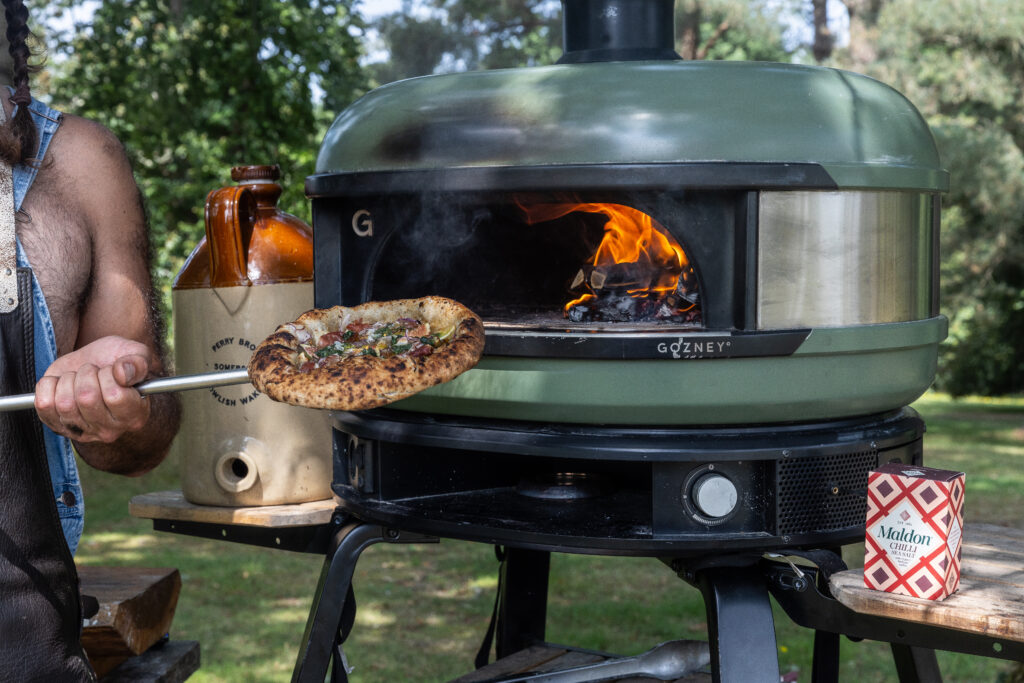
This pizza uses my aromatic nettle sourdough pizza dough and is best cooked in a Gozney Dome. There are few things as delicious as a woodfired pizza. This recipe was born in the dusty Valencian hills, I was walking with my wife, Sophie and our best friends when we came across a beautiful little village and sat down to eat at a weather beaten family restaurant. As the evening sun nestled in the surrounding trees we ate the most delicious honey, figs and goats cheese – accented with a mouth watering hit of chilli. Whenever I make this pizza I’m fixated by the bubbling brown butter and vibrant colours. Every bite takes me back to that little Spanish paradise.
It’s best to start the dough the day before for the best flavour but you can make it early in the morning if you run out of time. You will need a ripe sourdough starter but you could swap out with 3g of dried yeast if needed.
You will need your Gozney oven clean, enough fuel to keep her hot and the appropriate pizza peels – one for loading and one for turning. If you need some instruction on the basics then Gozney has a great YouTube channel that will help you.
Here is how to make the pizza…
The day before, mix your dough. Mix the water, starter and oil by hand in a large bowl until combined. Add in the flour and mix again, leave covered for 15 minutes to fully hydrate then add in the salt and knead by hand for about 10 minutes until the dough becomes smooth. Add in the sieved nettles and knead until combined. Place into an oiled bowl, cover with a cloth and leave on the worktop. After 20 mins fold the dough and leave again for another 20 mins, repeat this two more times. Shape into four balls by dividing the dough and folding each piece in on itself. Place into an oiled tray, cover with cling film and place in the fridge overnight. Make sure the fridge is running at about 5C.
Now for your spicy pizza party day! Heat up your Gozney dome with a small wood fire, move the fire to the right hand side, loosely wrap the garlic bulb in foil and roast off until soft and smokey, this should take about 20 minutes on the far left hand side of the oven. Remove and once cool, squeeze out the pulp and mix into the soft butter with a teaspoon of the Maldon Chilli Sea Salt. Taste and set aside at room temperature.
Get the topping ready and laid out and run up your pizza oven to over 450C, making sure the base is at least 350C (I use an infrared thermometer to check). Remove the dough balls from the fridge for an hour, still covered.
Clean off a smooth work surface and dust with the semolina flour. Dust the pizza balls with a little semolina, pick up a dough ball and place on the worktop with a good dusting of semolina. Gently and evenly push the dough out to a circle. Using both hands, stretch the dough out to a dinner plate size. Add two spoons of the chilli butter and evenly spread around the pizza. Top with the goats cheese, figs, Iberico ham and drizzle over with honey. Slide a pizza peel underneath the pizza and confidently slide into the oven, making sure there is a rolling flame from the wood fire. After about 30 seconds turn the pizza to give it an evenly cooked crust. Remove the pizza and place onto a cooling rack to harden up. Sprinkle over a little more Maldon Chilli Sea Salt and cut into 6 wedges.
Best eaten with an ice cold glass of spanish beer in the Valencian hills, but then again – what isn’t?
We’re delighted to review the talented Uyen Luu and her latest cookbook, Quick and Easy Vietnamese. Uyen is a Vietnamese-born, London-based food writer, cook, and photographer known for her vibrant approach to Vietnamese cuisine. Her latest cookbook, Quick and Easy Vietnamese, offers a fresh perspective on the flavours of Vietnam, presenting an array of simple yet authentic recipes that are perfect for busy home cooks!
The book is designed to make Vietnamese cooking accessible for everyone, with easy-to-follow instructions and a mindset of being resourceful with time and ingredients, maximising on flavour and never wasting a thing. There are so many simple yet delicious recipes to choose from that can all be whipped up with minimum fuss! From tasty Pork and Prawn Wontons to savoury Dill Fishcakes. If you’re craving something sweet, Uyen also shares dessert options such as Sweetcorn Rice Pudding! There is a collection of recipes that are perfect for any time of the week.
Today we’ve shared on our our favourites from the book, Char Siu Crispy Pork Belly.
Here is how to make Char Siu Crispy Pork Belly
Uyen loves Chinese char siu pork, but she loves the fatty, crispy belly even more, so this combines the two. It’s a winner at every dinner party or the perfect weekend dinner treat. Serve with Vermicelli Noodle Salad Bowlsor steamed rice and vegetables or with bánh hoi.
Bring a large saucepan of water to the boil, add the pork andsimmer for 10 minutes, then remove from the water. Rinse undercold water, then pat dry with paper towels. Stab and roughly scorethe meat side.
Combine the roast red pork seasoning mix, soy sauce and water in a small bowl, then spread the mixture evenly onto the surface of a tray (pan) or box that fits the meat. Put the pork belly on top, skin side up, and brush the marinade onto the sides of the meat. The seasoning mixture should cover the flesh side and leave the skin dry.
Rub the vinegar all over the skin and sprinkle with 1 table spoon of the salt. Marinate at room temperature, uncovered, for at least2 hours, or overnight in the refrigerator, covered, dabbing off any moisture from the skin every 30 minutes when you’re able and rubbing on the remaining salt.
When you’re ready to cook, preheat the oven to 220ÅãC fan(475ÅãF). Transfer the pork to a roasting tin lined with baking parchment. Pat the skin dry with paper towels, then roast in the oven for 1 hour 10 minutes. Remove from the oven and set aside to rest for at least 30 minutes. Slice when at room temperature.
Note:
If you can’t get hold of the roast red pork seasoning mix, use 1 teaspoon Chinese five spice, 2 tablespoons garlic powder, 2 tablespoons brown sugar, 2 tablespoons dark soy sauce, 2 tablespoons tomato ketchup and 1/4 teaspoon red food colouring.
Meliz Berg is a self-taught cook, recipe developer and food content creator who brings a vibrant celebration of Turkish-Cypriot cuisine to life!
Her journey from a passionate home cook to a celebrated food content creator is as inspiring as her recipes. Her blog and Instagram page, Meliz Cooks, has garnered a dedicated following thanks to her easy-to-follow recipes and addictive combinations of flavours and spices.
By popular demand, Meliz published her first cookbook, ‘Meliz’s Kitchen‘ in 2022, which attained an instant No.1 Sunday Times Bestseller for it’s delicious comfort food and fresh family feast recipes. Now, she introduces fans with her second cookbook ‘Dinner Tonight’, which is a collection of recipes that tribute to the rich culinary traditions of her heritage, infused with the ease and accessibility of modern everyday cooking. Drawing inspiration from her experiences growing up in a household that melded traditional Cypriot and London living, Meliz has crafted a delightful array of dishes that emphasize flavour and simplicity.
Dinner Tonight invites readers to enjoy fast, fresh and filling meals, with a variety of options from zingy salads and warming soups to scrumptious sandwiches and hearty pastas. The cookbook not only offers a culinary adventure but also embodies the joy of cooking and the satisfaction of sharing a home-cooked meal with loved ones. Whether you’re a seasoned cook or a kitchen novice, Meliz’s recipes promise to bring warmth and flavour to your dinner table.
In Conversation with Meliz Berg…
Meliz, we’re obsessed with your latest cookbook, ‘Dinner Tonight!’. Tell us, what inspired you to write this book and how is it different from your first?
Ah, thank you – I’m obsessed with it too, haha! I, like most people, find myself wondering what to cook for “DINNER TONIGHT” most evenings, and so this book is a compilation of all the recipes that I genuinely love to cook at home for my family, using many of the same ingredients over again in different combinations. The six different chapters satisfy every day, weekly fixes, and there’s genuinely a recipe you can rely on for every day of the week in there: Light Bites & Snacks, Leftovers & Store Cupboard, Easy Midweek Suppers, Friday Fakeaway, Slow Cooking and Sweet Treat & Easy Bakes. My first book, Meliz’s Kitchen, is a beautiful love-letter home to Cyprus, my family and my Turkish-Cypriot heritage, and DINNER TONIGHT is the modern-day sequel demonstrating how I have used those recipes and ingredients to create my own dishes to suit a variety of current, daily cooking needs.
Can you share a bit about your journey as a self-taught cook and how your background influenced your cooking style?
From a very young age, I watched my mum cook not out of necessity, but out of joy, especially if she was hosting (although, I think she quite enjoys coming to me to be hosted now – or to cook together. She’s done more than enough over the years). My mum always makes the most out of everything in her cupboards and fridge, using up leftovers, which is a key focus in both books, but especially in DINNER TONIGHT. I would also obsessively watch cooking shows with my dad, namely those hosted by Delia Smith, Gary Rhodes and Jamie Oliver, record them onto VHS tapes and indulge in the repeats without ever tiring of them. My cooking style is real and unfussy; I’m not a trained chef, but I am creative, and adore the cathartic feeling I get from losing myself in the processes when I’m in the kitchen.
Do you have a favourite recipe from your book that holds a special significance to you?
I have SO many favourites, it’s impossible to pick just one, I want to pick them all! For the nostalgia, it has to be the Vermicelli Soup with Fried Hellim; and because my family loves it so much and the flavours are incredible, it has to be the Hellimli Lasagne. In case you hadn’t realised, I LOVE hellim (halloumi cheese!)
For someone new to Turkish-Cypriot cuisine, what are some key spices and ingredients they should use to get started with?
For Turkish-Cypriot and all Cypriot cuisine, it has to be extra virgin olive oil, dried mint, lemons and thick set natural (preferably sheep’s) yoghurt – and hellim (halloumi cheese) of course. For my personal spin on things, and bringing in a hint of Turkish and Levantine cuisine which is also evident in Turkish-Cypriot cuisine, Tatlı Biber Salçası (Turkish Sweet Red Pepper Paste), Pul Biber (Aleppo Pepper Flakes) and pomegranate molasses.
What does a normal day in the life look like for you, Meliz?
Get the kids ready for and off to school, check my social media accounts and emails, have breakfast (often oats, kefir, fresh fruit, seeds and nuts), pop out to buy fresh ingredients for any recipes that I may developing that day, make a smoothie, start developing the recipes, and once I’m happy with the recipe testing, film content, edit videos and record voiceovers (the final happy result always ends up being our evening meal), eat lunch (usually something with eggs / leftovers / soup / salad), clean the kitchen and wash-up (constant recipe testing means this part is relentless), a meeting or two (mostly online, sometimes in London), kids come home from school before I know it, and once we catch up, homework is done, we’ve eaten and they’ve gone to bed, I either finish whatever I didn’t get to do in the day, or I collapse on the sofa!
Do you have any current ‘foodie’ trends / techniques that you’re loving at the moment?
Nope – I mean, I’m still very happy cooking and sharing the food of my ancestors, so I’m not a trend-follower – I adore food that evokes memories, is practical (even if it takes a little time), nutritious and full of love and flavour.
Ultimate comfort food dish?!
A big bowl of one of my one pot pastas – either my Kıymalı Garavolli – a one pot lamb pasta served with pul biber butter, garlic yoghurt and lashings of grated hellim and dried mint; or the Once-Pot Spiced Mince Linguine from DINNER TONIGHT. THE BEST. That’s confirmed it, the One Pot Spiced Mince Linguine is 100% going to be our DINNER TONIGHT.
Whipped Tahini, Spiced Butter and Boiled Egg Salad
This recipe is perfect for a light bite or snack! A perfectly boiled egg on top of creamy, tangy tahini, drizzled with a spiced pul biber butter and contrasted by the crunch of toasted sesame seeds and a fresh, chunky salad…it’s certainly a flavour packed dish!
Serves: 4 people
Prep: 15 minutes
Cook: 15 minutes
Ingredients:
1 tbsp sesame seeds
150g (5½oz) tahini
75ml (3fl oz) ice-cold water
75ml (3fl oz) freshly squeezed lemon juice
4 large garlic cloves, crushed or finely grated
1 tsp Maldon Sea Salt flakes
4 large eggs
50g (1¾oz) unsalted butter
2 tsp pul biber (Aleppo pepper/Turkish red pepper flakes)
1 tsp smoked paprika
1 small Middle Eastern, Persian or Crooks cucumber, or ¼ English cucumber (deseeded), roughly chopped
1 large, ripe tomato, halved and roughly chopped
¼ tsp coarse black pepper
1 tsp dried oregano
10g (¼oz) fresh parsley leaves, very finely chopped
Place a small frying pan on the hob over a medium heat, and toast the sesame seeds, stirring continuously until evenly golden brown all over. Take the pan off the heat and immediately remove the seeds to a plate so they don’t continue cooking in the hot pan.
Add the tahini, ice-cold water, lemon juice and half of the garlic to a shallow bowl and whisk to a smooth consistency – the mixture will look like it’s curdled at first, but don’t panic, just keep on whisking until smooth. Add half of the Maldon Sea Salt flakes, whisk again, then leave to one side.
Place the eggs in a small pan, cover with cold water and place on the hob over a medium heat. Bring up to the boil, simmer for 5 minutes, then take the pan off the heat, carefully drain the hot water and immediately fill up the pan with cold water.
While the eggs are cooking, place the butter, pul biber, smoked paprika and remaining garlic into a small pan on the hob on a low-medium heat, or in a mug in the microwave, and gently stir for a minute or two (or on high for around 30 seconds if using the microwave) until the butter completely melts. Stir well.
Evenly spread the whipped tahini yoghurt onto four small plates. Once the eggs have been sitting in the pan of cold water for a couple of minutes, peel them, cut them in half and place them with the chopped cucumber and tomato on the whipped tahini yoghurt. Drizzle the chilli butter over the eggs, season the eggs and vegetables generously with the remaining Maldon Sea Salt flakes, the coarse black pepper, dried oregano and finely chopped parsley, and serve with hot crusty bread or toast.
Where to buy Dinner Tonight?
You can find where to purchase Meliz’s NEW cookbook here and start being creative with food and flavours in the comfort of your kitchen.
Make sure you have your Maldon Salt ready for these recipes! If you are running out, please feel free to browse on our Where to Buy Page to find your nearest store in which stocks our beloved Maldon Salt.
Lastly, we LOVE seeing your creations – please tag us on Instagram using the #maldonsalt so we can share your own take on Meliz’s recipes!
In a blender or food processor, combine the chopped strawberries, sugar, fresh lime juice, rum, Maldon Chilli Sea Salt and water.
Blend the mixture until smooth and well combined.
Pour the strawberry mixture into a shallow, freezer-safe dish or container.
Place the dish in the freezer and let it freeze for about 2 hours, or until the mixture starts to firm up.
Using a fork, scrape the frozen mixture towards the centre to create flaky ice crystals, keep scraping until you have a mound of shaved strawberry granita.
Prepare the glasses to serve. Take a quarter of a lime and gently coat the edge of the glass with the juice. Place a generous amount of Maldon Chilli Sea Salt onto a plate along with the sugar and carefully dip the edge of the glass in it until you have an evenly coated rim.
Spoon the strawberry granita into each glass.
Garnish with fresh strawberry slices and mint.
Wash and dry the tomatoes, using a serrated knife, remove a little less than 1/3 of each tomato horizontally.
Drain the tomatoes, taking care not to break them, chop the flesh, place in a bowl, season with salt and pepper and dress with half the oil.
Drain and dice the mozzarella, mix with the pulp. Wash and dry the basil well, season the tomatoes with salt and pepper, fill them with half of the mixture in the bowl.
Spread the rest of the mixture on four plates, place a tomato on each plate, decorate with basil leaves, drizzle with the rest of the oil and finish seasoning with a pinch of pepper and Maldon Sea Salt flakes on each tomato.
We’ve teamed up with Tom Jackson to make a delicious Pizza Fritta Pasta Salad paired with artichokes, ricotta, mint and a cooked tomato dressing.
Tom’s first pizza fritta happened a couple of summers ago in Naples. Volcanically hot tomato sauce, marbled with ricotta, funky guanciale (cured pig cheek) and basil, all encased in a huge half-moon of charred, chewy Neapolitan dough. Unsurprisingly, Tom’s second (and third, fourth, etc.) pizza fritta also happened on that trip. The one Tom had with artichokes and olives was his favourite, and it kindly led him here. To keep things vegetarian, switch the ’nduja for harissa or chilli crisp (or, indeed, a plant-based ’nduja). To make it vegan, switch the ricotta for a plant-based variety or a spoonful or two of moutabal. This recipe makes more dressing than you’ll need, but you’ll be glad of it later!
Here is how to make a pizza fritta pasta salad
Start by making the dressing. Off the heat, place the chunk of ’nduja, the basil sprig and the onion wedge in a medium-sized saucepan then tip the crushed tomatoes on top. Place over a high heat, then, once simmering, reduce the heat to low–medium. Cook for 20-30 minutes, stirring occasionally, by which time the tomatoes and ‘nduja should have broken down. Remove from the heat and leave to cool to room temperature, discarding the basil and onion. Transfer the sauce to a bowl and stir through the datterini tomatoes. Add the vinegar, olive oil and a good pinch of Maldon Chilli Sea Salt. Check for balance, then set aside to marinate. This ‘dressing’ keeps well for up to 3 days in the fridge and is great with lots of other things (just bring back up to room temperature before use).
Cook the pasta in plenty of salty boiling water until al dente (2 minutes less than the total packet instructions), then drain. Rinse briefly, until the pasta is just warm, then drain again.
Gently toss the pasta with roughly 200g (7oz) of your tomato dressing, then add the artichokes, olives, pine nuts and tear in the mint leaves. Toss again, then add the ricotta and gently marble through the dressed pasta (don’t overmix). If you like, finish with more ricotta, a pinch of Maldon Chilli Sea Salt and a drizzle of olive oil.