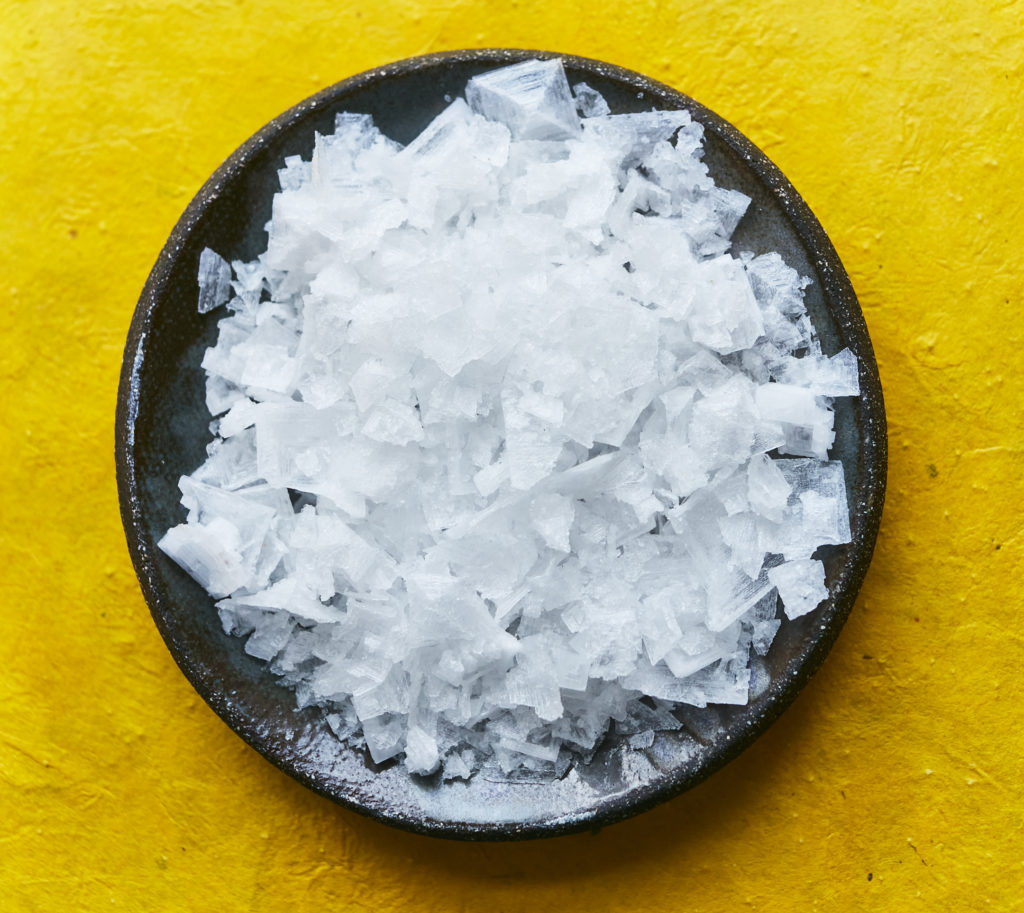
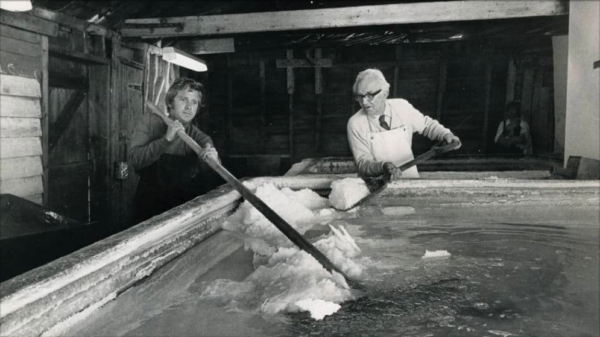
Maldon Salt is made like no other, there’s an art in temperature and timing. Simple, time honoured techniques, with skilled hands poised over every batch. Traditional methods passed down through the centuries make Maldon’s pyramid salt flakes unique.
We hand harvest our gourmet flakes to ensure they are perfect in both taste and texture. We then package them and send them out around the world. But it doesn’t end there. We take it upon ourselves to inspire chefs and foodies plus each new generation of up-and-coming talent, wherever they may be. Whatever we do, we do it with passion.
As a company, we take our corporate social responsibility to our customers, our partners and ourselves – extremely seriously. It’s very much a part of our culture. We are always seeking ways to lessen our footprint and reducing carbon emissions. It’s all part of our commitment to global environmental sustainability.
Want to find out more? Please email us on info@maldonsalt.co.uk and keep up to date via social media @maldonsalt
Maldon Salt and it’s Rich History
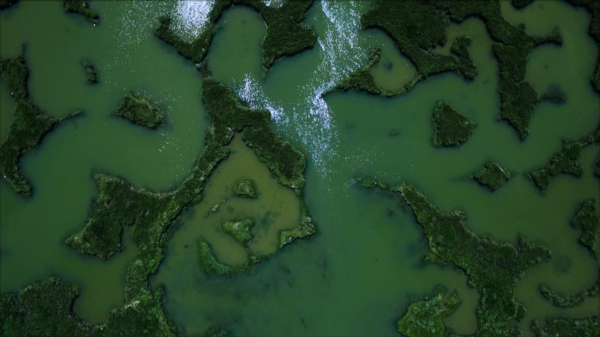
Maldon Salt’s twisting shorelines of Essex have been alive with salt making for almost a thousand years, since the time when salt was worth its weight in gold! With records of salt making in Maldon dating back to the Doomsday survey, it was this local heritage that would finally give birth to the beloved Maldon Salt Company, where the art of salt making was practised since 1882.
Here we want to deep dive into the roots of Maldon Salt, looking into the past in where and why Maldon Salt was born, our proudest moments throughout the decades, and of course what the future will look like for Maldon.
Why is it Called Maldon Salt?
Although the area is not so easy to spot on the world map, Maldon Salt is a family founded business situated in Maldon, Essex and is still run by the same four generation family to this day. The Osborne family have run the business for over a century since 1882 by James Osborne and his son Cyril, following on with grandson Clive, and now great grandson Steve, who is following in James’ footsteps to nurture the brand that we know and love today.
These days it’s rare to find a family-grown business that’s still family run, especially for almost a century! That’s a long time and a lot of salt for a family that’s both custodians of ancient culinary tradition and creators of a globally recognised brand!
Where Does Maldon Salt Come From?
The clue is in the name! Maldon Salt is hand harvested and produced in the little English village of Maldon, located in the county of Essex. The town itself has a strong maritime history where St. Mary’s Church near the Hythe Quay is known locally to Maldon as the mariner’s church to aid sailors whilst navigating the rivers.
On the subject of rivers, Maldon Salt was created through the Blackwater Estuary River. This is where Maldon would harvest the salt through the ‘Spring Tide’ saltwater and create the unique pyramid-shaped flakes through time-honoured techniques and the appreciated art of temperature and timing. Head over to our YouTube channel to learn more about where Maldon Salt comes from.
Notable Moments in our History
As we share the light on how our sea salt flakes are formed, this process is what has caused Maldon Salt to be renowned and loved by the world over.
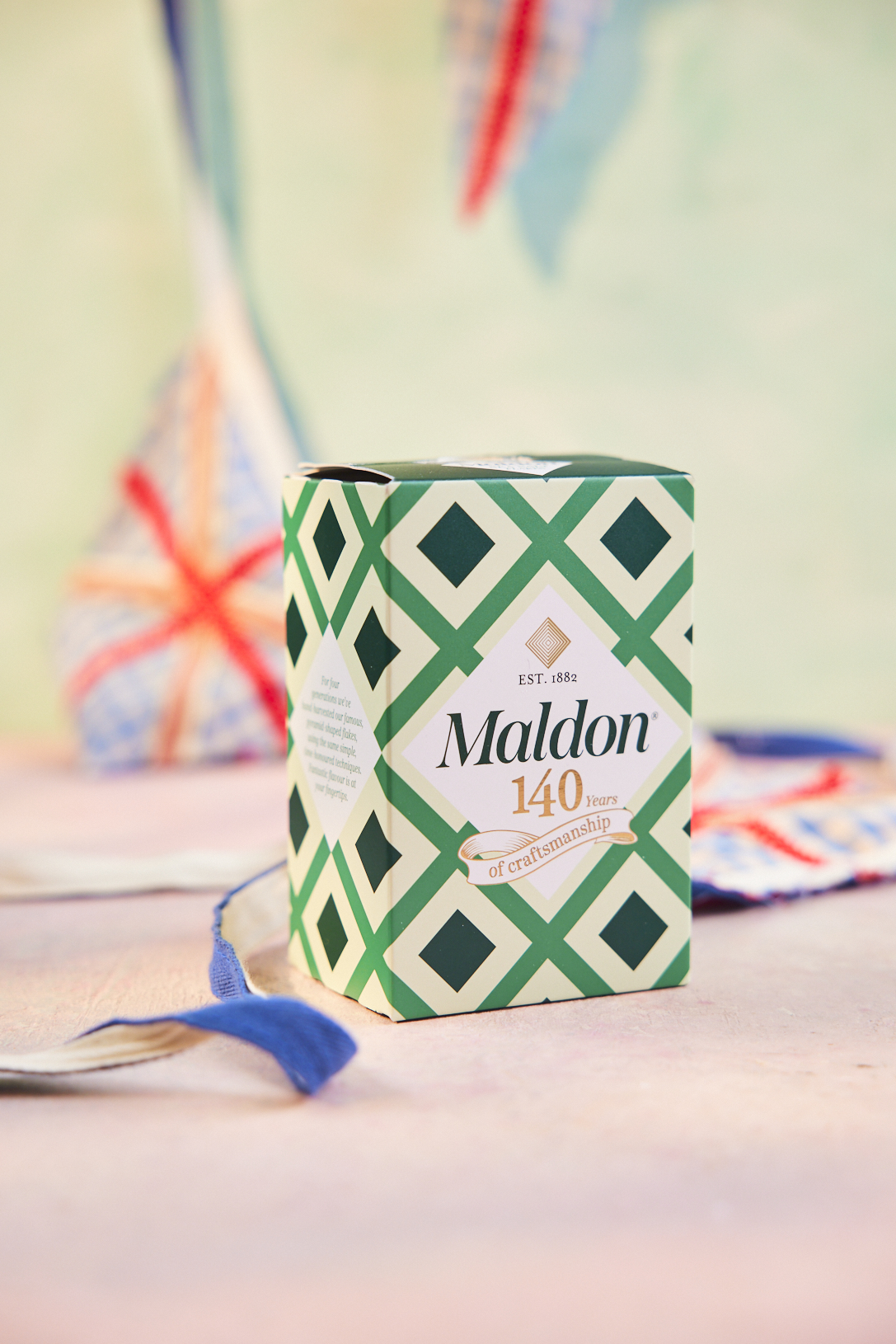
In 2022, we celebrated 140 years of craftmanship! Delighted to celebrate this milestone, Maldon unveiled their limited edition 140th Anniversary 250g Pack which was available in retailers nationwide. Featuring a striking golden ‘140 years of craftmanship’ logo, it is a must-have for many millions of loyal fans who want to join in with the commemoration. You can read about the 140th limited-edition pack here!
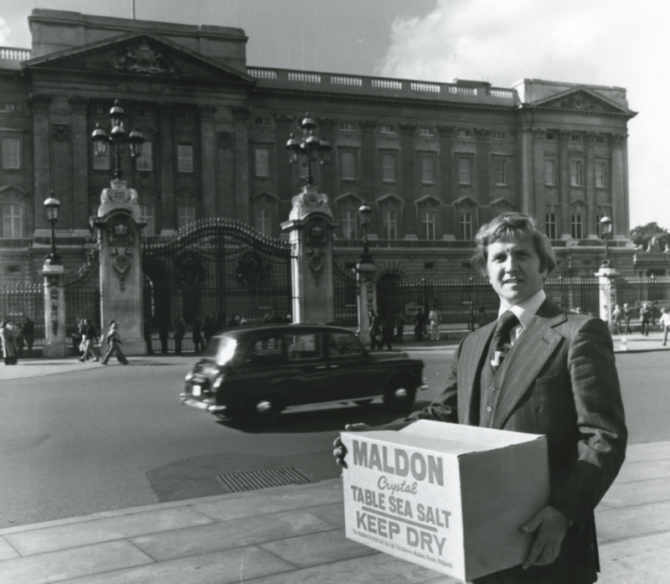
On the topic of celebrations, whilst Queen Elizabeth II had also celebrated her Platinum Jubilee the same year, did you know that Clive Osborne delivered a case of our finest sea salt to her Silver Jubilee! Then in 2010, Queen Elizabeth II was welcomed to the salt works in Maldon, where two years shortly after Maldon Salt was granted a Royal Warrant as the official purveyors of sea salt…talk about grand celebrations!
Not only are we current Royal Warrant holders, we also hold a rich history of exporting our famous flaked sea salt since the 1950s, now supplying to over 55 countries around the globe.
Why is Maldon Salt Well Known?
Our unique pyramid flakes are a trademark for Maldon, recognised and loved by the world over. As the finest of sea salts, our flakes have a unique taste and a luxurious quality where they release their saltiness with sweet precision, a fresh intensity and clean taste. This is why Maldon is used and loved by chefs and foodies from around the world.
Not to forget Maldon Salt compliments every dish, as it brings out the sweetness in desserts and complements the hidden savoury notes. Head over to our recipes, blog and tips page to learn how versatile Maldon Salt really easy, from salt rimming cocktails to salt baking sea basses!
The Future of Maldon Salt
Whilst embracing our rich history, we are always looking forward. Our vision is to inspire chefs, home cooks and foodies to enjoy Maldon Salt every day, taking the simple to the extraordinary in every recipe. Keep your eyes poised on Maldon as we have very exciting plans to share with our beloved foodies in the upcoming months… we can’t wait for you to ‘sea‘ with your very own eyes!
As a brand we continue to seek ways to lessen our footprint, and therefore we are currently working on a five-year plan to both increase the sustainability of our packaging. Additionally, Maldon Salt will be supporting the World Land Trust and the admirable work they do to protect threatened habitats and wildlife.
Make sure to have a browse through our other pages, including where you can purchase our Maldon Salt Range. Still wanting to find out more about us? Do you have some ideas you’d like to share? Please email us on info@maldonsalt.co.uk and keep up to date via social media @maldonsalt.
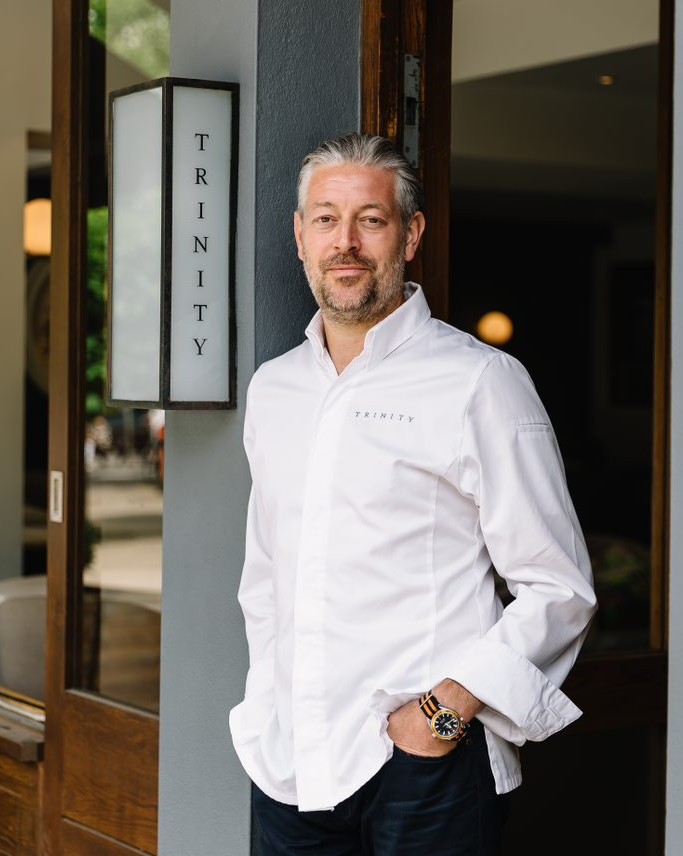
As part of our Seasoned Pros campaign we caught up with Adam Byatt, restauranteur and owner of Michelin star restaurant Trinity Clapham.
We find out how he started his career at Claridge’s Hotel, what he can’t be without in the kitchen plus his favourite afternoon tea at Brown’s Hotel.
When did you know you wanted to be a chef?
I left school at the age of fifteen to join an apprenticeship at Claridges Hotel. I had wanted to become a policeman but was vertically challenged at the time. I loved cooking and this opportunity was too good to miss. I fell in love with the role of being a chef on the job. I certainly didn’t start out as one.
Top 3 things you can’t be without in the kitchen?
Equipment wise, it has to be my beloved knives, great saucepans and a solid large chopping board. I can make most things taste great with those.
In terms of ingredients, my store cupboard is never short on great olive oil, salt – good quality pure sea salt and yes I do use Maldon exclusively – and anchovies. More food becomes delicious with these wonderful ingredients.
Your go-to comfort dinner and dessert?
Comfort dinner has to be roast chicken, lots of garlic and lemon, well rested and served with simple roast potatoes. I love Fosse Farm chickens.
Pudding has to be apple tart tartin – hard to beat, harder to make and even harder to work off!
Your favourite lockdown watch – series/film?
My wife, Vicki, and I managed to watch all of the Tin Star season one, an episode a day for a few weeks. It was joyful with a glass of wine…love Tim Roth.
Where are you going to eat as soon as you are able?
Afternoon tea at Brown’s Hotel. I’m lucky that I can make most foods we want to eat at home but there is no way I am going to rustle up a proper afternoon tea! Then my mum’s roast – with my parents who I haven’t seen for way too long.
What’s your favourite cookery book?
Forgotten Cookery by Darina Allen.
What job did you do before you were a chef?
I started work in a kitchen the May after I left school but before that I had worked from a young age as a paperboy, a milkman, a window cleaner and started a car cleaning business with my mates. I’ve always liked working.
Why don’t you try swapping your classic roasties for these delicious hasselback potatoes! These baked potatoes are thinly sliced down the middle and drizzled with plenty of juicy, garlic butter to create a perfectly crisp outside and fluffy centre – ideal as a side dish for your Sunday roast.
If you’re using larger potatoes, preheat the oven to 210°C/190°C Fan/gas mark 7/425ºF. For smaller, new potatoes, preheat to 200°C/180°C Fan/gas mark 6/400ºF.
Take one potato at a time and place in a wooden spoon (like you would carry it in an egg-and-spoon race), and cut vertical slits about 3mm / one-eighth of an inch interval.
When you have cut the slits in all the potatoes you are using, put the baking tin on the hob, adding the butter, garlic and oil into the tin and heating up until sizzling.
Add the potatoes cut-side down first onto the tray, spooning the buttery juice over them. Make sure to turn them well to coat evenly.
Sprinkle each potato well with Maldon Salt and your rosemary and put in the oven. Cook the large potatoes for about 1 hour and 10 minutes , testing to see whether the flesh is soft (you may need another 10 minutes for this). If you are using the new potatoes, cook for around 40 minutes.
Transfer to a warmed plate, and serve.
What to serve hasselback potatoes with?
Hasselback potatoes pair beautifully well with beef due to the succulent juices from the meat, in which create an almost rich umami-like flavour to enhance the potatoes. You can follow our Genevieve Taylor’s Ribeye Steaks recipe to create the flavour sensation for your dinner tonight!
Join Ben Tish in creating the classic spring lamb with a twist! Salt crust baking is a great way to cook lamb – using Maldon Salt for the crust will allow the juices to become trapped, whilst also perfuming the meat without making it overly salty and enhancing the flavour.
You’ll not get a more tender result than this method of cooking your lamb which makes a great addition to your Sunday Roast. Accompanying the lamb are these beautiful, buttery jersey royals which are at their prime in Spring and make a great addition to the roasted lamb.
Mix Maldon Salt with the egg whites to form a thick “paste”. Add some water to loosen if its too thick, you’ll need to be able to roughly mould around the lamb.
Heat the oven to 160°C/ 350°F/ Gas Mark 4
Season the lamb leg and then seal in a large sauté pan to brown on all sides. Turn off the heat and lay the rosemary stalks on top of the leg.
Spoon some of the Maldon Salt mix into a roasting tin and place the lamb on top. Nestle around the garlic and then mould the rest of the salt mix around the lamb to seal but leave the end bones protruding out.
Place the lamb in the oven and slowly cook for 2.5 – 3 hours until the meat is soft and tender with an internal temp of around 65c. Remove from the oven and rest for at least 20 minutes before cracking the crust open and carefully discarding. The lamb should come away from the bone very easily.
Whilst the lamb is cooking, boil the potatoes until just tender and then drain and cool before slitting lengthwise halfway through the middle and inserting a bay leaf. Place the potatoes on a roasting tin, season with Maldon Salt and drizzle with olive oil. Place in the oven and cook for 20 minutes or until golden and crispy. We find this the best way to cook jersey royals because it creates them to have a nice, crispy finish. Reserve and keep warm.
Serve chunks of the lamb alongside the bay potatoes and some garlicky aioli. Spring greens tossed in olive oil would also be a good addition. Baked lamb also pairs well with seasonal vegetables roasted in goose fat or vegetable oil, and sprinkled with Maldon Salt and pepper of course!
Interested in Salt Baking?
We have many other recipes including our delicious Salt Baked Sea Bass which showcases our to create a tender, juicy sea bass using the salt crust baking method.
What does salt crusting do?
Cooking lamb with a salt crust will lock in the natural juices of the meat. This is because when the lamb starts to cook in the oven, steam is then produced within the crust keeping it succulent and tender.
As the steam builds, some of the salt from the crust and natural oils of the meat will start to dissolve. This will then gently seep back into the lamb, giving it a rich, flavoursome taste.
You may worry that it seems like a lot of salt for this dish, however most of the crust is removed after cooking and only the correct amount of salt will season through the leg of lamb.
Should lamb be cooked in foil when roasting?
There’s no need to cover your leg of lamb with foil when it is roasting in the oven. You want a nice, slow roast to this meat so it can be enriched with flavour and covered in succulent juices. However, you may want to cover it with foil while it rests after cooking in order to retain the juices and keep it nice and warm before serving.
Do you enjoy cooking with lamb? We’ve also teamed up with chef Adam Byatt to create the delectable Buttery Lamb Leg with Weber. You may also be interested in our Lamb Chops with Parsley Aioli recipe in which shows you how to keep them tender and rich in taste!
We have teamed up with the talented Chef Ben Tish to create a British-loved classic with a twist – toast!This recipe is perfect as a breakfast or brunch to enjoy amongst friends and family on a dreary Sunday.
Ben whips creamy ricotta cheese to spread on each slice of homemade sourdough bread, toasted so that it is deliciously golden and warm. Laying cooked asparagus on top of the whipped ricotta creates a perfect flavour balance between sweet and savoury, which is only elevated further with a pinch of Maldon sea salt flakes!
Take this recipe even further by adding a perfect soft-boiled egg on top of the dish, sprinkled with an Aleppo pepper salt mix, which again incorporates Maldon Salt to enhance the fiery kick.
What is Aleppo pepper?
Aleppo pepper is named after the Syrian city of Aleppo, where it is largely grown in the area. It is also known as the Halaby pepper, where the pods, once ripened, are semi-dried, de-seeded and crushed to form the spice that we all know and love today.
It has a mild to moderate heat of around 10,000 on the Scoville scale, with almost cumin-like undertones. When combined with Maldon Salt flakes, it enhances the flavour to have a slightly sweet, raisin-like taste, counteracting the bitterness from the chilli itself.
What can you use instead of Aleppo pepper?
You can substitute Aleppo pepper with a mixture of paprika and cayenne pepper. It’s very easy to make! Since Aleppo pepper is mild in heat, we recommend only using 3-4 times as much paprika as cayenne pepper to replicate the gentle spice. Feel free to add more cayenne pepper if you desire a more fiery kick!
How to make asparagus, ricotta toast with egg and Aleppo pepper…
Firstly, place the eggs in a saucepan and cook for 6 minutes on medium heat.
After 6 minutes, carefully drain the water out of the saucepan.
Run cold water on the eggs for a minute. This will cool the shells off quickly and make it easier for you to peel the shell off.
When cool enough to handle, carefully begin to peel. Set aside in a bowl.
Set a pan of salted water on medium heat.
Add the asparagus and gently boil for 3 minutes until just tender.
Remove from the water and drain well.
Season with a generous pinch of Maldon Salt, black pepper, lemon juice and olive oil. Set aside.
In a small bowl, whisk the ricotta with the lemon zest and some black pepper.
Mix the Aleppo pepper with 1 tsp of Maldon salt.
When ready to serve, toast the sourdough lightly on both sides. Spread each slice with the whipped ricotta and then top with the asparagus.
Cut each egg in half and place this on the toast with the asparagus.
Finally, sprinkle the Aleppo pepper salt over the top and finish with a small pouring of olive oil.
Serve immediately.
Can you make this vegan?
You can easily make this vegan by replacing the soft-boiled eggs with tofu. Tofu is made out of pressed soybean curd which contains a high protein content. Since tofu contains moisture, it allows the texture to replicate that of an egg, making it a great alternative for vegans wanting to gain that flavour/taste experience of this recipe.
As part of our Seasoned Pros campaign we caught up with head chef of Norma London Ben Tish, to find out how he went from his family’s amusement arcade to working at the Ritz…
When did you know you wanted to be a chef?
At 18, I moved to London to start working at the Ritz – I hated it for the first year and then something clicked – I knew that was going to be the rest of my life- age 19!
Top 3 things you can’t be without in the kitchen?
Maldon Salt, lemons, extra virgin olive oil…
Your go to comfort dinner and dessert?
Indian food is a passion either homemade or takeaway – Dessert would have to be really good cheese cake – I love both set and baked and the thicker the base the better.
Your favourite lockdown watch – series/film?
Better Call Saul (realise I’m late to the party with that one)
Where are you going to eat as soon as we are able to?
Fallow.
What’s your favourite recipe book?
Moro – the cook book by Sam and Sam Clarke.
What’s a job you did before you were a chef?
I worked for my dad in his amusement arcade – giving out change, hoovering and polishing.
In this beautifully seasonal recipe, Maldon Salt is used to cure and preserve fresh limes which adds a really special mellow tang to the dish. The further in advance you can do the limes, the better they will be. You want to cure them for a minimum of 3 days. This recipe will give you a little too much wild garlic butter but makes a great addition to your fridge and can be used to make deluxe garlic bread or used instead of butter to add extra flavour to stews or pasta sauces.
Slice the limes as thinly as you can. Take your jar and place them in layers, sprinkling the Maldon salt equally between them. Press down as you go so they are all compressed and then pour over the oil. It is really important that the limes are totally submerged in the oil or else they will mould. Seal tightly and leave in a cool dark place or the fridge for at least 3 days.
Place your wild garlic, butter, preserved limes and a pinch of Maldon Salt in the blender and blitz until smooth. Transfer to a container and set aside.
Next, for your crispy panko garnish: heat 1tbsp olive oil in a pan, add your panko and stir until all the crumbs are coated in the oil. Toast on a medium heat until golden brown, season with a pinch of Maldon and set aside.
To blanch your asparagus, bring a pan of water to the boil, and season with 1tsp table salt. Trim the woody stems from your asparagus and blanch for 3 mins.
Take a small pan and add 50g of the wild garlic butter and 100ml of double cream. Bring to the boil, stir and season to taste with Maldon and lemon juice.
To serve, spoon the garlic sauce onto the bottom of your serving dish, top with the asparagus and sprinkle with the breadcrumbs and remaining preserved lime.
I put Maldon Salt in all sweet dishes I make – it has a way of adding balance so nothing is ever overly sweet, as well as bringing out other flavours and making them shine. Here, it is paired with ras el hanout, which translates to ‘spice of the house’. I know it seems a little strange to use these spices in a cookie, but trust me on this one – the overall flavour is of warming, subtle spice. If you want to make a big batch of ras el hanout, multiply the quantities by 10 and just use 20g for the recipe.
Pre heat the oven to 180c fan.
Place all the ingredients for the ras el hanout in a spice grinder and blend to a fine powder. Set aside. Place the rose petals for the decoration into the spice ginger, blend roughly and toss with the remaining ingredients. Set aside.
Beat the butter and sugar until pale and fluffy. Add and beat to combine. In a separate bowl, combine the flour, baking powder, Maldon Salt and cranberries with the ras el hanout and stir to combine. Beat into the butter mixture until fully incorporated. Transfer the mixture to a sheet of cling film – the mix should be a rough ball. Refrigerate until firmed up – about 45mins – 1 hour.
Line two baking trays with baking parchment and divide the mixture into 50g balls – you should get about 15 cookies out of the mixture. Spread the balls out evenly over the two trays, making sure they have enough space to spread as they cook. Press lightly and bake for 12 mins. As soon as you remove the cookies from the oven, sprinkle them with the rose mix to garnish and leave to cool.
As part of our Seasoned Pros campaign we caught up with head chef of Bubala London Helen Graham to find out when she knew she wanted to be a chef, Selling Sunset and where she’ll be going to eat as soon as we are able to!
When did you know you wanted to be a chef?
At University when me and my friends would play Come Dine With Me – I got so into it, I forgot to hand in an essay! I was hooked. Top 3 things you can’t be without in the kitchen?
Maldon, Sumac, Lemons. Your go to comfort dinner and dessert?
Parmigiana & a tiramisu! Your favourite lockdown watch – series/film?
Selling Sunset – I’m not ashamed.
Where are you going to eat as soon as we are able to?
I’ve no idea, I feel so overwhelmed by the choice! Probably Smoking Goat or Koya.
What’s your favourite recipe book?
Every Grain of Rice by Fushia Dunlop – it really helped me to understand a whole new cuisine and open my eyes to a different way of cooking and seasoning. What’s a job you did before you were a chef?
I used to work at a fancy chocolate shop on the counter – it was torture!