Struggling for ideas on what to cook during the Christmas holidays? Why not combine all the best flavours of Christmas and wrap them under a blanket of golden puff pastry with our showstopping sausage rolls!
We use good quality pork sausages as the main component for our rolls, with bursts of sweet cranberries and chestnuts for a nutty bite!
Why add salt to sausage meat?
Adding a pinch of Maldon Sea Salt to the raw sausage meat will improve the texture and enhance the flavour of the pork, whilst also lowering the water content, resulting in a perfectly seasoned meat ready to be used for making sausage rolls!
Here is how to make our Christmas Sausage Rolls…
Start by making the filling – in a large bowl mix together the sausage meat, cranberries, chestnuts, sage, cranberry sauce, some Maldon salt and cracked black pepper.
Unroll the pastry, place half the sausage meat down the length of it on one side, and then fold the rest of the sheet over it, using the egg wash to seal it tightly. Repeat this with the second sheet of pastry. Press the seal using a fork and then place the two long sausage rolls into the fridge for 30 minutes to firm up.
Preheat the oven to 180C.
After 30 minutes, remove the sausage rolls and then cut them into 6 individual sausage rolls – so 12 in total. Place them onto a baking tray lined with parchment paper and brush them all over with egg wash. Sprinkle the tops with nigella seeds and then bake in the oven for 15 minutes. They should be golden brown and crisp on top.
Remove from the oven and allow to cool slightly before serving with extra cranberry sauce for dipping and a final sprinkle of Maldon Salt.
Can you make these vegetarian?
Absolutely! We make a delicious meat-free version of this recipe, where we use vegetarian sausages, finished off with black sesame seeds. There are many well-known brands that offer meat-free alternatives, including Richmond, Linda McCartney and Cauldron.
What to serve with sausage rolls?
Sausage rolls are the ultimate comfort food – there’s no doubt about that! So, when your are baking these for a gathering, what other tasty finger foods and side dishes could you serve?
Firstly, homemade chips. These are the perfect companion to your sausage rolls. The chip’s crispy, golden skins have the same soft interior as of the humble sausage roll, making it a match made in heaven.
If you are looking for something with a pinch of spice, try our BBQ sweetcorn, paired with a harissa and coriander butter. The smoky flavours contrast the sweet burst of cranberries in the sausage rolls, playing with that irresistible sweet and spicy flavour balance.
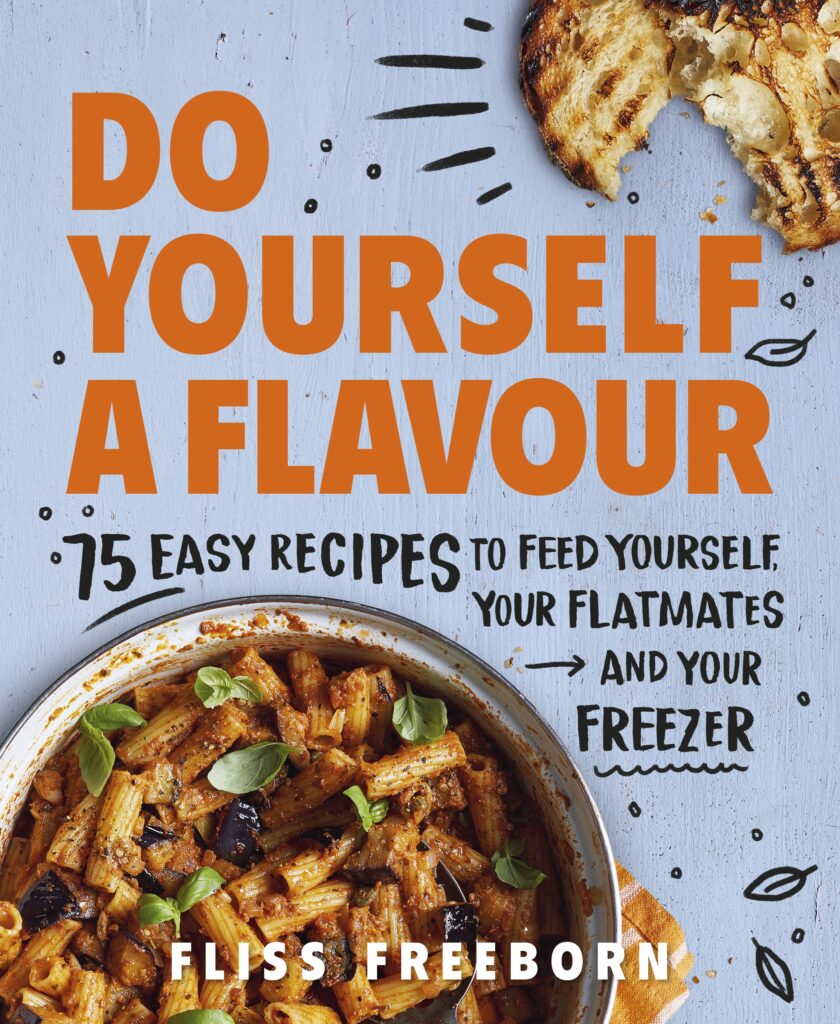
Do Yourself A Flavour by Fliss Freeborn (Ebury Press, £17.99) Photography by Luke Albert.
In this month’s edition of Maldon’s Cookbook Club, we have partnered up with Penguin Books to explore the culinary masterpieces of Fliss Freeborn.
Fliss has been writing about food since she was 8 years old, where her first ‘cookbook‘ featured recipes including clotted cream and golden syrup on toast! It was her love for cooking which allowed her to share recipes and quirky takes on food through her own blog, ‘Student Cuisine for the Gloomy Teen’. The great success of the blog eventually led Fliss to winning the award for best cookery writing at the 2023 Fortnum & Mason Food and Drink Awards – an amazing achievement!
Do Yourself A Flavour by Fliss Freeborn (Ebury Press, £17.99) Photography by Luke Albert.
And the excitement doesn’t stop there…June 27th was the date in which Fliss released her debut cookbook: ‘Do Yourself a Flavour‘.
If you are a young person wanting to expand your culinary skills beyond basic pot noodles and beans on toast, than this cookbook will be your best friend! Too well does Fliss understand the struggles of cooking during university on a restrictive budget. She wants show people that you too can create delicious tasting foods without breaking the bank or needing the latest kitchen accessory!
With a collection of over 75 recipes to choose from, you’ll find yourself reading the chapters of speedy meals, tasty dinners and crowd-pleasing feasts. If you like the ‘sweeter’ things in life, she also offers easy sweet treats and bakes. Hilariously, she also dedicates a few pages for feeding the drunk or when you are hungover – which can be a real life-saver!
The cookbook is also brimming with tips and tricks, from using up leftovers to cooking for the freezer – this is truly the ultimate ‘foodie’ guide for any young person looking to advance their cooking.
Do Yourself A Flavour by Fliss Freeborn (Ebury Press, £17.99) Photography by Luke Albert.
In Conversation with Fliss Freeborn…
When Fliss had a spare minute from cooking, we had our notepad and pen at the ready, wanting to get to know Fliss on a more personal level. We touch upon her inspirations behind the cookbook to her own top tips for people wanting to learn how to cook. We also look into what a normal day in the life looks like for Fliss!
Fliss, we are obsessed with your cookbook ‘Do Yourself a Flavour’. Tell us, where did your love for cooking first come from?
My parents considered cooking from scratch to be a non-negotiable life-skill, so I was lucky enough to have been encouraged in the kitchen from a very young age. I even had one of those high-chairs which clamped to the kitchen counter to save space – my parent’s first kitchen was tiny but they still wanted to involve me with everything. My dad used to make me taste and smell everything that was going into the cooking pot, which included all the different herbs and spices from the rack mounted on the wall. I then started baking at the age of around six, and I was obsessed with that for a good few years – it was during the crazy cupcake craze of 2008-2012 that I got really into cake decoration, which gave me the confidence to experiment with proper meals later on in my teenage years.
Your book has a collection of recipes to help people cook tasty food without breaking the bank – is this something that is important to you?
Yes. My parents split up when I was 14 or so, and to help out, I took over the majority of the cooking and food shopping. We’d never been a financially stable family due to my dad being an entrepreneur with several different businesses which he had to keep afloat – something which I was very much made aware of as a child – so our food budget was never enormous. I am very privileged to have never gone hungry, and to have had lots of educational opportunities given to me, but making food stretch as far as possible and not wasting anything was key in our household, as I’m sure it was in many others. It’s very important to me that we learn to be respectful of the ingredients we’re working with – even if they come, like mine do, from a budget supermarket. Knowing how to make something tasty out of a few cheaper ingredients is a precious skill to have, so I’m thrilled to be able to pass on this knowledge in the book.
There’s plenty of tips and tricks in your book to help young people expand their love for cooking! What would be your main top tips for people wanting to learn how to cook?
As Mary Poppins once said: find the fun and snap: the job’s a game. If you don’t enjoy cooking, it’s always going to be a chore, so find out what sort of things you like to eat and then see if you can find the joy in figuring out how to make it yourself. My second tip is to trust your instincts – you don’t have to be a slave to the recipe. If you taste it and you think it needs more cumin, add more cumin. I say in the book that you have to imagine you have a nonna on your shoulder – if she says ‘a splash more’ you add a splash more. And lastly, slightly antagonistically to that previous tip, do things slowly and carefully at first – you can always add, but you can’t take-away!
There are over 75 delicious recipes to choose from…come on, you must have a favourite!
Ah the age old favourite child question. Well, just like my mother, I do have a favourite* – it’s the mussel linguine, which I originally wrote out as a series of limericks but it’s in there as a conventional recipe too. It uses one of those cheap packets of pre-cooked mussels that lots of people bypass at the supermarket, but amps it up using lots of fresh parsley, lemon zest, chilli and cherry tomatoes. It’s a really uplifting dish.
*Big joke. Huge joke. It’s both me and my brother. We are her favourite. Ahem.
We love the humour of your cookbook, from the title to the catchy chapters; is this your way of showing people to have more fun with cooking?
Yes, I suppose it is – that’s something I hadn’t really considered before, seeing as my writing is simply a direct reflection of the way my brain works. I’m thrilled that my turn of phrase makes sense to other people when it comes to descriptions in my recipes. The humour is also probably subconscious response to the fact that many recipes are written in more or less the same way: do this, add this, stir that and serve. Mine are somewhat – ok, very much – more playful but I still hope are just as functional as those without the humour.
What does a normal day in the life look for you Fliss?
I travel a lot, and also do a lot of ad-hoc temporary work, so having a routine feels like wearing a straightjacket to me: a ‘normal’ day is kind of hard to pin down. To answer your question though, let me take you through what sometimes happens when I’m at home in Glasgow with no direct employer-related obligations.
I’ll wake up at about 9am (sorry, everyone) and then make three cubic feet of tea while having good old scroll through some cat videos, many of which I send to my boyfriend who is already being a productive human at work. Then, I’ll answer some emails and doomscroll Twitter until my social media time limit kicks in, which is always a good reminder to do something useful, like hang up the washing I forgot about yesterday.
I don’t get hungry til around 11:30 usually, and I answer the call of my stomach with whatever I can find in the fridge, which is usually cheese, or maybe some olives, or bread if I’ve made some. Then, I panic about all the things I have to do, so I’ll either have a shower, or go for a brief and hateful jog to delay actually doing the things, before heading to the library or a coffee shop to do some writing. And some more panicking for good measure.
By 3.30pm I’m hungry and restless and ready to buy whatever anyone wants to sell me, so I might head to the local bakery for a spot of cash haemorrhaging before returning home to eat whatever I’ve bought with plenty of salted butter – and possibly a salad if I’m feeling virtuous. After lunch, I start thinking about dinner.
(The above holds unless I’m on a fun writing project, where I can zone everything out including hunger signals, and only exit my trance-like state when I realised I’ve also been needing to pee for the last 12 hours. This trance-like state can continue for about four days, after which I need a holiday to the Maldives but will make do with thinking about sand.)
In the evening, we’ll often be hosting a friend or two for tea. I’ll have planned what I’m making before I invite them, and I’ll usually have done a pudding in advance. If we’re not hosting, we’re meeting pals at the pub. I say we, because at this point, my chap has arrived home from work, so I can show him cat videos in person. But whether we’ve been pubbing, entertaining, working, or simply lounging about watching Taskmaster, we tend to head to bed around 11:30pm where I am guaranteed to have some sort of ridiculous dream sequence involving fish which I’ll have to write down in the notebook on the nightstand at 4am.
What a charmed and peaceful life I lead!
Name three things in the kitchen you simply can’t live without!
Salt, lemons, microplane grater. Easy. And brief because I talked too much in the last one.
Do Yourself A Flavour by Fliss Freeborn (Ebury Press, £17.99) Photography by Luke Albert.
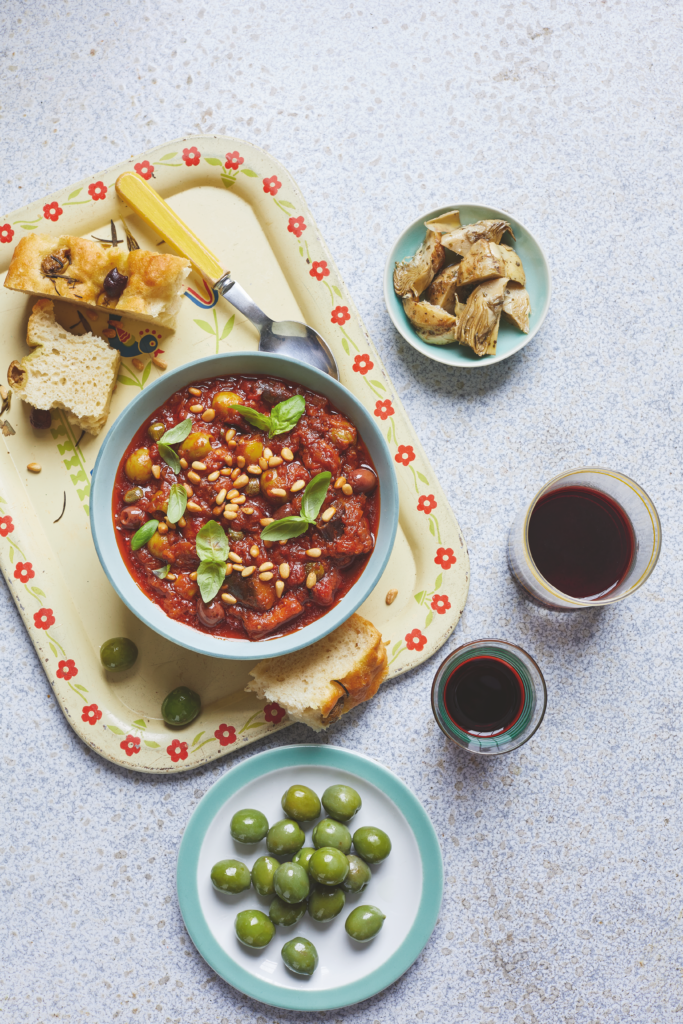
Sicilian-Style Aubergine Stew
Whenever Fliss asks her friends what they’d like to eat, they never really have a clue, to which she suggests either a curry, roast, a risotto or perhaps a ‘caponata’.
‘A caponata?’…
It a sour Sicilian stew made with lots of olive oil, aubergines, tomatoes and capers, lifted by a heavy hit of red wine vinegar. You can use pine nuts to this dish, but Fliss likes to use chopped almonds for a more heartier crunch!
This recipe is closely based on a caponata but with more flexibility on the ingredients. It freezes well, so if cooking for fewer than four people, you can save portions for another rainy day!
Serves: 4 as a main, 6 as a side
Prep Time: 30 minutes
Cooking Time: 1 hour, plus 2-4 hours resting on the hob
Ingredients:
a third of a mug of good olive oil
2 large or 3 smaller aubergines
4 shallots, if you can find them, or 2 medium white onions if you can’t
2 garlic cloves (optional)
2 tins of chopped tomatoes or peeled plum tomatoes
a tablespoon of raisins (exceedingly optional, but very authentic)
2 tablespoons of double-concentrated tomato purée
a smallish glass or half a mug of red wine (about 150ml)
a good tablespoon of capers (if your palate hasn’t yet reached maturity, you may leave these delicious morsels out)
2 tablespoons of pitted olives, or more if you like them (I’ll use whatever’s in the cupboard or fridge; it doesn’t matter if they’re green or black. Again, if you’re not a culinary chad, you can leave these out)
4–5 tablespoons of EITHER (in order of preference) red wine vinegar, balsamic vinegar, white wine vinegar or malt vinegar
salt and freshly ground black pepper
2 tablespoons of pine nuts, if the budget allows, or the same quantity of chopped almonds if it doesn’t, to serve
A pinch of Maldon Salt
a good handful of fresh basil, if you want, to serve
Method:
Pour your olive oil into a large, deep saucepan – it should definitely cover the bottom and come up the sides a little. Place over a medium heat. As it warms up, roughly chop your aubergines into oblongs of around 2–3cm. Add them to the pan, along with some salt, and fry them, stirring often, until the oil has soaked in and there’s a little bit of golden-brown colouring on the flesh – around 6–8 minutes. You may need to do this in batches to get some properly nice browning.
Just as the aubergines are colouring, remove them from the pan and set aside in a bowl – you’ll want them again in just a minute. There should be a small amount of olive oil left in the pan. Finely chop and fry your shallots or onions with a pinch of salt in this oil, adding more if necessary. Cover until they’re translucent and cooked through, around 10 minutes. Add the garlic halfway if you’re using it. Then, return the aubergines to the pan and fry for a little longer. Next, add your tins of chopped tomatoes, breaking up any plum ones with a spoon as you go. Add a good pinch of salt now, and a grinding of black pepper, along with your raisins, if they’re going in. Squeeze in the tomato purée and add the red wine, then stir and simmer for around 45 minutes–1 hour with a lid on.
Once that time is up, stretch and have a cup of tea, then take the chance to add the capers and olives, if using. Next, pour in your vinegar. It should smell really sour at this point, and have a good acidic top note when you taste it, but with a deep richness underneath from all that previous simmering.
Adjust for seasoning (does it need acidity? Or perhaps more Maldon Salt? Or maybe it’s too tangy for you and you need a splash of olive oil? When you’re happy, let it simmer – uncovered – for around 10 minutes while you doom-scroll. You can serve it now, but it’s much better if you switch off the heat and leave it on the hob to meld for a few hours, reheating when you want to serve it.
To serve, toast the almonds or pine nuts in a dry frying pan and scatter them over the pot, along with some torn fresh basil leaves.
Caponata is usually served as a side, but we’ve taken to having this dish as part of an Italian-themed main, served with lots of focaccia, some antipasti, such as artichokes and salami, and a huge green salad.
Do Yourself A Flavour by Fliss Freeborn (Ebury Press, £17.99) Photography by Luke Albert.
Want to create a recipe from this book?!
You can find where to purchase Fliss’ cookbook here and start getting creative in the kitchen!
Make sure you have your Maldon Salt ready for these recipes! If you are running out, please feel free to browse on our Where to Buy Page to find your nearest store in which stocks our beloved Maldon Salt.
Lastly, we LOVE seeing your creations – please tag us on Instagram using the #maldonsalt so we can share your own take on Fliss’ recipes!
Maldon Salt have been proud markers and merchants of salt since 1882. Our passion to create and celebrate great taste and bringing delicious new products to the tables has driven to the launch of a new range…The Merchants Range.
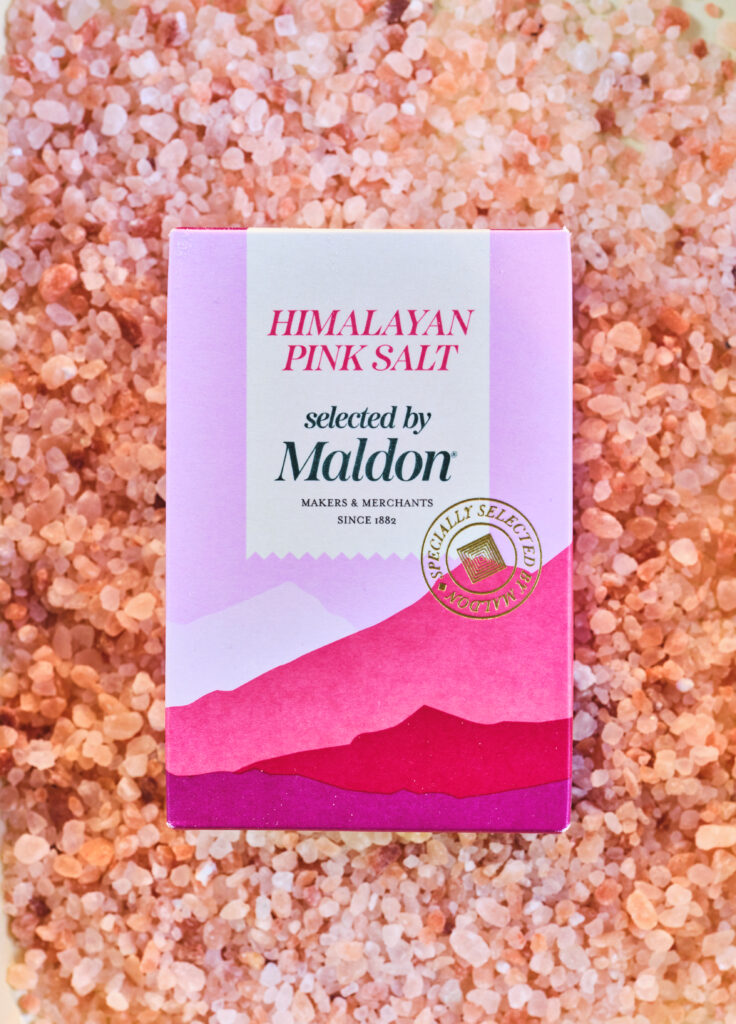
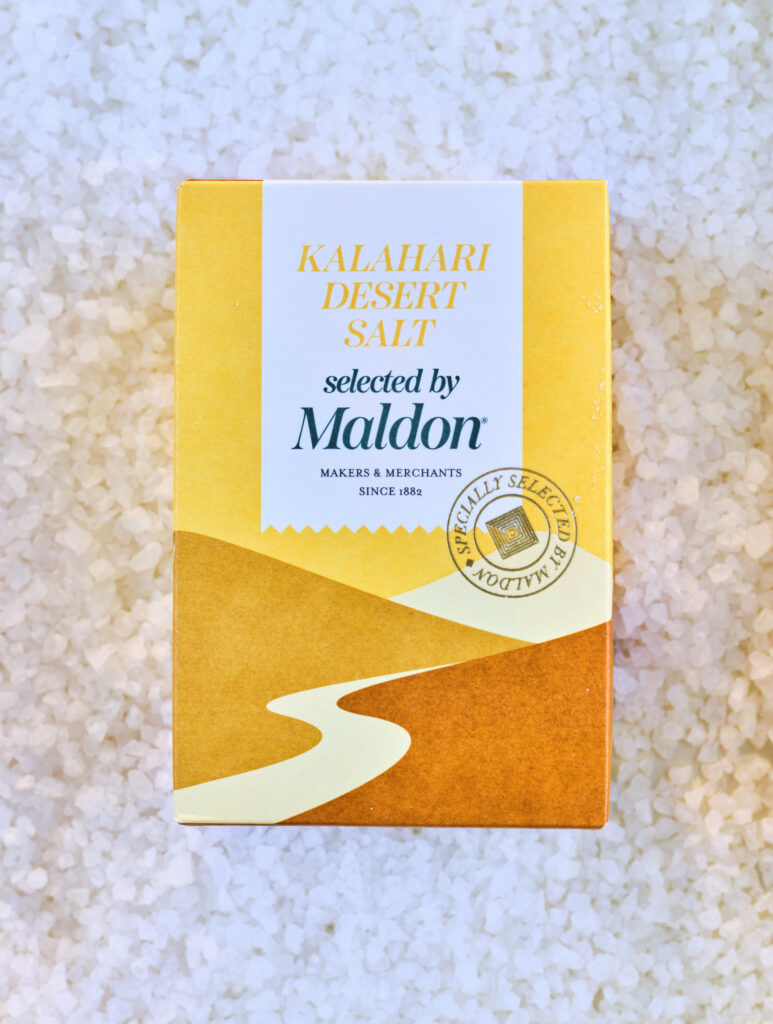
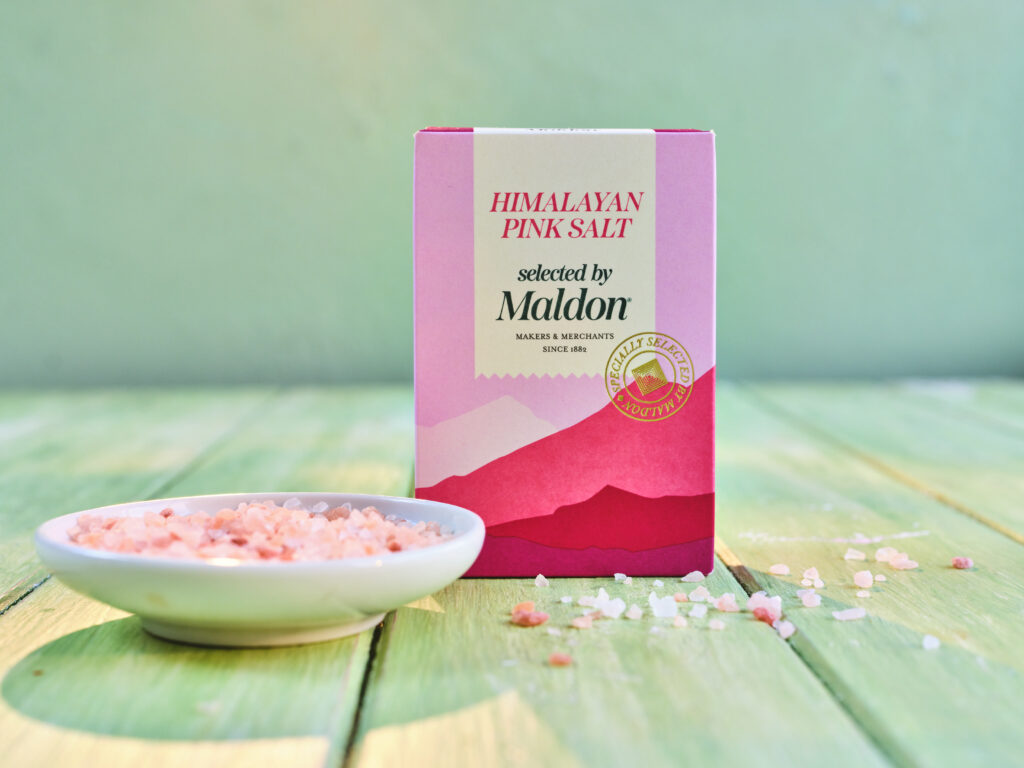
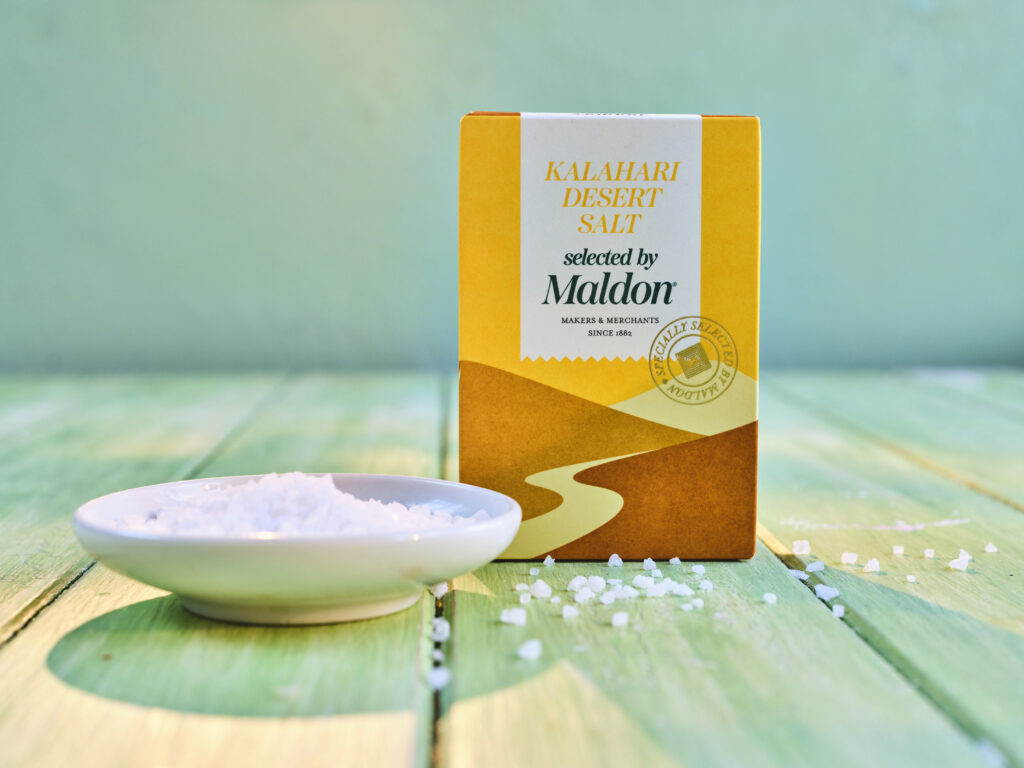
Selected by Maldon’s master salt merchants, who for four generations have been making and sourcing exceptional salts and seasonings, we proudly introduce to you the first two NEW salts from this range: Himalayan Pink Salt and Kalahari Desert Salt, Selected by Maldon.
Himalayan Pink Salt, Selected by Maldon
Himalayan Pink Salt is an established trend, that until now has lacked a premium player with a quality product who are able to educate people on it’s usage.
This pink coarse rock is sourced from the foothills of the Himalayas which has been prized for centuries. It’s beautiful pink colour stems from trace elements, concentrated in certain parts of the mine. These differences allow the salt to have a range of colours, from deep to pale pink.
Notably, Himalayan Pink Salt is a quality rock salt that has versatile uses for professional chefs who are looking for special ingredients to elevate their cooking. It is also perfect for cooking authentic recipes from the region. It can be used by adding to curries and sauces whole, or can be put in your grinder for everyday use.
Buy directly from Amazon to have your very own pack now!
Kalahari Desert Salt, Selected by Maldon
Selected by our seasoned experts, this naturally coarse salt has been harvested from the vast desert plains of the Kalahari, South Africa.
Sourced from the naturally occurring underground salt lake in the desert, the salt is broken down by water, leaving an impressive brine solution that the desert’s sun dries. This leaves the salt to contain essential minerals and trace elements.
We recommend using Kalahari Desert Salt for barbecues, particularly with meat to enhance it’s flavour. You can also use it for baking breads to gradually release the saltiness.
Buy directly from Amazon to have your very own pack now!
Makers and Merchants…
Make sure to keep an eye out in your local store in the coming months…
Tag us on social media with your new packs and recipe creations using the #maldonsalt.
Want to find out more? Please email us on info@maldonsalt.co.uk and keep up to date via social media @maldonsalt.
Did you know that lamb is one of the most desired meats in Nepal? One of the many ways to celebrate this meat is by preparing a lamb curry dish, usually made with lamb chops that are charcoal grilled and then sautéed in a chilli sauce. We have adapted this slightly by using lamb shoulder, as shoulder is a much richer and fattier cut of meat that works wonders when oven cooked for a period of time. This results in a deliciously succulent curry dish that will make you want to go up for second helpings!
We serve our curry with steamed turmeric rice and warm roti flatbreads on the side – which are perfect for dipping!
Here is how to make our Nepalese Lamb Curry…
Start by heating the vegetable oil in a large casserole dish. Add the red onion and fry until softened, then add the cloves, ginger, garlic, cinnamon, bay and cardamon pods and fry for another few minutes until smelling fragrant.
Next add the lamb pieces and cook in the spices and onion until it browns on all sides – the longer you brown it the more caramelisation you will get on the meat and the deeper the flavour.
Once the meat is nicely browned all over, add the diced tomatoes followed by the garam masala, fenugreek, turmeric, chilli flakes and Himalayan Pink Salt. Stir everything together so it is all well coated and allow it to sizzle and fry for 5 minutes, so the tomato breaks down.
Add the lamb stock or water and bring to the boil. Then reduce to a low simmer and allow it to bubble away for 1 hour. Keep an eye on it and if it needs some more liquid then top it up.
After an hour the sauce should be thickened and the lamb tender.
Serve the curry topped with chopped coriander and alongside some steamed turmeric rice and warm roti flatbreads.
Simply delicious!
Let’s make a fresh batch of momos filled with juicy minced chicken that are served with a zingy tomato and chilli chutney sauce. We prepare the momos by using our NEW Himalayan Pink Salt, selected by Maldon.
Chicken momos are a very popular North Eastern dish, particularly in Tibet. Being a tasty treat for many within the region, the word ‘momo’ actually means ‘steamed bread’ in Chinese, where people can see the resemblance to a dumpling due to it’s doughy outer and succulent, juicy centre.
Here is how to make our Chicken Momos with Tomato Chilli Chutney…
Start by making the dough for the momos. In a large bowl add the flour and a pinch of Himalayan Pink Salt. Add the oil and mix it in well.
Next add the water and mix it well with your hands until combined and the dough feels smooth. Cover the bowl with clingfilm or a tea towel and set aside.
Next make your filling. In a bowl mix together the chicken mince, garlic, ginger, spring onions, green chilli, lemongrass, chopped coriander and mint and Himalayan Pink Salt. Mix well until evenly distributed.
Now start on the sauce. In a large pan add the tomatoes, dried chillies and garlic cloves and pour over the water. Place it onto the heat and bring the water to the boil. Simmer the tomatoes for 5 – 8 minutes until they soften and break down, and the dried chillies have also softened. Remove from the heat and allow to cool slightly before placing in a high-powered blender along with the soy, caster sugar and pinch of Himalayan salt and blitzing until smooth. Set aside to serve later.
Now you can shape your momos. Divide the dough into 15 equal balls. Lightly dust the work surface and then use a rolling pin to roll each ball into a circle as thin as you can.
Lift the circle and place it into the palm of your hand. Spoon in about 1-2 tsp amount of the filling. Then use your fingers to lift the sides of the dough to enclose the filling and pinch in a pleating action all the way around until you have a spiral. Pinch the dough in the middle of this to make sure it is fully sealed – it will look like a little moneybag.
Continue with the rest of the balls and using the filling until you have all your shaped momos.
Prepare your bamboo steamers with some greaseproof paper in the layers and place them onto a pan with an inch of simmering water.
Steam the momos on the layers for approximately 10 minutes.
Serve the momos warm with some sliced spring onions scattered over and the tomato chilli chutney for dipping.
Sosaties are a classic South African kebab, normally comprised of lamb and apricot to bring an infusion of both sweet and savoury. We tweaked this cult favourite and used pork instead to give you a meatier bite with a slightly sweet undertone.
Did you know the name ‘sosaties’ is broken down to reflect ‘sate’, meaning skewered meat, and ‘saus’, which is a spicy sauce in Afrikaans.
Here is how to make our pork sosaties…
Begin by making the Braai marinade. Mix the spices, grated garlic, mustard, Kalahari Desert Salt, and black pepper with the olive oil in a large bowl. Then add the pork pieces and mix so they are well coated.
Cover the bowl with clingfilm and place in the fridge for 30 minutes to marinade (you can do this the day before if you would like to get ahead).
After the meat has marinaded, it is time to assemble the skewers. Place 3 tbsp olive oil in a bowl and add the onion wedges, green pepper, apricots, and bay leaves – toss them so they are all lightly coated (this will help avoid any burning on the Braai). Thread pieces of the meat on to wooden skewers and then alternate between the other ingredients and more pieces of meat until you have 6 full skewers.
Place the skewers on the hot BBQ or Braai and griddle then for 5 minutes on each side until cooked through and lightly charred in places. At the same time, place the lemon halves on too and allow them to charr.
Serve the skewers immediately along with the charred lemon squeezed on top.
A classic chakalaka – refreshing spicy tomato bean relish that will make you go up for second helpings! We use our NEW Kalahari Desert Salt, Selected by Maldon to elevate the spices of cumin and cayenne pepper and make your taste buds sing!
Chakalaka originates from South Africa and is a staple throughout the country! This pairs perfect with barbecues, known as braais. It is believed that the dish was developed by men who worked within the goldmines, combining vegetables with beans to form a tasty relish to give them enough energy for the day.
Here is how to make our Chakalaka…
Heat the oil in a large frying pan and then add the onion. Cook for a few minutes until it starts to soften and go translucent.
Next add the garlic, ginger, curry powder, cumin and cayenne and fry for another minute.
Add the diced peppers and cook for a couple of minutes to allow them to soften.
Next add the grated carrot, tomato paste and tinned tomatoes. Mix it well so everything is well coated and allow it to cook for 5 – 10 minutes.
Finally add the cannellini beans, fresh thyme and seasoning and allow it to bubble for a further 5 minutes.
Mealie bread is a quick and easy bread found in South Africa and Eswatini. It ‘s a baked good which is leavened with baking powder, mealies (sweetcorn), flour and eggs. We add a pinch of paprika to give a gentle layer of spice to the bread!
You can serve mealie bread at a braai (barbeque), but can equally be enjoyed on it’s as a snack, smothered with a generous helping of butter.
Here is how to make our Mealie Bread…
Place the plain flour and cornmeal in the bowl of a stand mixer and make a well in the middle.
In a small bowl mix together 40ml of the milk, yeast and caster sugar and pour this into the well. Mix well.
In a blender or food processor add the sweetcorn and remaining milk and blend until smooth. Next add the Kalahari Desert Salt, paprika, turmeric, cooled butter and eggs and whisk in.
Tip the sweetcorn mix into the flour and mix with the dough hook attachment, kneading it for approximately 10 minutes.
Cover the bowl with clingfilm and leave in a warm place for 1 hr until it has doubled in size.
Line a 20cm springform cake tin with baking paper.
Once the dough has doubled in size, transfer it to the prepared cake tin and smooth it out. Now allow it to rise for a second prove of 15 minutes again lightly covered in clingfilm.
Preheat the oven to 180C fan. When the bread is ready to bake simply scatter over the sesame seeds and place into the hot oven for 30 – 35 minutes until risen, and lightly golden brown. You can check it is cooked through but inserting a toothpick or skewer and making sure it comes out clean.
Remove from the oven and allow it to cool slightly, before removing from the tin and serving.
It is best served still a little warm and can be toasted and topped with butter. A delicious side dish to the Chakalaka.
Preheat the oven to 180C.
Start by making the crust for the salmon.
Place the Himalayan Pink Salt, Selected by Maldon, in a pestle and mortar and crush until it has a fine texture. Pour this into a bowl and add the fresh white breadcrumbs, parmesan, finely chopped pistachios, red chilli, chopped parsley, lemon zest and some cracked black pepper. Finally add the olive oil and mix until it forms a wet paste – add a little more olive oil if it looks dry.
Place one of the salmon fillets on a baking tray lined with baking paper, skin side down. Layer the lemon slices and the dill and parsley sprigs across the top of the flesh. Next place the second fish fillet on top of this, again skin side down – sandwiching the lemon and herbs in between.
Spoon the crust mixture on the top piece of fish and press it onto the top of the flesh, it should stick nicely.
Place the tray into the preheated oven and bake for 20 minutes, the salmon should be cooked through and the crust lovely and golden. If your fillets are thicker, you may need to give this an extra 5 minutes.
Once cooked, serve your stuffed salmon as the centrepiece of your dinner tables along with your favourite sides – we like to do this with herby new potatoes and seasonal greens.
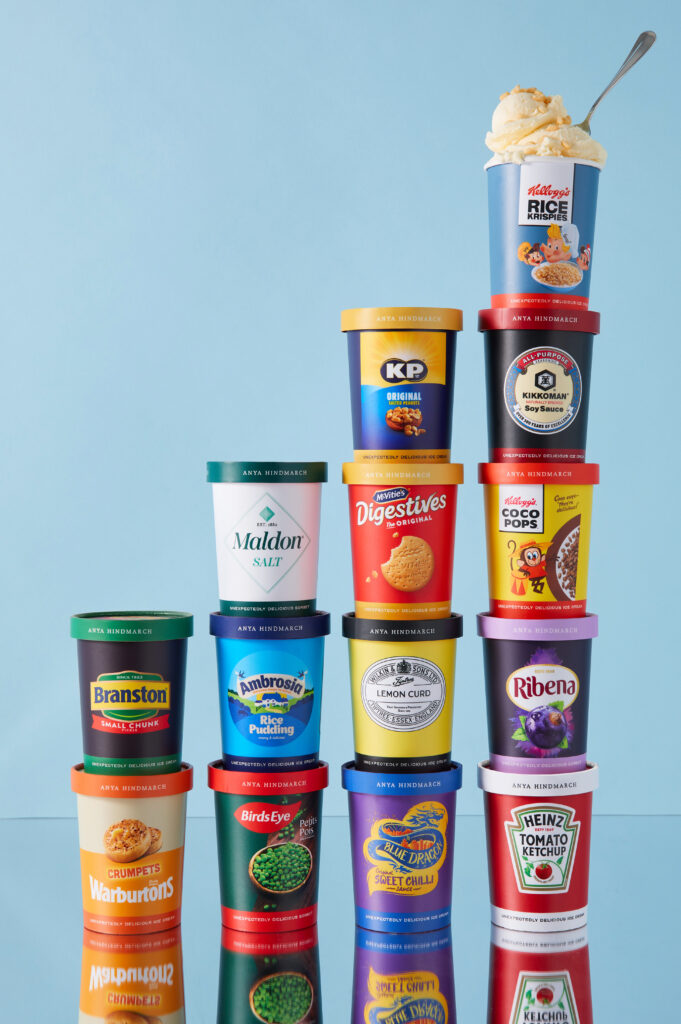
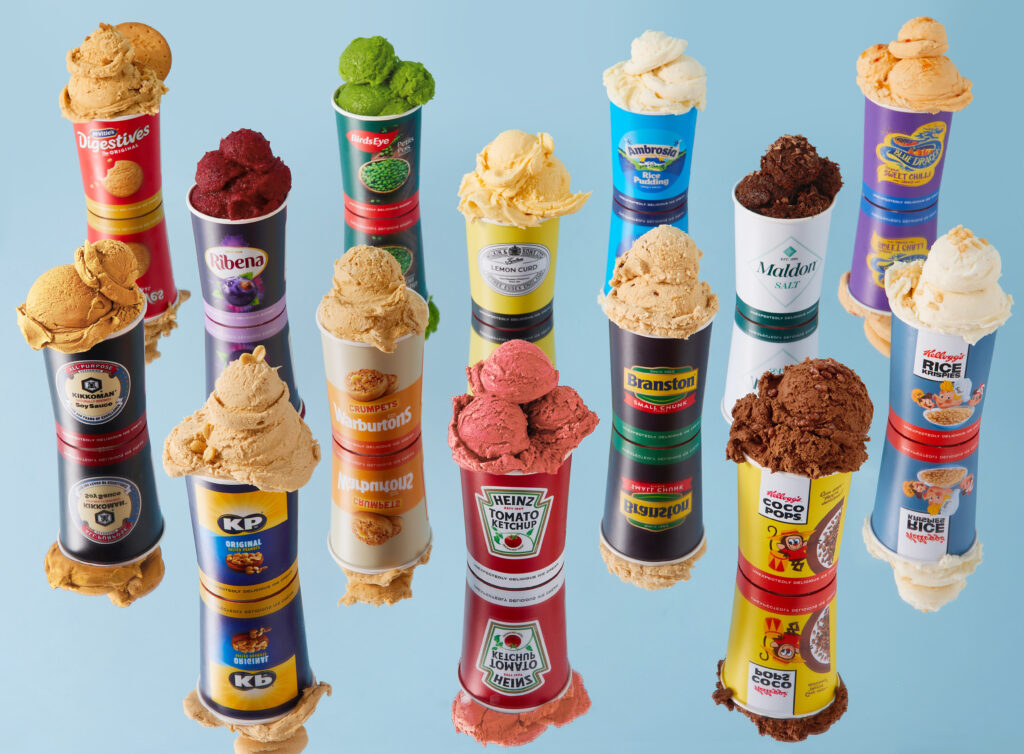
Back by popular demand, the concept store will return to The Village from 29th June – 27th August, serving an unexpectedly delicious line up of ice creams and sorbets. The project is all about bringing the joy of ice cream back…but with a twist! Classic, household names that you would typically find in the pantry are now in the freezer, featuring sauces, condiments, biscuits, breakfasts and of course…salt!
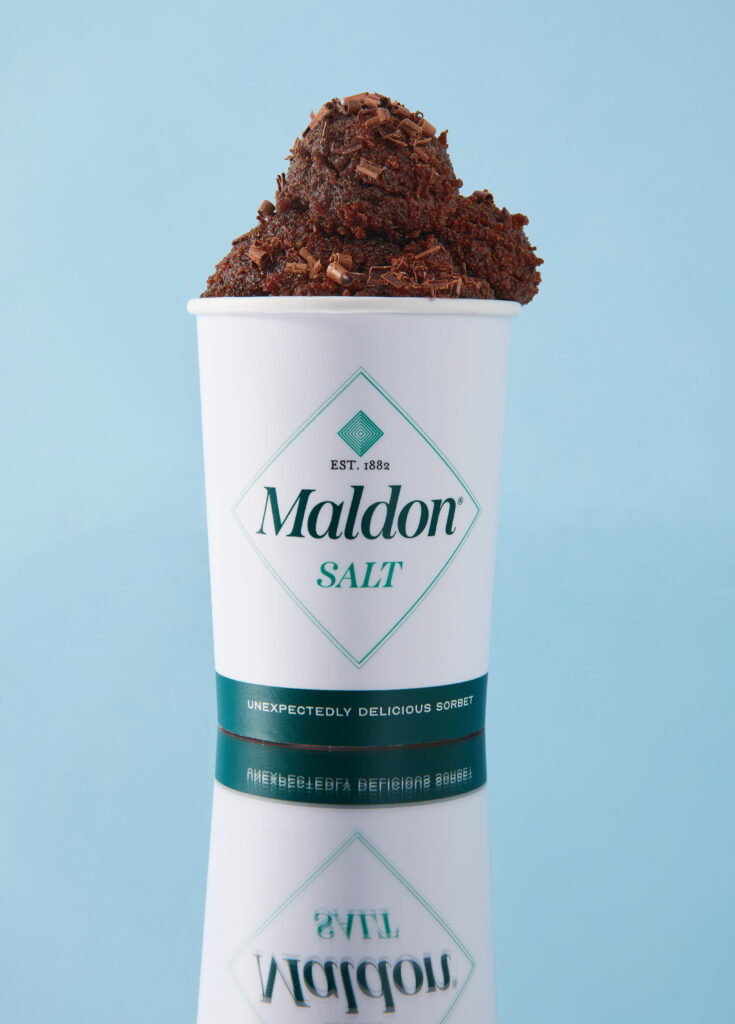
Yes, that’s right! Maldon Salt is part of The Ice Cream Project this year, along with various other classic brands. Hand-made in small batches in Devon, each recipe is created with only the very best ingredients.
Here is the full list of flavours to choose from…
Maldon Salt (Sorbet)* – Rich dark chocolate elevated with Maldon sea salt flakes and dark chocolate shavings.
Ambrosia Rice Pudding – Creamy and delicious, laced with the original Devon rice pudding.
Birds Eye Petits Pois (Sorbet)* – Smooth and refreshing with the natural sweetness of specially selected peas.
Blue Dragon Original Sweet Chilli – Rich, creamy vanilla with the sticky sweet tang of chilli and a touch of heat.
Branston – Mellow cheddar cheese with the ‘chunky, crunchy bite’ of Branston.
Heinz Tomato Ketchup – The unmistakable taste of sun-ripened tomatoes with the perfect combination of sweet, salty and tangy flavours.
Kellogg’s Coco Pops – Milk chocolate with the crunch of chocolate flavoured toasted rice.
Kellogg’s Rice Krispies – Rich creamy milk with toasted rice.
KP Original Salted Peanuts – The great taste and crunch of KP Salted Peanuts with the rich, roasted flavour of peanut butter.
McVitie’s Digestives – Blended with the ‘classic sweet and salty crunch’ of the original digestive biscuit.
TipTree Lemon Curd – Deep and creamy with the distinctive sweet and tart zing of finest sicilian lemon curd.
Ribena (Sorbet)* – The unmistakably delicious taste of juicy blackcurrants, bursting with ‘berryness’.
Warburtons Crumpets – Packed with melt-in-your-mouth toasted crumpet and notes of butter.
*Maldon sea salt, Ribena and Bird Eye Peas are all sorbets. All flavours are made in a factory that handles milk and cream so we can’t guarantee there is no cross contamination.
HAVE A SCOOP!
The Ice Cream Project is live from the 29th June – 27th August 2023. You can have a scoop for £3.50 or delve into buying a 500ml tub for £15.
The Ice Cream Project
11 Pont St, London, SW1X 9EH
Opening Hours:
Monday – Saturday, 10am – 6pm
Sunday: 12 – 5pm
Make sure to tag us with your Maldon Salt ice cream scoop! Use the handle @maldonsalt for us to feature you on your Instagram page.